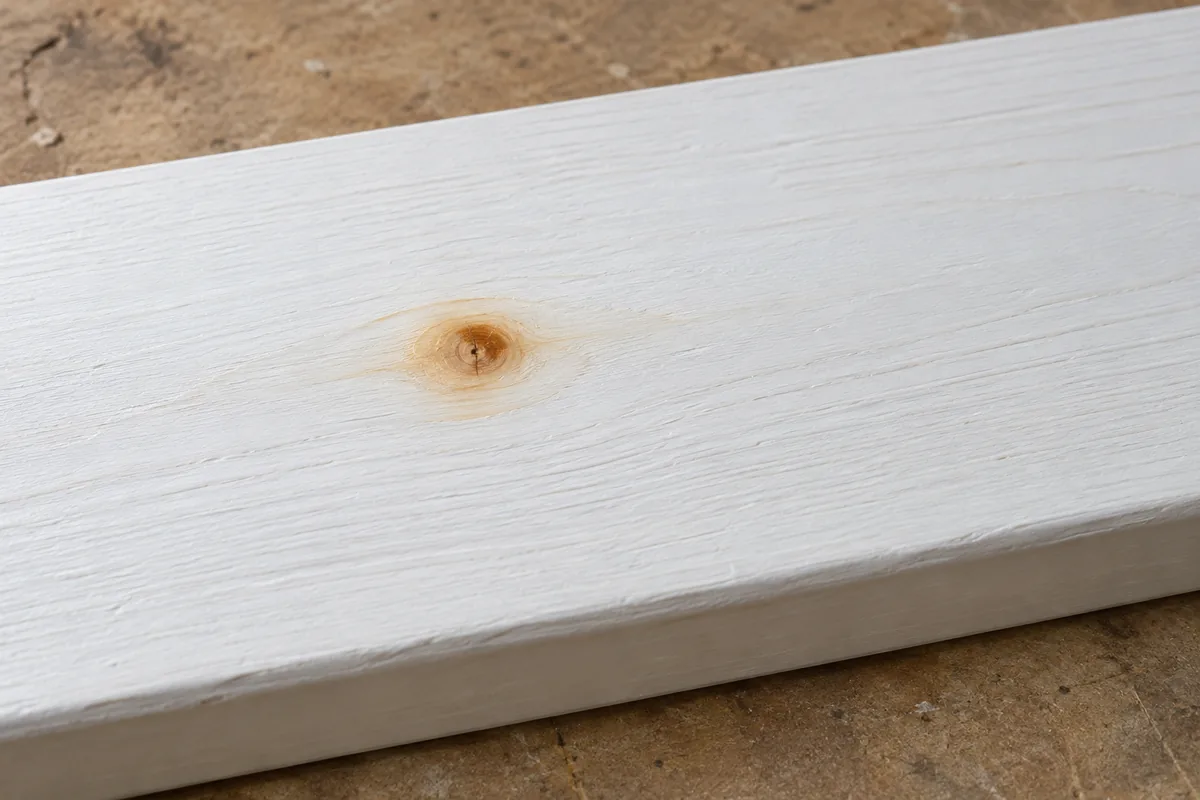
A knot can remain visible after several coats of white paint, sometimes as discoloration rather than a raised shape. Before repainting it, establish that the mark is associated with the wood and not an active moisture problem or another contaminant.
Inspect the surrounding area. A localized mark matching a knot suggests a different cause from a spreading stain below a window. If water may be involved, investigate and resolve that source before treating the color. Primer is not a leak repair.
Match the blocker to the problem
Ask the coating supplier for a stain-blocking primer suited to the wood, existing coating and intended topcoat. Products differ in the stains they address and the conditions they require. Do not assume that any primer, or an extra layer of ordinary paint, provides the same blocking performance.
Follow the preparation and recoat directions. The required ventilation and protection depend on the product, including any solvent content. Avoid combining miscellaneous products because one is already open in the workshop.
For new trim, an offcut containing a similar knot is a useful test. Apply the complete system and inspect after it has dried appropriately. A sample can also reveal whether the repaired area will differ in texture or sheen from the rest of the board.
Separate color from surface shape
A knot may also be uneven or surrounded by a surface defect. Blocking discoloration will not level a ridge or secure an unsound area. Decide whether the wood is suitable before treating the finish. For a particularly prominent painted run, selecting clearer sound stock may reduce the need for corrective work.
On existing trim, assess old coatings before sanding or scraping. Pre-1978 or unknown paint can require lead-safe assessment and work. A small stained spot is not a reason to bypass that precaution.
After the blocking layer, use the compatible finish system over a logical area. An isolated patch can remain visible if the surrounding paint has aged or if the sheen differs. It may be preferable to repaint the complete board section once the stain is controlled.
Keep the product names and a note of the original cause. If the discoloration returns, that record helps determine whether the system was unsuitable, the preparation incomplete or the diagnosis wrong. Repeatedly increasing paint thickness can bury profile details while leaving the underlying staining mechanism untouched.