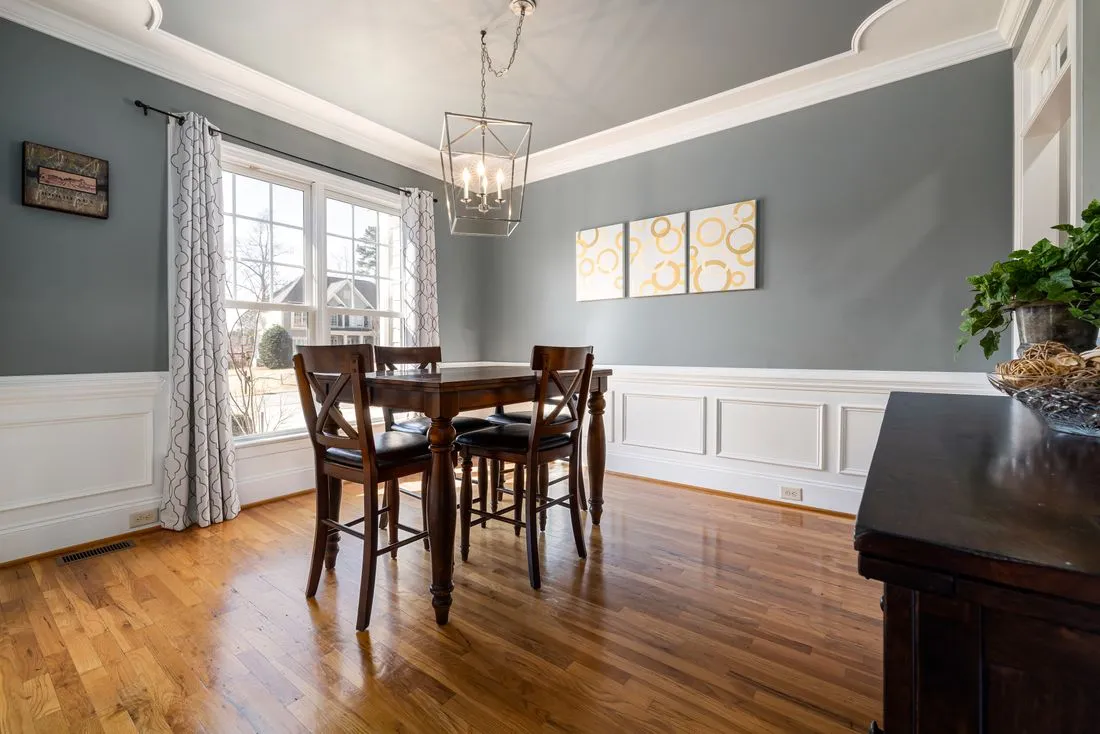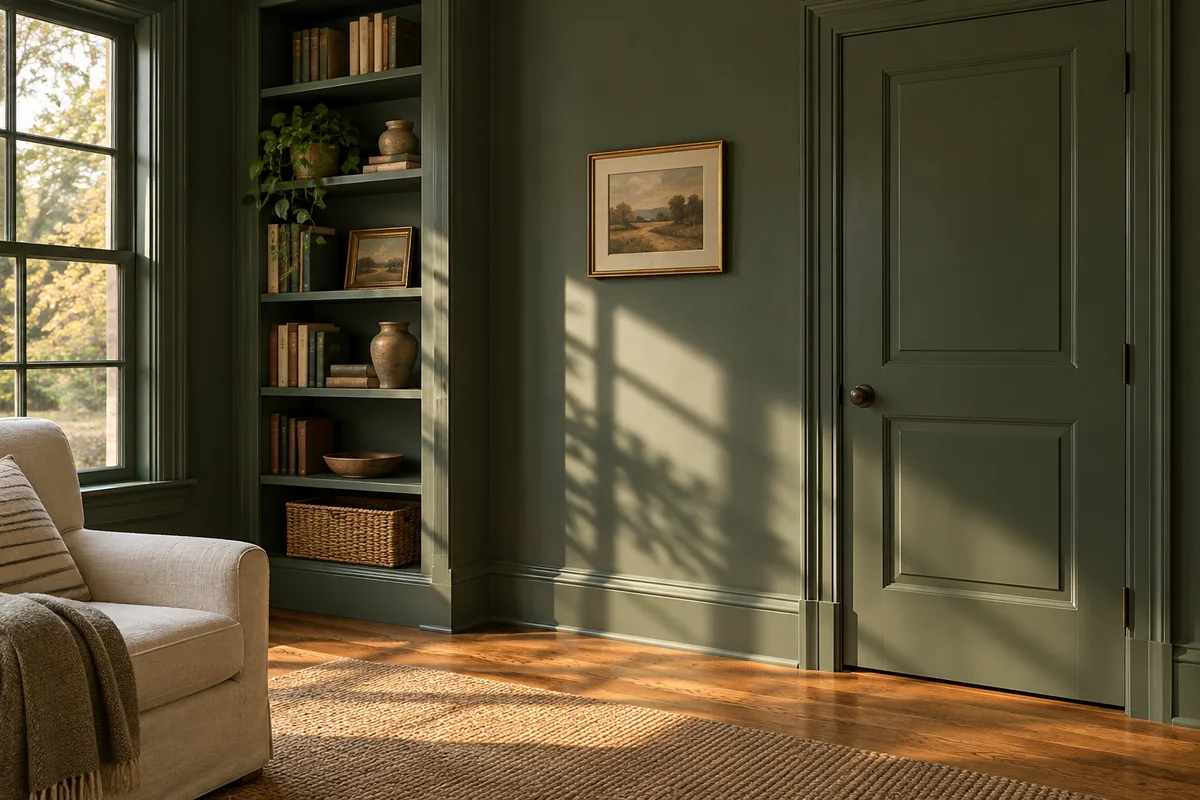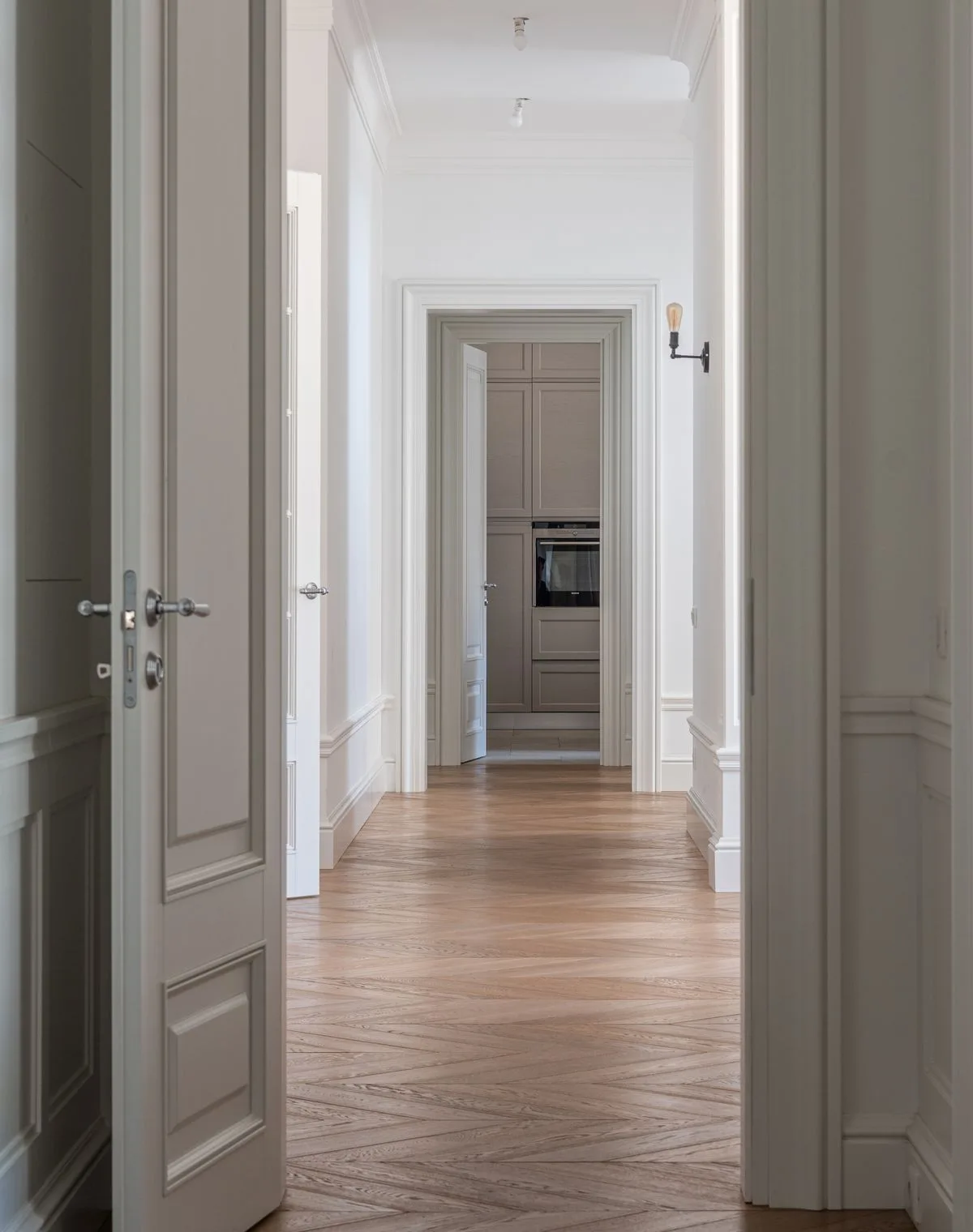
The line between a matte wall and painted woodwork can be almost invisible in morning light, then quite sharp when a lamp comes on. That shift is part of choosing a trim finish. Semi-gloss usually makes edges and curves more noticeable; satin often softens them. Neither label tells you everything about how a particular paint will look or wear.
Finish names are not a universal scale across paint brands. One manufacturer's satin may look closer to another's low-luster finish than you expect. When comparing options, use the same product range where possible and read what the manufacturer says about its intended surfaces, preparation and cleaning.
Let the condition of the woodwork into the decision
Raking light travels across a surface and exposes small ridges. On an older door casing, those ridges may be thick paint edges, filled nail holes or an uneven patch. A more reflective finish tends to draw attention to them. Satin can make a modestly imperfect surface less conspicuous, although it does not repair the underlying defect.
Do not sand an unknown old coating just to make a sample look better. In a pre-1978 US home, lead-based paint may be present; establish a safe approach before disturbing it. A separate new offcut lets you compare sheen without altering existing paint. For the eventual work, preparation must suit both the substrate and the existing coating.
Compare samples where the trim will live
Paint two similar offcuts with the proposed primer and finish system. Apply the recommended coats and allow the stated drying time before judging the appearance. Hold them vertically beside a door or against the baseboard area. Looking down at a sample laid flat on a table gives a different reflection from looking across upright trim.
Check the samples with the window uncovered, with curtains drawn and with the room's usual lamps on. A glossy edge facing a bright window may flash white even when the paint is a muted color. If the walls and trim share a color, a sheen difference can create enough definition without introducing another shade.
Cleaning depends on the coating, not just the shine
Door frames and stair-side trim collect fingerprints and scuffs. Choose a coating intended for trim or other frequently handled interior surfaces, then follow its cure and cleaning guidance. Dry to the touch is not the same as fully cured. Aggressive wiping too soon can mark a surface that would have held up well after the specified curing period.
For a quiet bedroom with flat-profile woodwork, satin is a useful option to sample first. For crisp, detailed casings in good condition, semi-gloss may give the definition you want. In a hallway with strong side light, compare both before committing to a large can. The better finish is the one that works with that surface, that light and the level of preparation you can achieve.