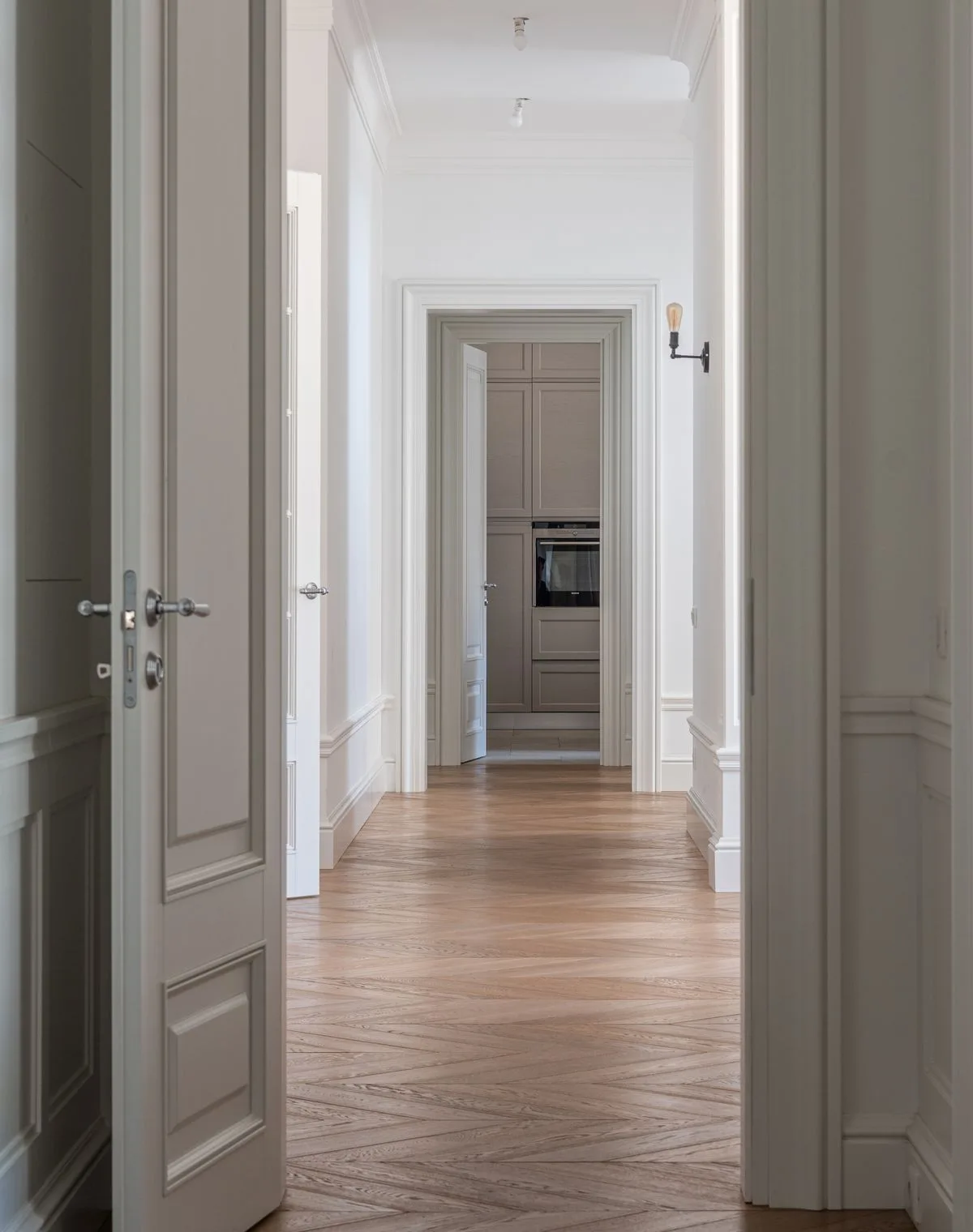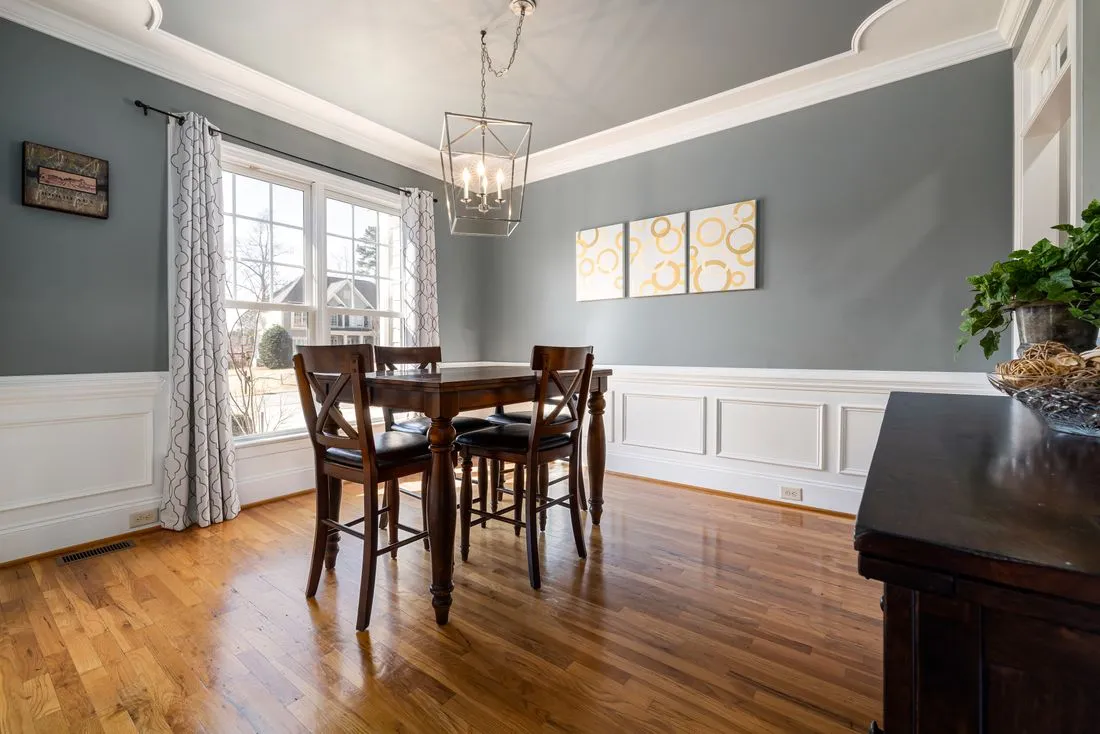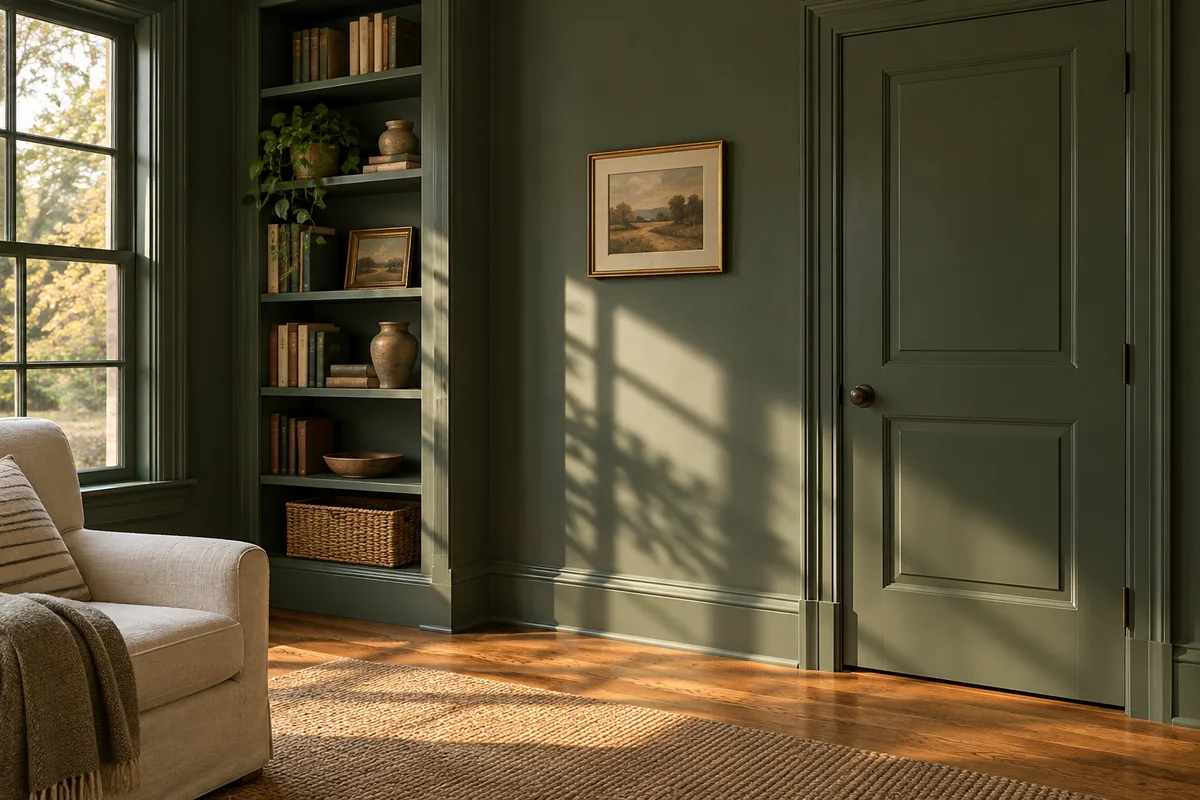
The white that looked calm on a paint card can turn surprisingly yellow beside a cool wall. A soft gray may almost disappear in one doorway and look sharply outlined in another. Trim color is not being viewed on an isolated rectangle; it is being viewed on a narrow, shaped surface beside other colors.
Give the sample the same conditions as the finished trim. Use a piece of the actual molding, prepare it appropriately and apply the intended coating system. A sample pot intended only to demonstrate color may not reproduce the final product's sheen or texture, so confirm what you are comparing.
Make the sample large enough to read
A tiny painted chip can show color but not the profile's shadows. Use enough length to see a flat face, a curved detail and an edge together. If the room uses several different materials, make a sample of each where their finished appearance could differ.
Label the back with the color, product, sheen, primer and date. Several almost-white samples become difficult to identify after they have moved around the house. Keep the label out of the visible comparison so that a persuasive color name does not influence the choice more than the surface itself.
Apply the coating at its specified coverage and number of coats. A thin sample over a dark substrate can misrepresent the final color. Let it reach the appropriate dry state before judging, and keep it away from dust or handling marks while it settles.
Compare a small group, then reduce it
Start with a few genuinely different directions: perhaps a warmer white, a more neutral white and a muted color related to the wall. Looking at a dozen near-identical samples at once can make every difference feel important without clarifying which works in the room.
Place the samples beside the actual wall finish, floor and door. Existing white objects such as a window frame or cabinet may be fixed constraints. A trim white that looks attractive alone can make those objects appear unexpectedly blue or cream.
Do not require every white in the room to be identical. Different materials reflect light differently, and a slight deliberate contrast can be more convincing than an unsuccessful exact match. The question is whether the relationship looks settled in the room, not whether the names on the paint labels agree.
Follow the light through an ordinary day
View the sample near a window, in a darker corner and under the lamps normally used at night. A south-facing opening and a shaded hallway can make the same coating read differently. Check the places where the trim will actually be seen, including the doorway from the adjacent room.
For a useful comparison, keep the sample in its installed orientation. A baseboard lying flat on a table catches light differently from one held vertically against the wall. A casing sample should be seen as a vertical strip as well as a horizontal head.
Imagine choosing between two warm whites for a room with pale oak flooring. In daylight both may appear acceptable. Under warm evening lamps, one may become too creamy beside the existing window frame. That is a concrete reason to choose the other, not evidence that one color is universally better.
Confirm one finished junction
Once the choice is narrowed, make a small mockup where the trim meets the wall and another material. Include the intended sheen. A color that works as a broad painted board can feel more conspicuous when a glossy edge catches the light.
Photographs are useful reminders, but camera exposure and screens can shift the result. Make the final choice from the physical sample in the room. Keep the selected piece after painting; it will be a better repair reference than a screenshot of a retailer's color swatch.
Write down the finish decision before ordering the full quantity. Then stop moving between nearly identical alternatives unless a real condition changes. Sampling is meant to resolve the relationship, not turn every room into an endless comparison of whites.