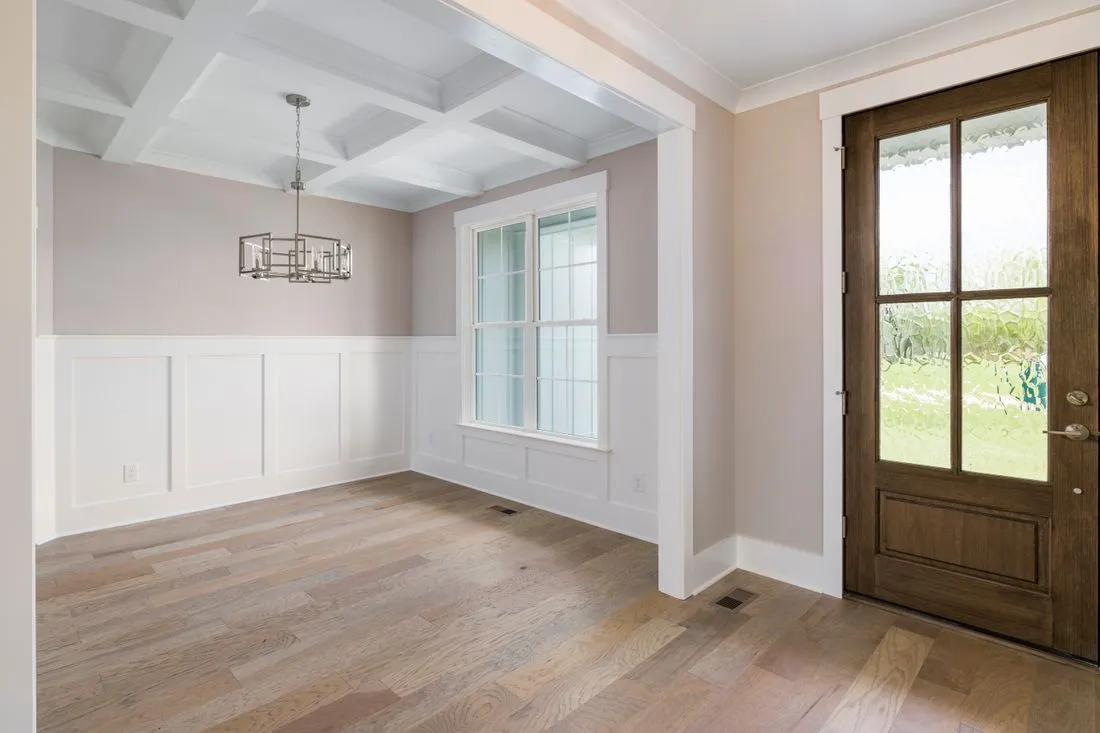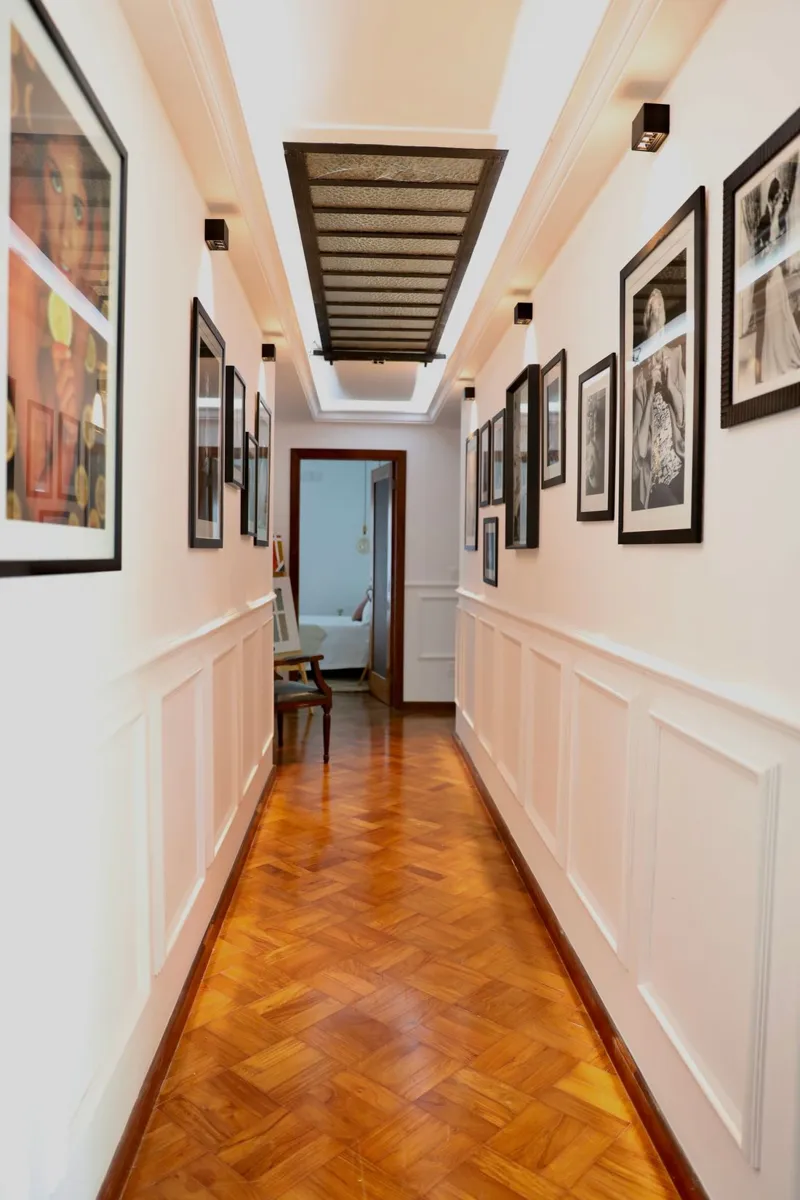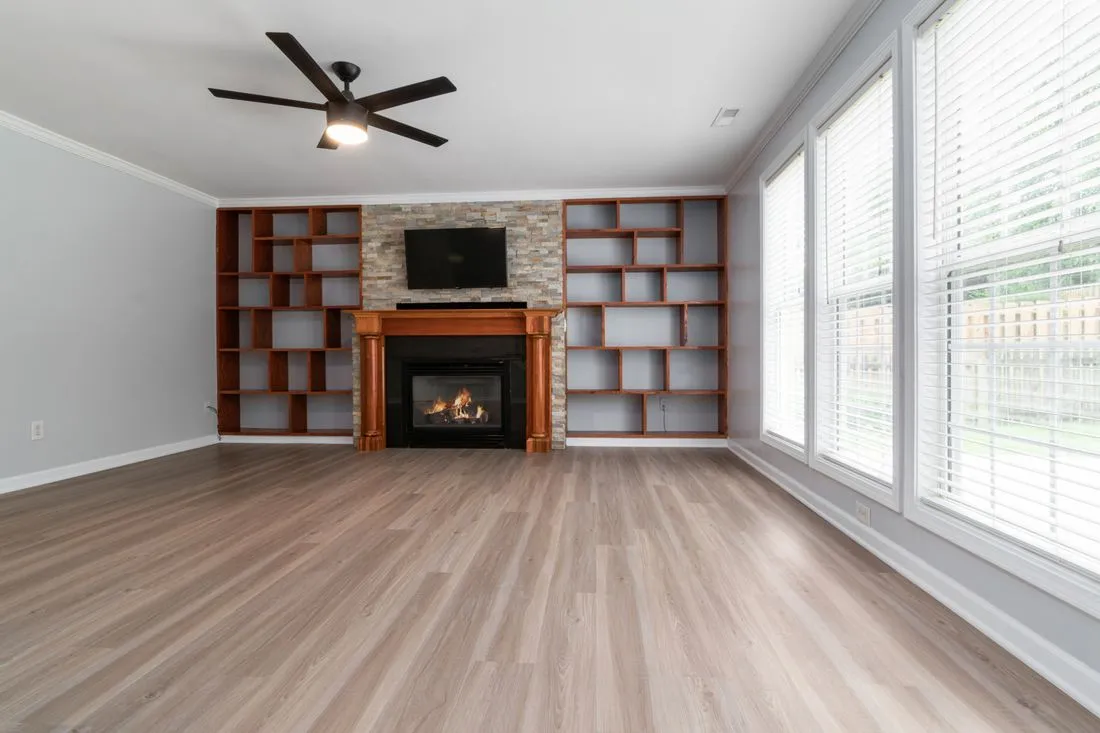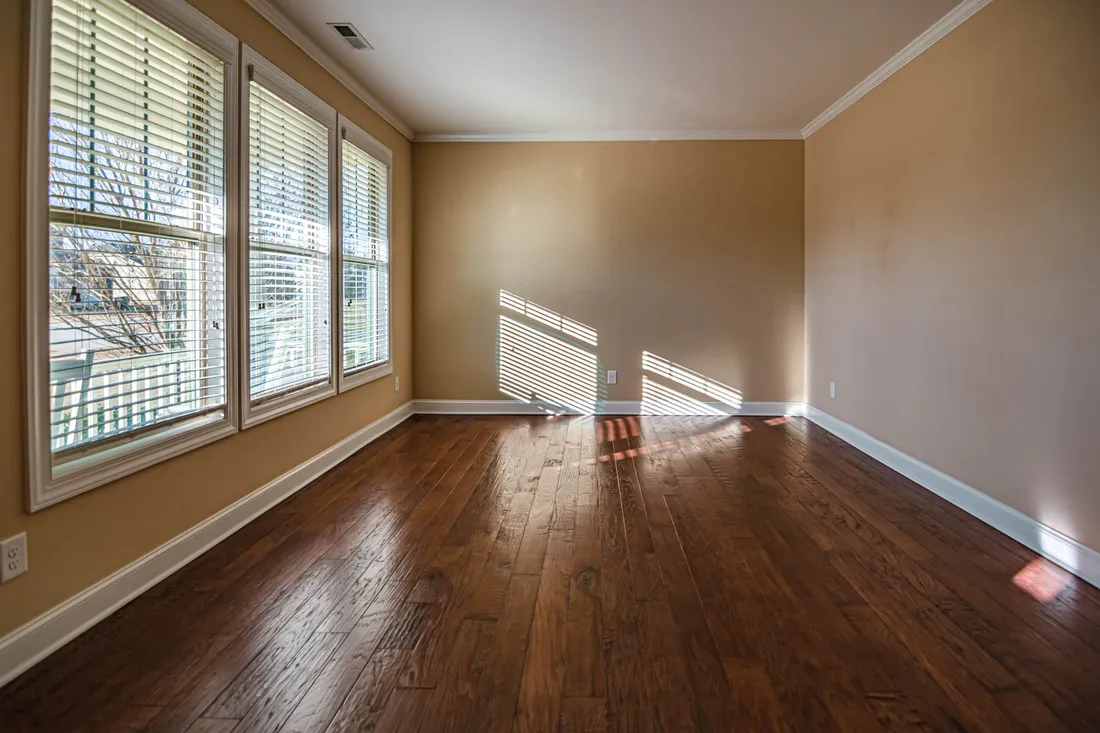
A shallow groove can disappear under soft overhead light and become a dark line beside a window. That is why a trim sample needs to be seen in position. You are choosing the way light moves across a surface, not only the outline of an offcut.
Start with a sample long enough to read as part of the wall. A tiny cross-section is useful for comparing profiles, but it says little about repetition along a hallway. Where possible, arrange two pieces at a corner or junction so that you can see how the shadows meet.
Hold door casing vertically, baseboard at floor level and a proposed wall rail at its intended height. Keep the sample secure without damaging the existing finish. A piece tilted toward the ceiling reflects light differently from the same piece installed upright, so avoid making the decision with it resting casually against a chair.
If color or sheen is part of the choice, prepare a separate sample with the intended coating system. Bare wood, factory primer and finished paint can look quite different under the same light. Give the sample the drying time specified for that product before comparing its appearance.
Look in daylight, then with the lamps normally used in that room. Pay particular attention to a light positioned close to the wall. It may reveal unevenness and throw stronger shadows than the ceiling fixture. The goal is not to create the harshest possible test; it is to see the conditions the finished trim will actually experience.
View the sample from the entrance and the usual seats, not only from a few inches away. A finely detailed profile can merge into a heavy band at a distance. Conversely, an apparently plain board may give enough definition when its top edge casts a clear shadow.
Photographs help you compare the layout later, but automatic exposure and white balance can change the apparent color. Include a wider view that shows the room, and keep a written note about what you saw in person. Do not treat a brighter phone image as proof that one paint is lighter or one finish is shinier.
If the sample only works at one favorable time of day, consider a shallower profile, a quieter contrast or a different finish. A successful detail need not demand attention in every light. It should remain comfortable in the room's less flattering moments too.