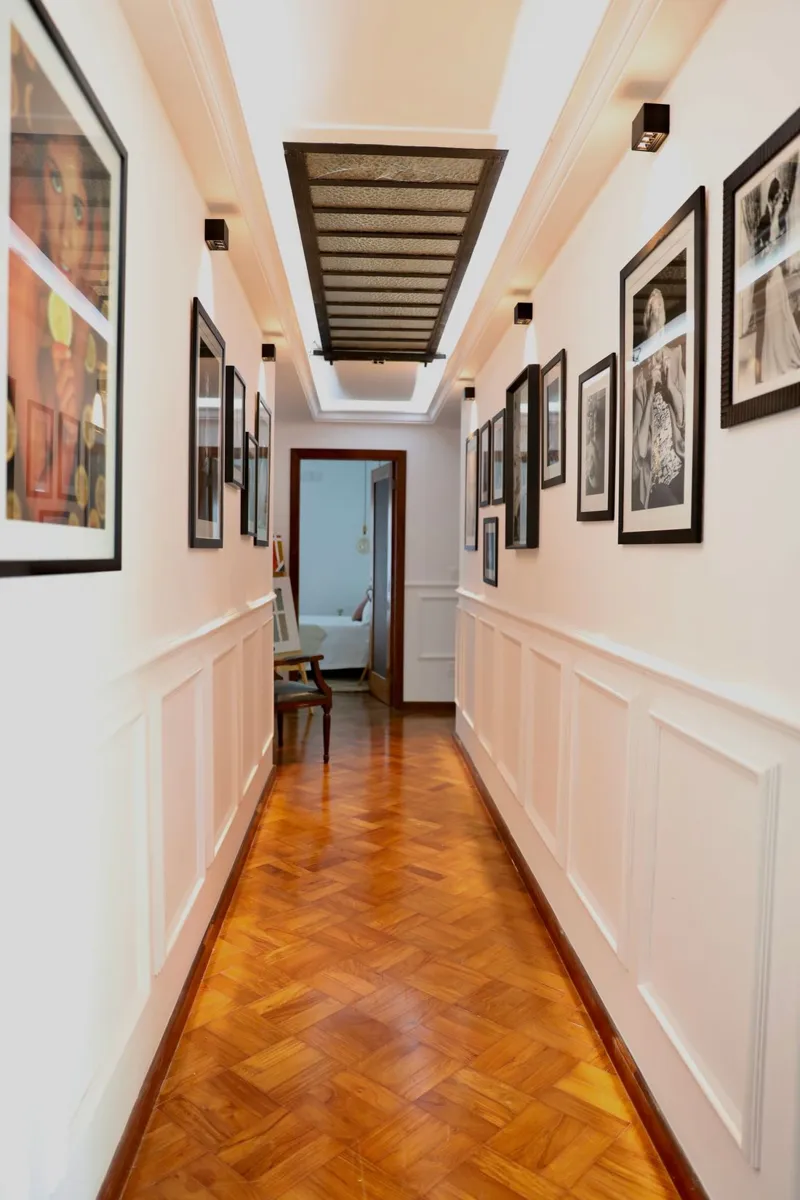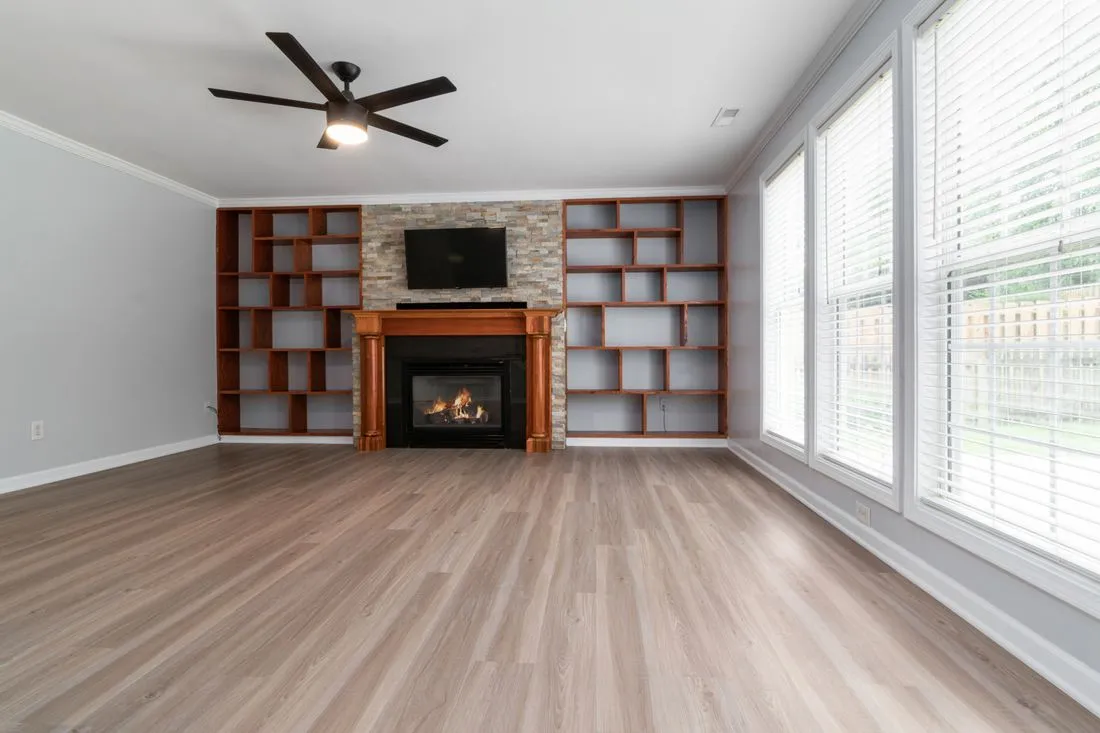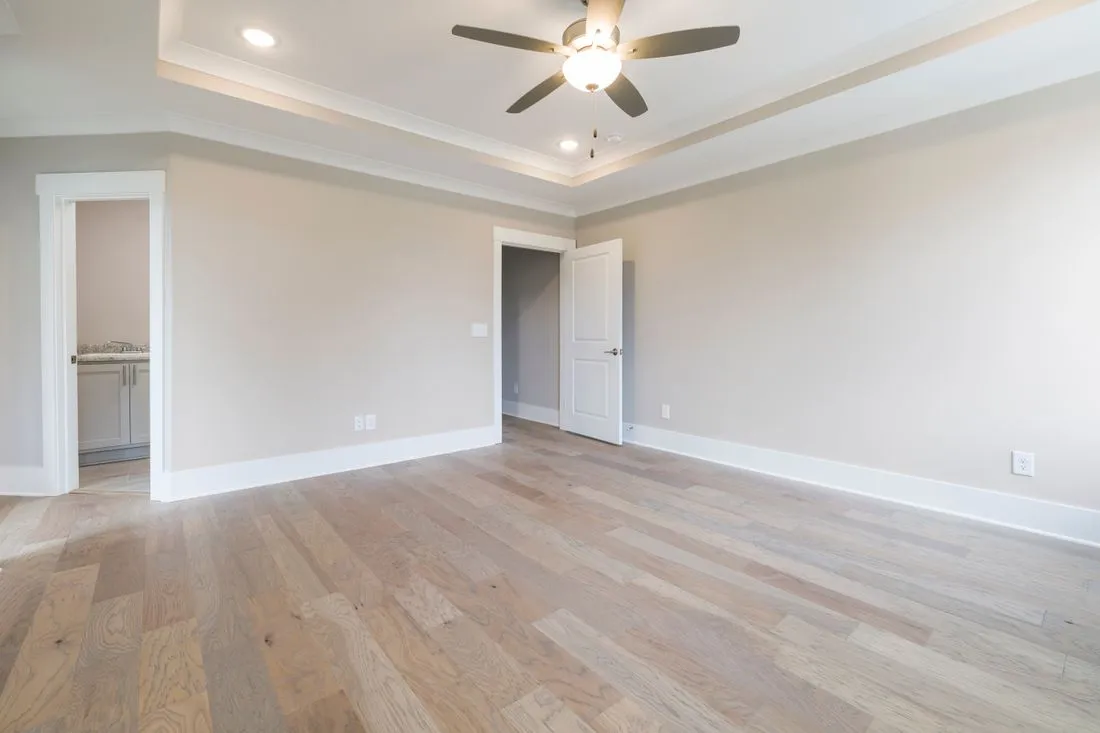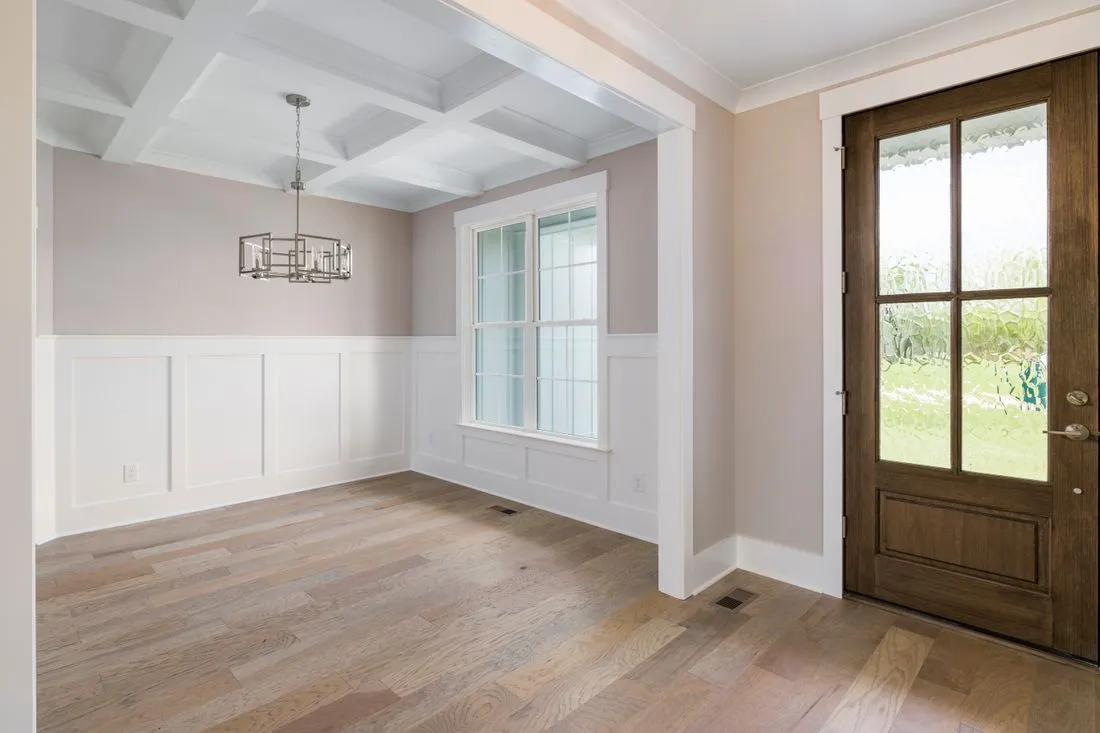
An entryway is a small room with a lot of moving parts. The front door sweeps across it, shoes collect at its edges, and a bag may land against the same patch of wall every afternoon. Before choosing decorative molding, spend a few days noticing those movements. They are a better starting point than a photograph of an empty entrance.
Mark the places that take the knocks
Look behind the door handle, beside the shoe storage and along the route from the door into the house. Scuffed paint can tell you where something repeatedly touches the wall. A new profile projecting into that route might make the collision worse. Moving the storage a little, choosing a shallower detail or improving a door stop may do more than putting elaborate trim over the damage.
A protective wall treatment also needs a suitable surface behind it. Do not enclose a damp patch or damaged wall because the new boards will hide it. Find out why the damage is there first. Wet shoes and umbrellas are reasons to choose finishes carefully, but they are not the same problem as moisture entering through a door or wall.
Keep the doorway working
Trace the full opening arc of the door. Check whether a bench, coat hook or thicker wall treatment would interfere with the handle. Include the thickness of anything that hangs on the hook, not just the hook itself. An entrance that works when empty can become awkward with a coat and shoulder bag in place.
The bottom edge deserves equal attention. A bulky new baseboard can prevent a shoe cabinet from sitting in its intended position. Some furniture is designed with rear clearance; other pieces need a different location. Do not remove a furniture safety attachment or push a unit forward into the walkway simply to preserve a decorative line.
Choose a finish you can live with
Deep grooves and narrow horizontal ledges collect dust. In a compact, heavily used entrance, a relatively simple profile can be easier to clean than several stacked pieces. Ask whether the intended coating is suitable for frequently handled trim and follow its curing guidance before regular wiping. A glossy surface is not automatically the most durable one.
Try a sample near the actual door in daylight and under the entrance light. If the door already has a strong panel pattern, the surrounding casing may only need to frame it. A quieter wall treatment can leave space for a mirror, hooks and the objects that inevitably arrive here. The finished entrance should make daily movement easier while giving those necessities a coherent setting.