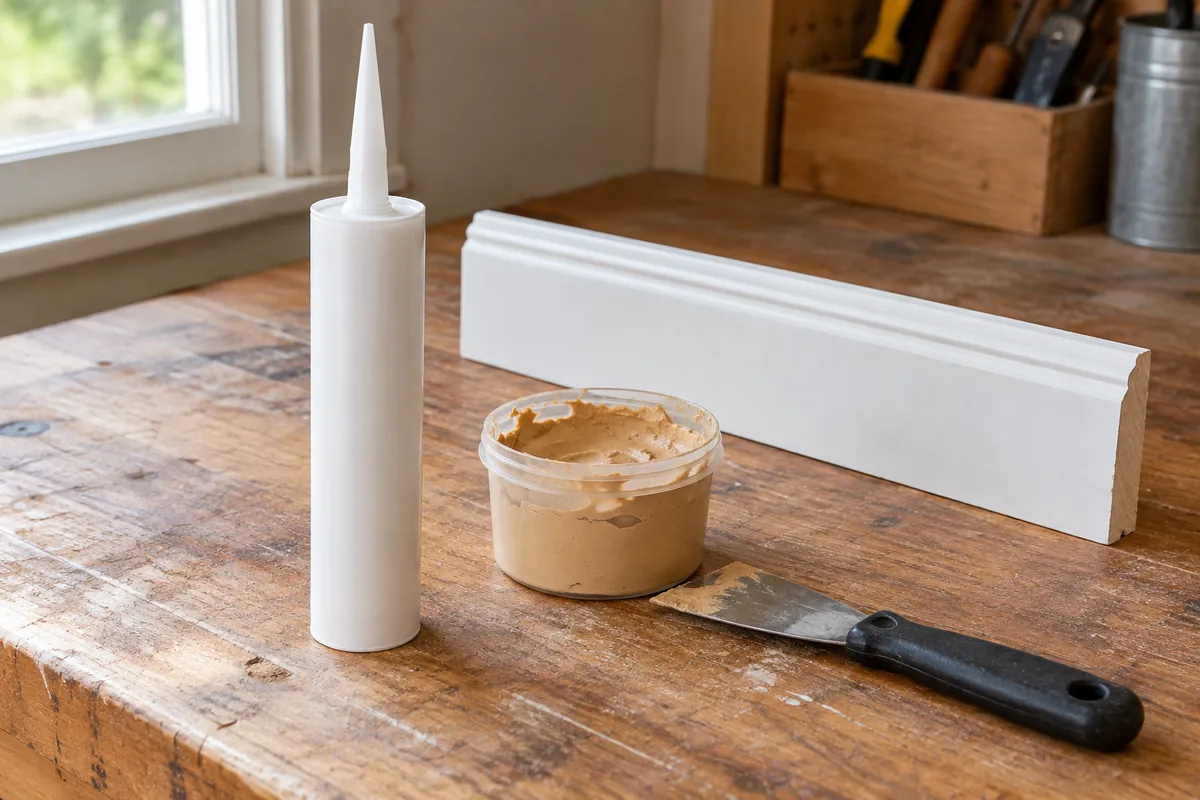
A line where trim meets a wall can look similar to a crack within the trim, but the repair materials have different jobs. Caulk is typically chosen for a joint that needs an appropriate degree of flexibility. Wood filler is generally used to restore a small missing area in a compatible rigid surface. Neither should be expected to correct an unstable installation.
Start by identifying what is moving and what is missing. A narrow wall-to-baseboard seam is a different situation from a nail depression in the front face. A split that opens when the board is pressed needs diagnosis before either product is applied.
Ask what the finished surface must do
For painted interior trim, verify that the chosen caulk is paintable and suitable for the two surfaces. Some sealants, including many silicone products, are not intended to receive ordinary paint. A label that promises water resistance does not answer the paintability question.
For a small dent or fastener hole, choose a filler compatible with the trim material and intended coating. A product suitable for a shallow wood repair may not suit a deep missing corner or a flexible synthetic molding. Check application thickness and preparation requirements rather than assuming a large repair is just several small repairs at once.
Stained trim adds another complication. A stainable filler may still absorb color differently from the surrounding wood. Try the complete finish on a sample before filling a prominent face.
Fit first, then finish
A wide or irregular joint may call for refitting the molding, correcting the backing or replacing a short piece. Filling it can leave a broad band with a different texture and a greater chance of visible movement. Caulk is a finishing detail, not a way to recreate a missing section of profile.
Likewise, a loose board should be secured using the correct system before cosmetic repair. If moisture is causing swelling or separation, resolve that source first. Covering the symptom can make the underlying condition harder to see.
Respect the product's drying, curing and painting instructions. These are separate from the time it takes the surface to stop feeling wet. Room conditions and the size of the application can affect the process.
Before working on old painted trim, establish whether lead precautions are required. Unknown or pre-1978 coatings should not be sanded or scraped casually. Once the substrate is safe and sound, a small test repair will tell you more than choosing the strongest-sounding product on the shelf.