Paint makes MDF and solid wood look remarkably alike from across a room. Their differences become more useful when you look at a cut end, a narrow projection or a place that gets bumped by shoes. Choose for those conditions before comparing the price of two white boards.
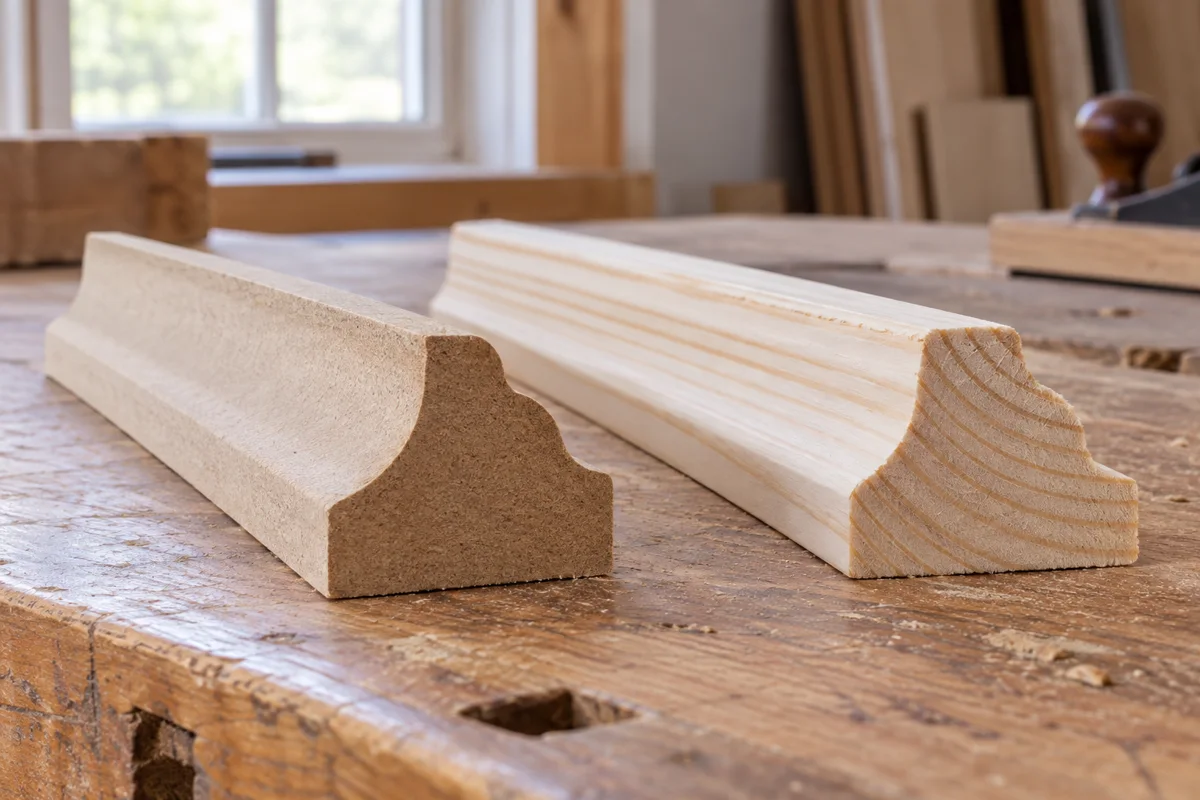
MDF is made from wood fibers and resin. Its uniform structure gives a painted profile a consistent appearance, without knots or visible grain. That makes it appealing for long, simple runs in dry rooms. A cut edge needs particular attention during finishing, however, and a damaged corner can become fuzzy rather than producing a clean wood chip.
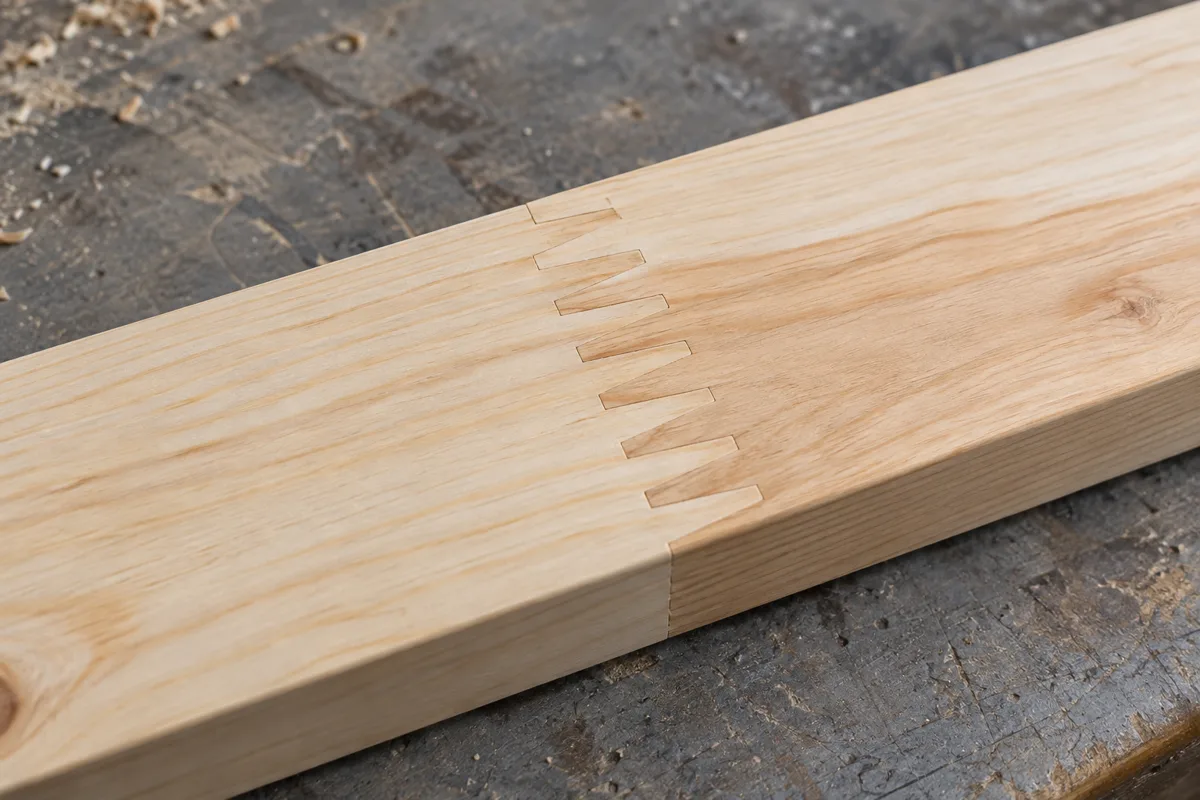
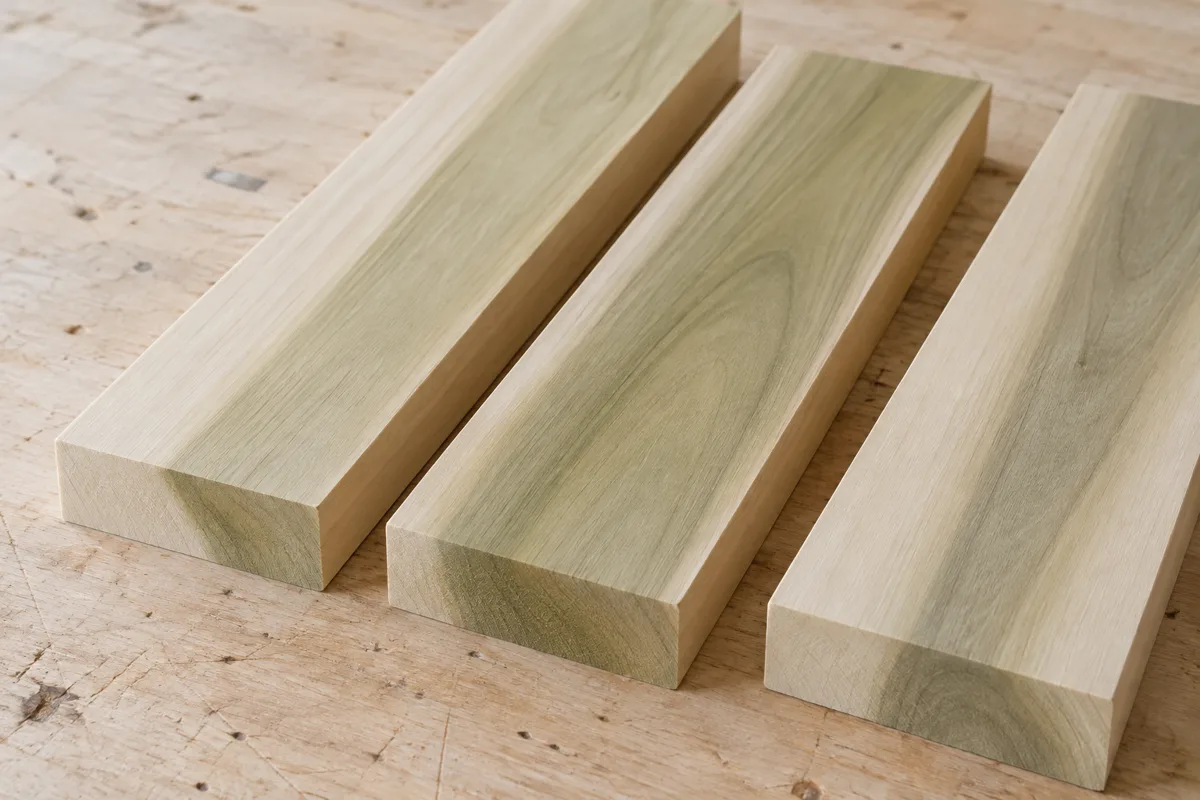
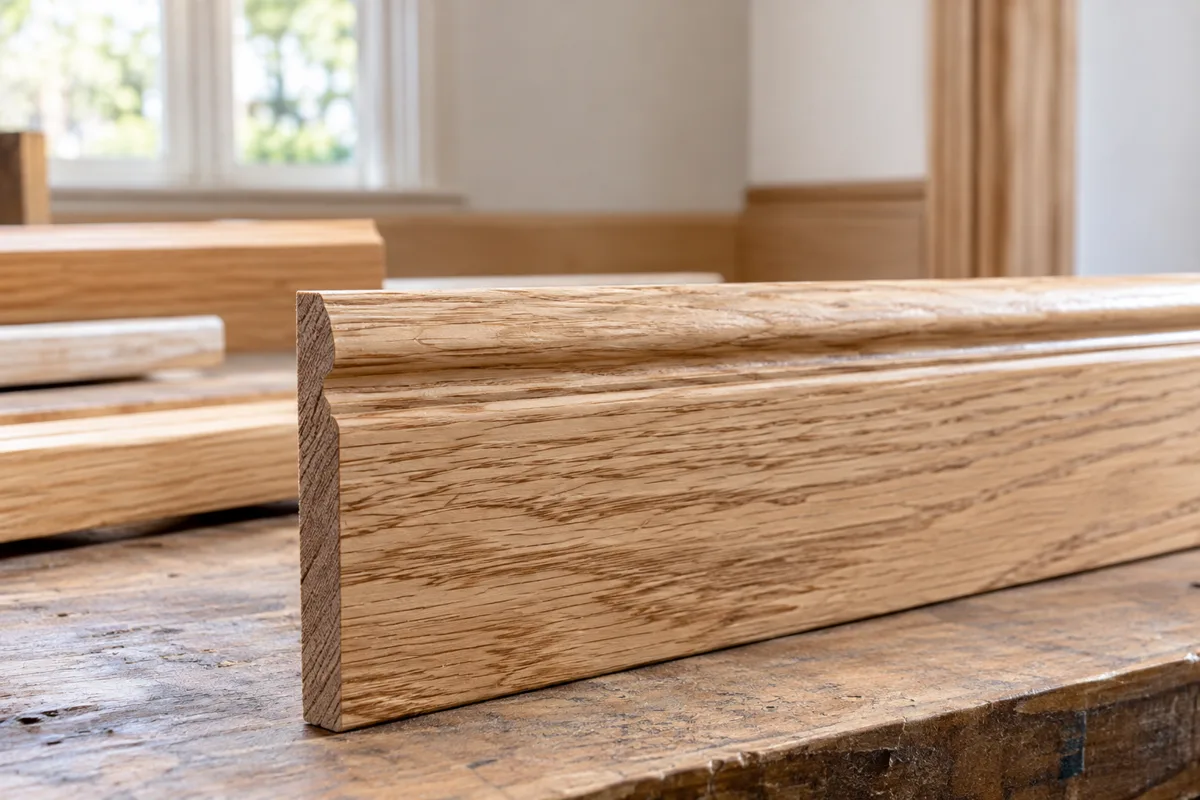
Solid wood has grain direction. A slim edge can split, a knot may need a suitable blocking primer, and individual boards can differ. Those are manageable characteristics, but they mean that two pieces labeled with the same species are not necessarily equally suitable for a prominent doorway. Look at the actual material you will receive.
Begin with the vulnerable places
A bedroom baseboard has a different job from trim beside a frequently wet entry. Standard MDF is a poor choice where repeated wetting is likely. Moisture-resistant grades have their own stated uses; the name does not make the finished assembly waterproof. Solid wood also needs protection from water and does not cure a leak behind a wall.
At a busy outside corner, compare the thickness remaining at the narrowest part of each profile. An elaborate shape with a delicate lip may be less forgiving than a simpler shape in either material. The profile and the material work together.
Compare finished costs
Include primer, edge preparation, finishing labor and the available lengths in your comparison. A less expensive board that creates several awkward joints may not be the less expensive installed result. Conversely, there is little reason to pay for attractive grain if you will conceal it and a suitable paint-grade product does the job.
Buy or request short samples of the actual profile. Put them beside the casing, look at how their edges meet, and ask the supplier which preparation and installation instructions apply. If you are mixing materials, confirm that the profile dimensions really align; matching names do not guarantee matching contours.
Consider a dry upstairs bedroom with simple painted baseboards and several short walls. A suitable MDF profile might deliver the appearance without paying for grain that will be hidden. Now move the same design to an entry where wet boots regularly touch the lower edge. The appearance requirement has not changed, but the exposure has. Material selection and the way the entry manages water need another look.
A third room might need a custom casing extension with a visible shaped edge. There, the ability to fit a sound solid-wood piece may matter more than the price difference per foot. These examples explain why choosing one material for every room can be less sensible than keeping the same visual profile while allowing the substrate to suit the detail.
Keep one labeled offcut after the project. A later repair is much easier when the person ordering replacement trim knows both the profile number and what lies beneath the paint.