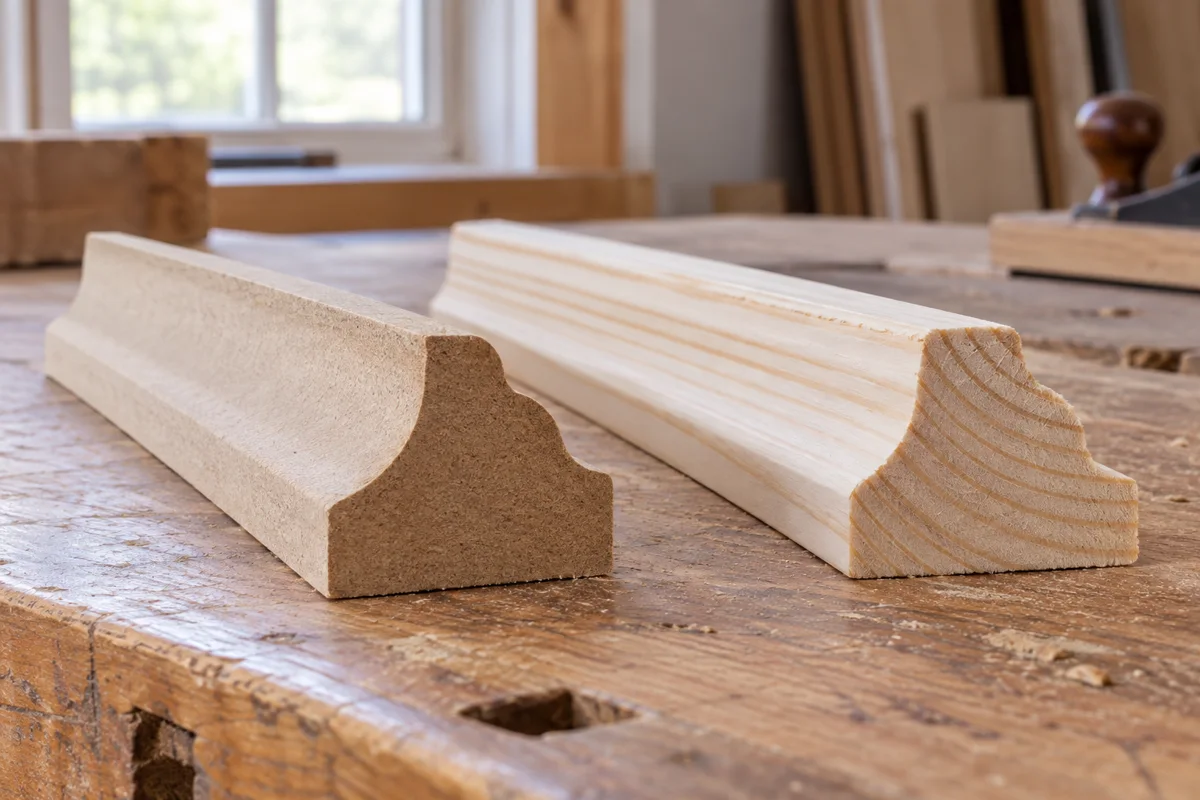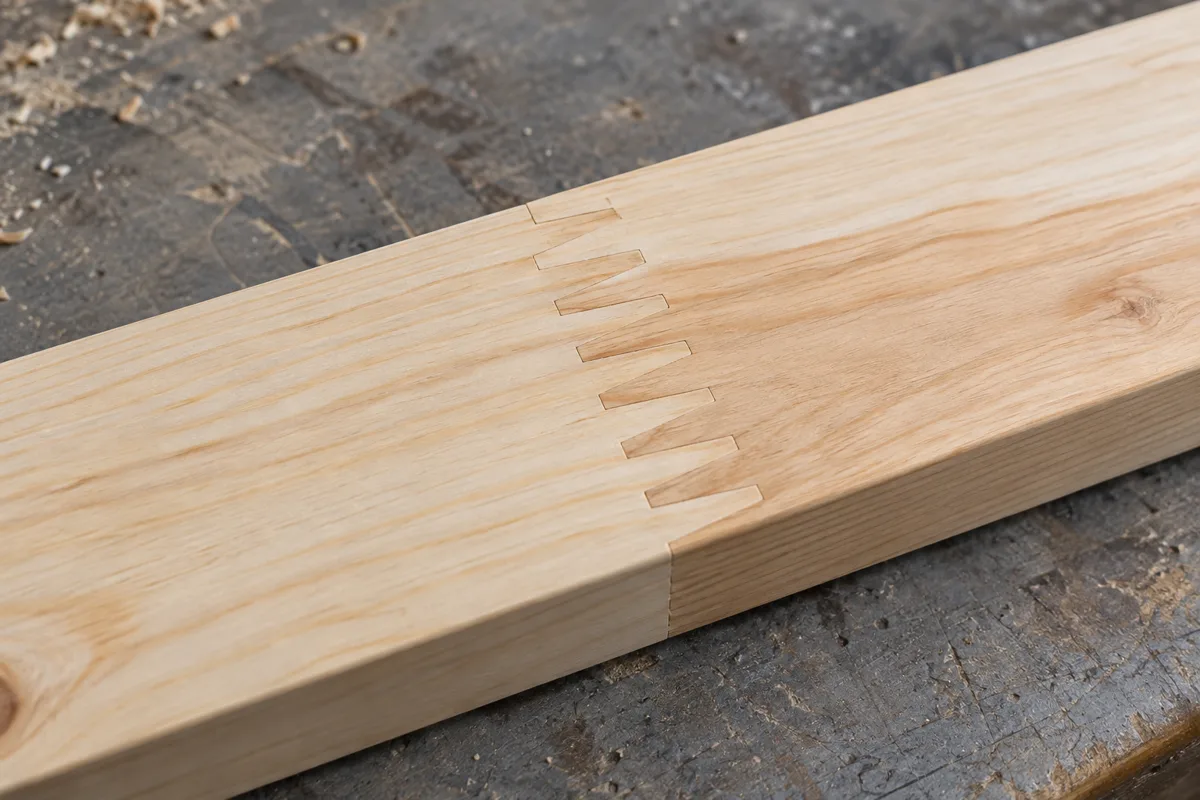
Look closely at an unpainted length of finger-jointed pine and you will see a series of interlocking ends. Short pieces of wood have been joined into a longer molding. This is a manufacturing method, not a decorative pattern intended to disappear under a transparent finish.
For painted interior trim, the result can be useful: longer runs without selecting a single clear board of the same length. It is still wood, though. Finger joints do not remove every knot, make the board immune to moisture, or guarantee that every piece in a delivery is straight.
Inspect the joint and the whole board
Check the visible face under light that falls along its length. A joint should not form an obvious step across the profile. Inspect the thin edges for damage and look for open seams. A tiny surface irregularity and a joint that is visibly opening are different problems; do not buy a failing joint with the assumption that paint will hold it together.
Also sight along the board without bending it into a better shape. Twist can be harder to accommodate than a gentle bow. If a piece only lies flat when you force both ends down, set it aside and compare another. The inspection is most useful before the material is cut, when exchange options are simplest.
A factory primer can conceal details, so feel for changes in the contour as well as looking for them. Do this carefully around unfinished edges, which may have splinters.
Decide how the finished run will read
Paint-grade finger-jointed trim is usually chosen for an opaque finish. Staining can reveal different grain directions and color between the joined sections. If a natural wood appearance is important, examine a finished sample rather than assuming that a dark stain will unify everything.
On an especially prominent wall, lay the pieces out before installation. This is a chance to put the cleanest lengths in the longest uninterrupted view and use suitable shorter sections where the room naturally breaks the run. It is not a reason to hide defective material inside the installation.
Store the delivery dry, flat and supported, and follow its conditioning instructions. A damp garage and a conditioned living room can be very different environments. Schedule delivery accordingly instead of treating acclimation as a fixed waiting period that solves all storage problems.
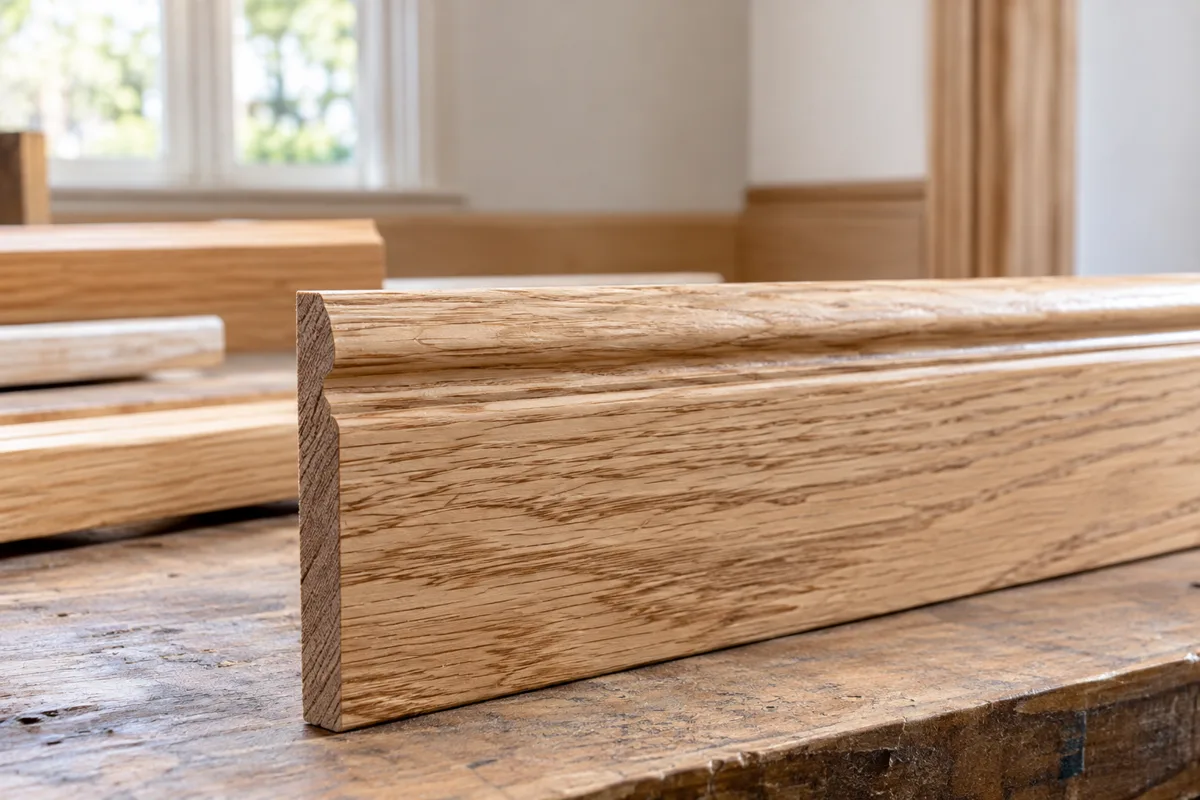
Finally, save the product label. “Pine baseboard” is not enough information for a close replacement match, especially where another manufacturer cuts a similarly named profile to slightly different dimensions.