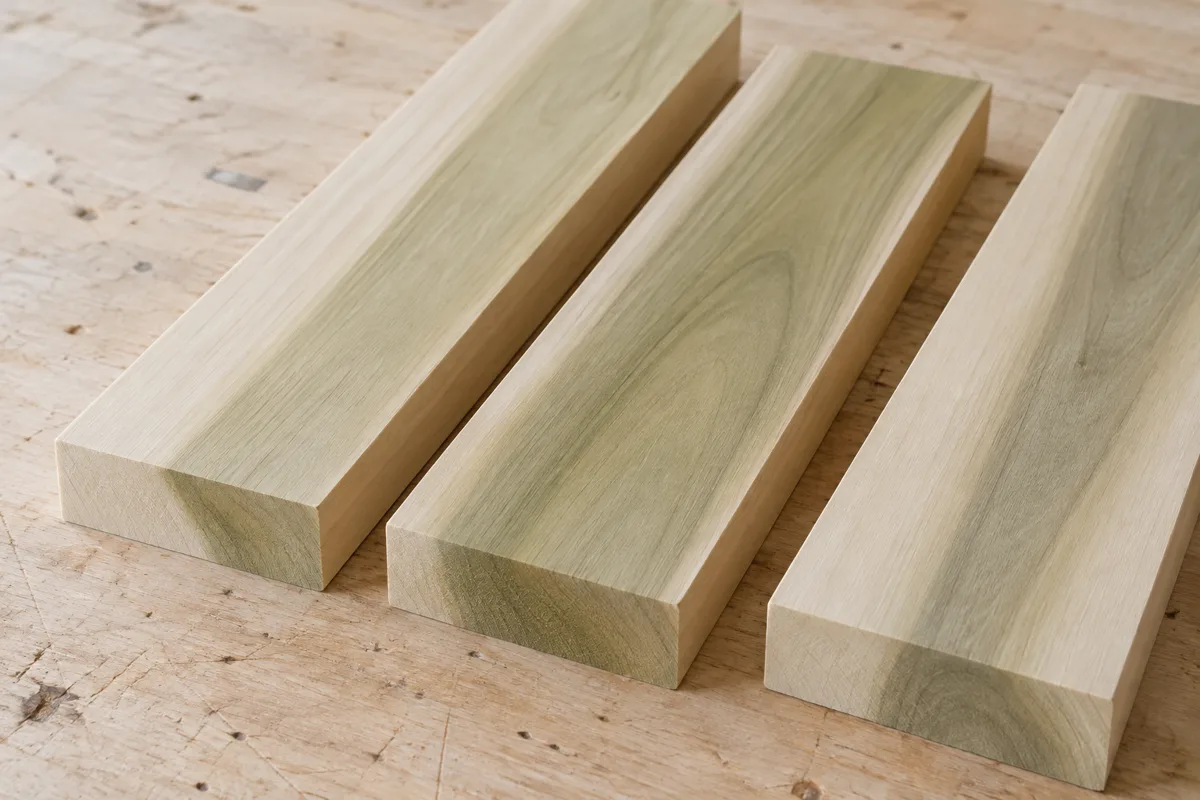
A greenish streak in a poplar board can look alarming if you are expecting pale, uniform lumber. For an opaque painted project, that natural variation is not automatically a defect. The questions are whether the board is sound, whether its shape suits the job, and whether the finish system will cover the underlying color evenly.
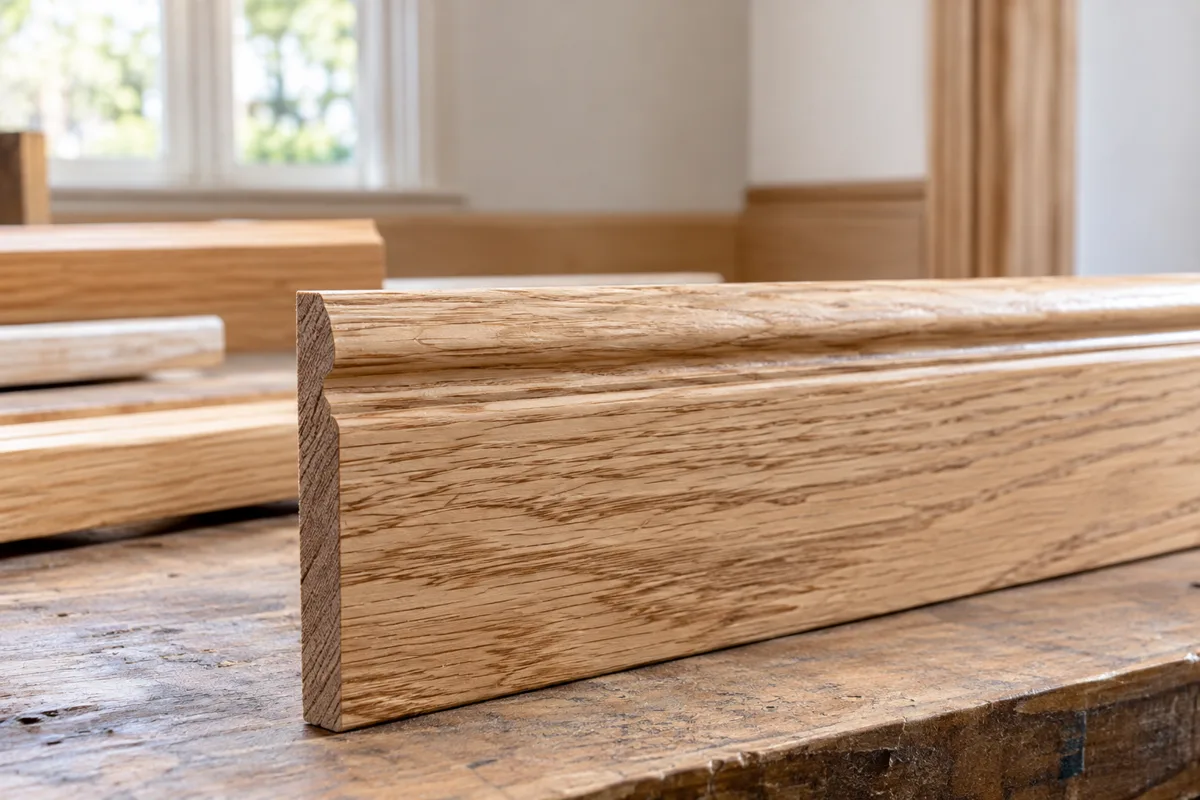
Poplar is often considered for painted millwork because it can provide a relatively understated grain. It is not a promise of a perfectly featureless surface. Grain, machining marks and the quality of preparation still show through a reflective finish, particularly when a window lights the molding from the side.
Where the solid-wood edge helps
Consider a doorway casing that ends at a visible outside edge, or a small custom piece that must be fitted to an unusual opening. A workable solid-wood blank can give the installer more options than a preformed product whose outer skin or thin detail cannot be altered easily. The benefit comes from the actual piece and the skills available, not from the species name alone.
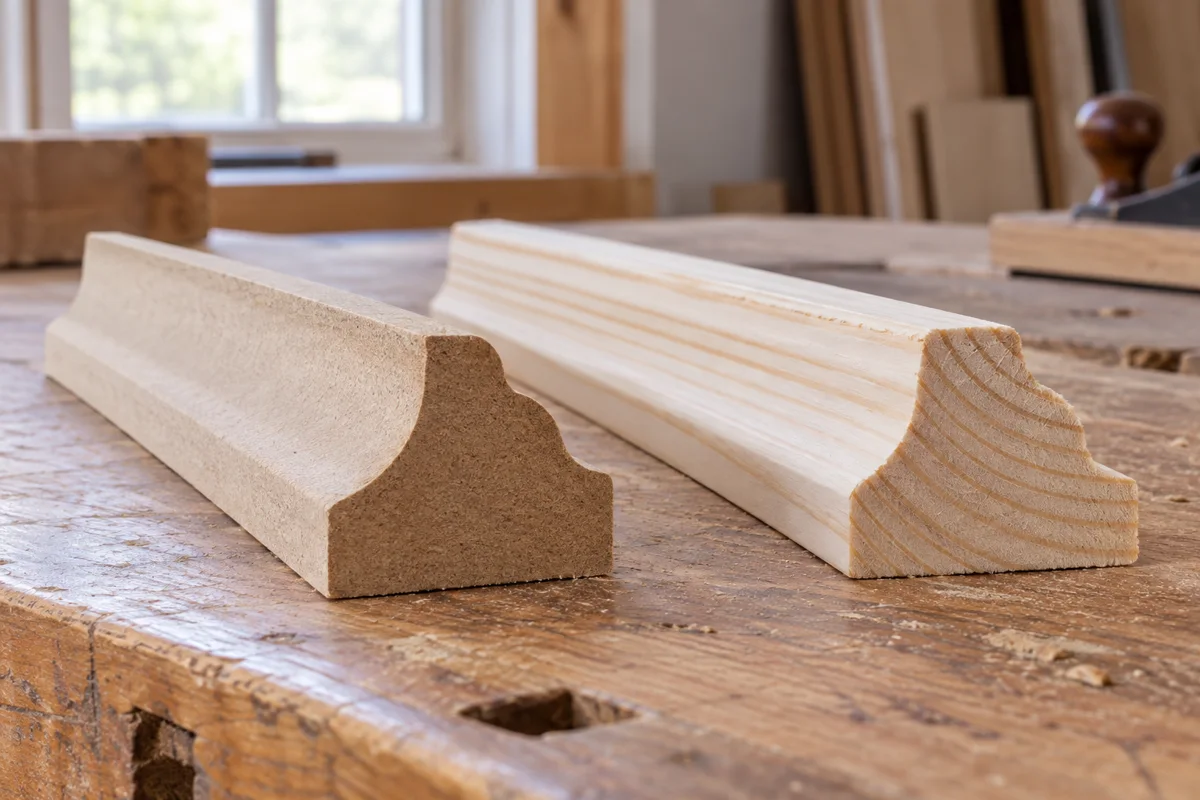
Check the narrowest portion of the profile. A thin tongue can still split. Examine the end grain, knot areas and any marks left by milling. Choose straight, sound stock instead of assuming that fastening will force an unsuitable piece into shape.
Do not skip the sample finish
Use an offcut from the delivery to try the complete primer and paint combination. Include a darker streak if the board has one. Let the coating reach the stage specified for evaluation before deciding whether coverage is adequate; wet paint is a poor judge of the final surface.
If the intention is to stain rather than paint, reconsider the choice with a sample in hand. Color variation can become more noticeable under transparent finishes. There is no universal stain color that makes every poplar board resemble another wood species.
Price the whole job. A custom poplar profile may be appealing but involve a minimum order or longer lead time. A stock paint-grade molding may fit the room just as well and be easier to replace later. Compare profile depth, available lengths and finishing work along with the material cost.
Once installed, painted poplar is still wood beneath a coating. Keep persistent moisture away, investigate a new stain rather than repeatedly painting over it, and record the exact profile and finish. That small record protects the investment better than relying on a memory of “the smooth white trim.”