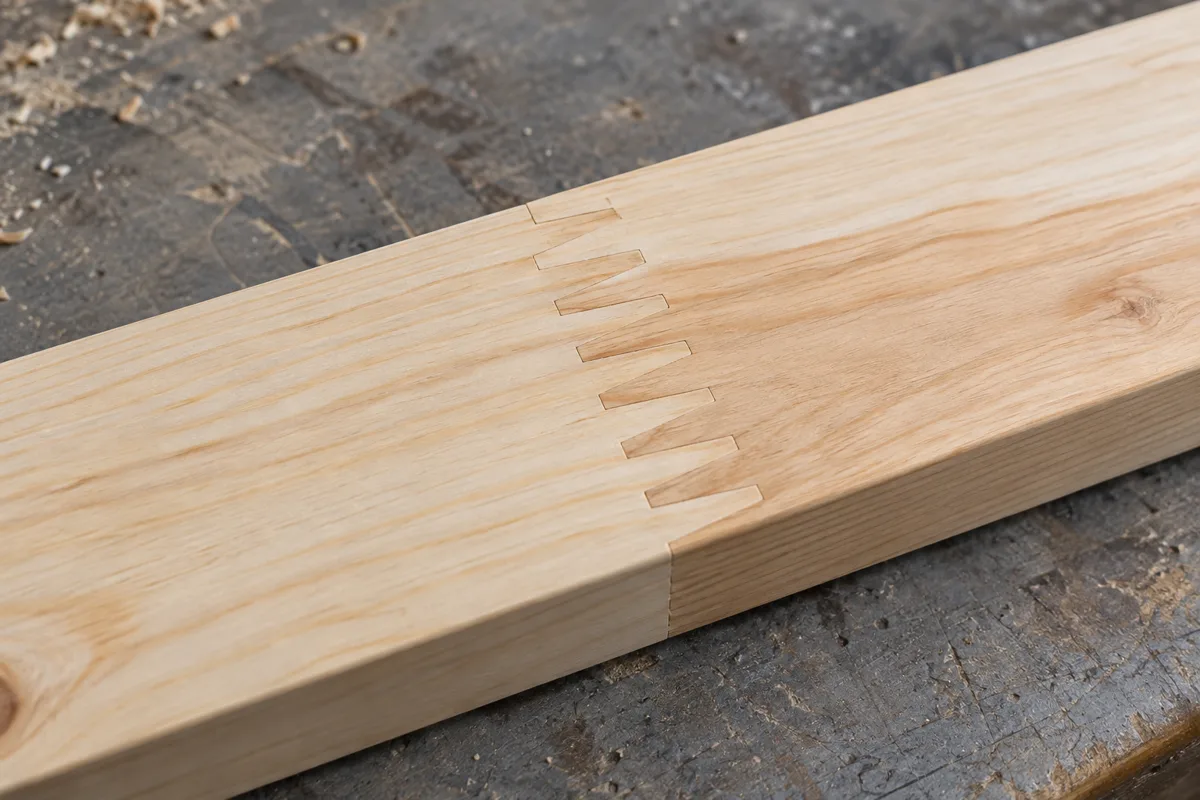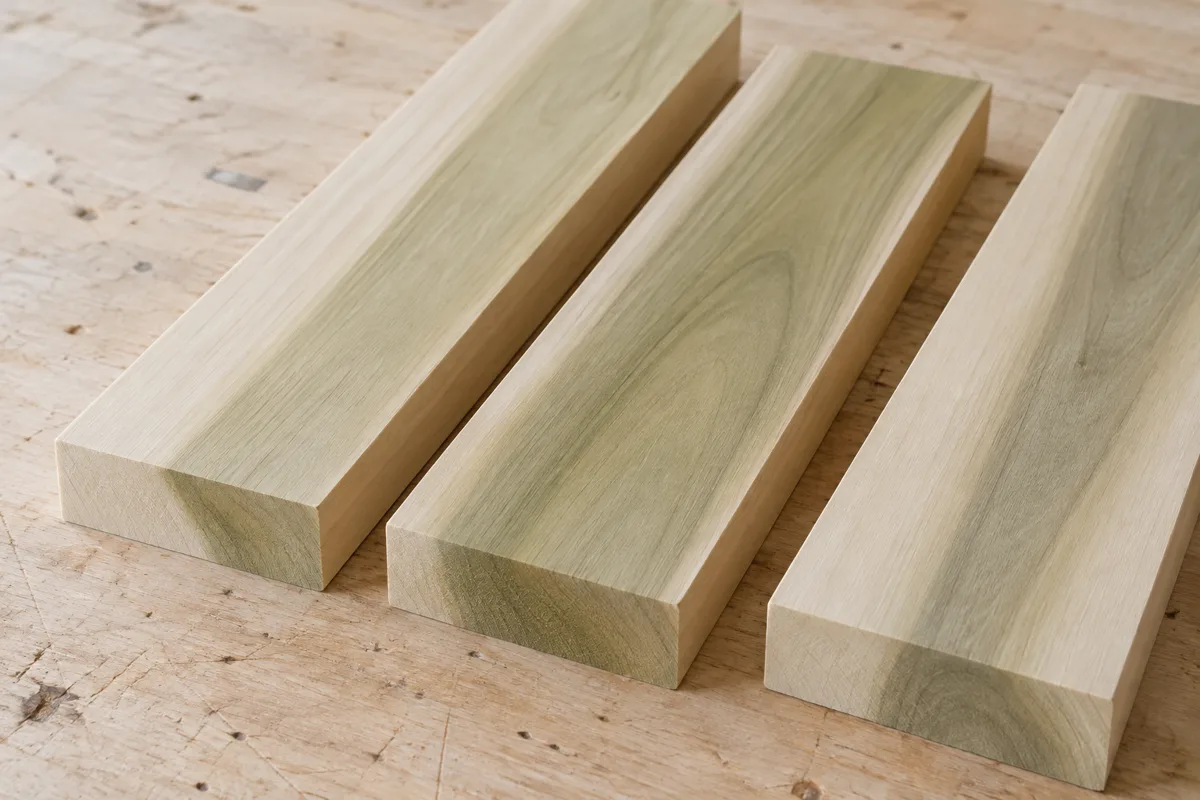
Oak trim is often chosen for the grain that a painted board would hide. That makes the selection process different. A dark color sample tells you only part of the story: broad sweeping grain, straighter lines and changes between pieces can remain visible through the same stain.
Before ordering, decide whether you want the trim to read as a continuous quiet border or as visibly individual pieces of wood. Neither is inherently better. The difficulty comes when a sample suggests one effect and the full delivery produces another.
Ask for more than one sample
A single short offcut cannot represent all the variation in a bundle. Look at several pieces, ideally from the actual product being supplied. Inspect long faces and cut ends. Ask whether the order has a particular species or grade designation rather than accepting “oak” as a complete specification.
Place samples vertically beside the doorway and horizontally along the floor. Grain that looks attractive on a table may become busy when repeated around several openings. Daylight also emphasizes surface texture differently from an overhead store light.
A clear finish or stain changes the appearance without making mismatched grain disappear. Prepare a sample using the intended finishing system and evaluate it beside flooring, doors and nearby furniture. Matching every wood exactly is not necessary, but the contrast should be a choice you can see before installation.
Plan the important joints
At a broad casing corner, adjoining pieces can draw attention to differences in grain and tone. Lay out the proposed combination before cutting. If a particular doorway is visible from the main entrance, reserve a well-matched set for it rather than selecting pieces at random as the work proceeds.
This does not mean discarding every board with character. A quieter length may suit a long eye-level run, while a more expressive piece can work where its grain is appreciated on its own. The installer needs enough suitable stock to make those choices without trying to salvage a poor cut.
Take care with expectations around repairs. A filler labeled stainable may not absorb color like oak. Test it on an offcut and include the clear coat, because a patch that seems close while bare can change after finishing.
Keep a finished reference piece away from prolonged sunlight and label its coating sequence. Wood in the room will age, so a future replacement may still need adjustment, but the original sample gives the finisher a useful starting point rather than a guess based on a photograph.