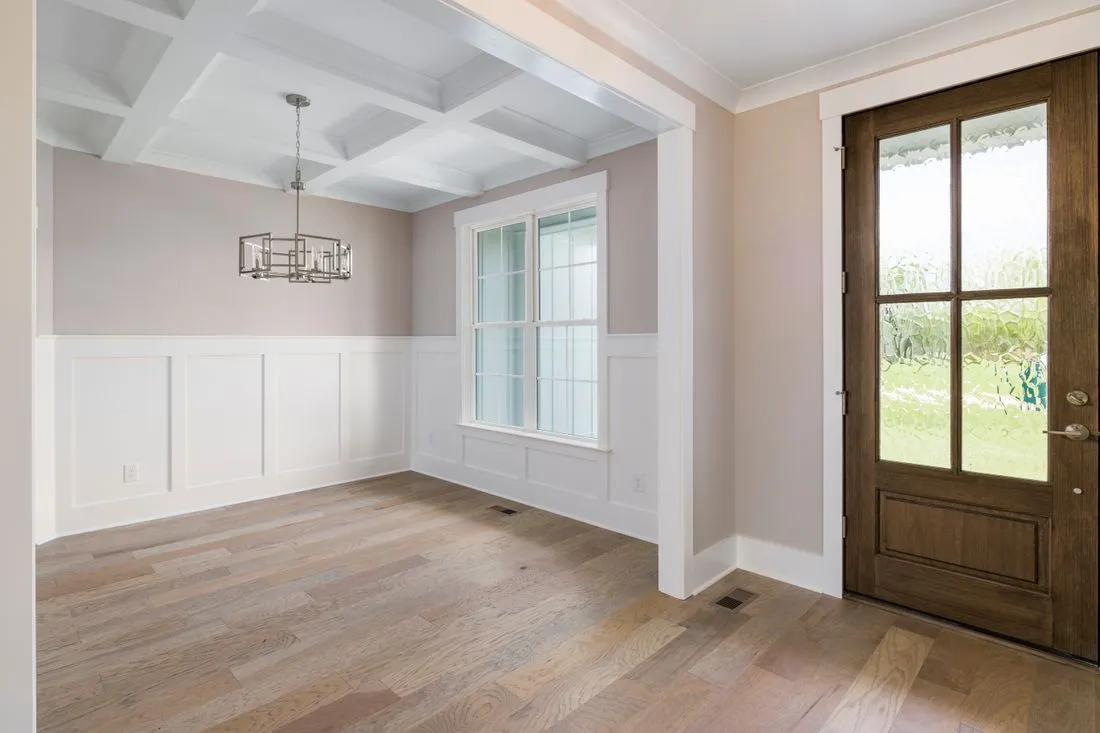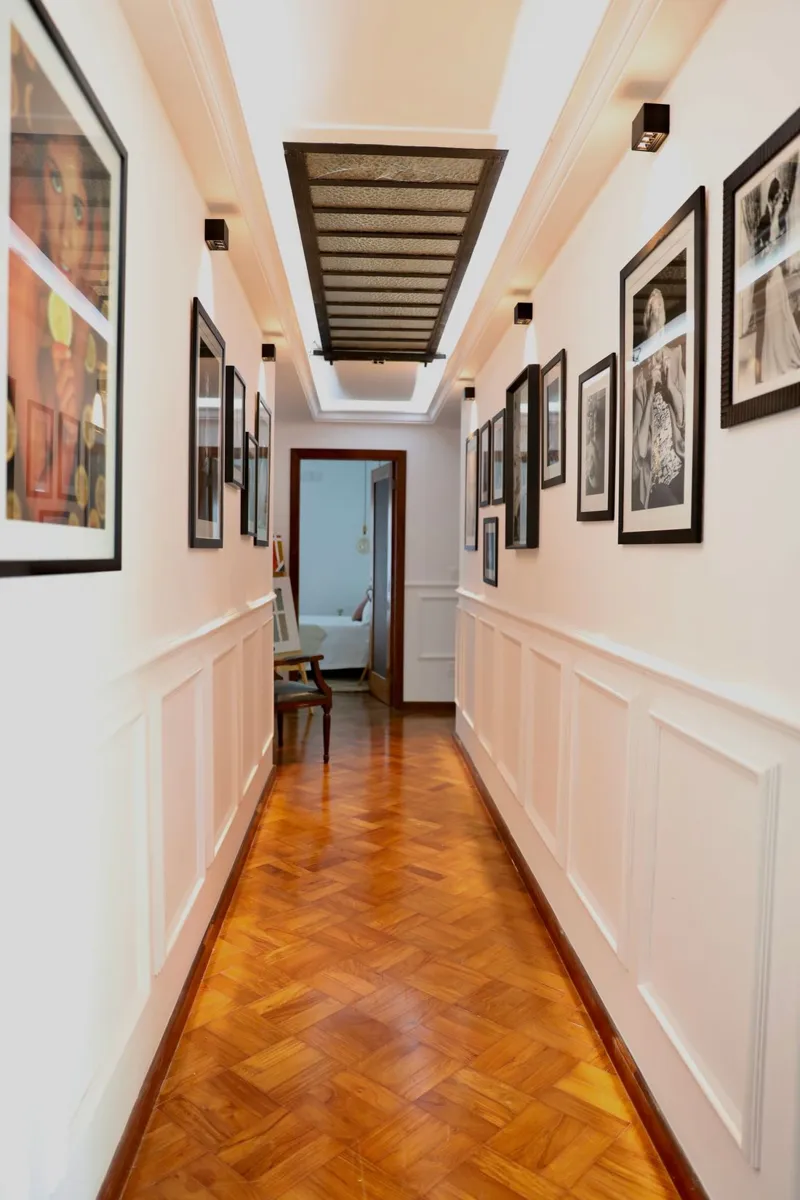
There may be three plausible places for a strong trim treatment in a living room: behind the sofa, around the window, or on the wall you see from the entrance. Choosing all three can leave the room with several competing centers. Choosing one gives the other woodwork a clearer supporting role.
Decide what the room is already doing
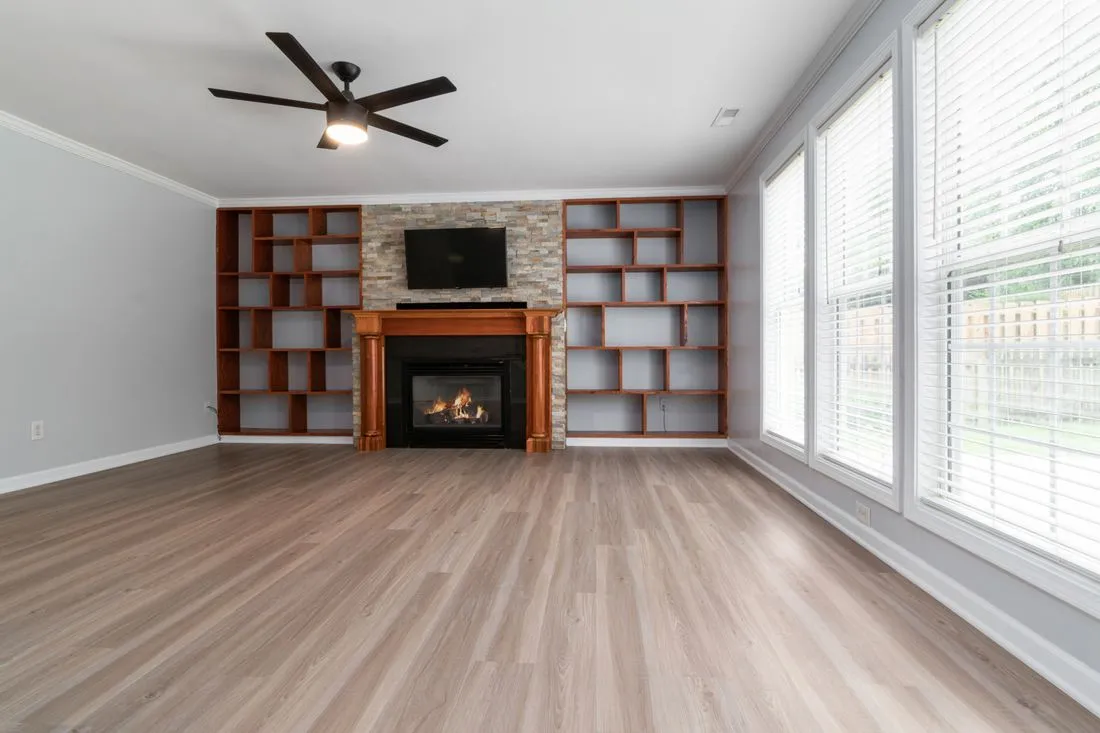
Make the first decision with the furniture in its usual arrangement. The largest uninterrupted wall is not necessarily the wall you notice most. A wide window, a substantial bookcase or an existing architectural feature may already hold attention. New molding can frame that feature, repeat one of its proportions or stay deliberately quiet beside it.
If there is a fireplace, keep decorative planning separate from assumptions about safe material placement. Appliance and fireplace requirements control where combustible materials may go. A design photograph does not establish the clearance for your installation. Resolve that constraint with the appropriate instructions and qualified help before drawing a surround.
Make a small hierarchy of details
A useful scheme might pair generous wall frames behind the sofa with simple door casings and a restrained baseboard. Another might give the window a substantial casing while leaving the walls plain. In either case, one detail does most of the visual work. The others share a color, edge shape or depth without needing to repeat every layer.
This is especially helpful in a room with patterned upholstery or a large collection of objects. The woodwork will remain when cushions, artwork and furniture change. Leaving some undecorated surface makes those future changes easier. It also means the room need not be perfectly styled for the architecture to make sense.
Judge the layout from a seat
The entrance view matters, but living rooms are mostly experienced sitting down. Tape the proposed panel edges and sit in the chairs you actually use. Does a horizontal line land awkwardly behind a lamp? Does the sofa conceal most of an expensive lower panel? Would a larger single frame be more legible than several small ones?
Take a photograph from each main seat, keeping the furniture in place. The images can reveal an overworked corner that was easy to overlook while standing close to the wall. If two treatments compete, simplify the one with less connection to how the room is used.
Once the main feature is settled, record its relationship to the surrounding trim. Consistent finishing and well-resolved ends usually contribute more than adding another decorative strip. Let the focal treatment have enough plain space around it to be seen.