The wall opposite the bed is sometimes a better place to begin a bedroom trim plan than the wall behind it. It is the surface you may look at for longest, and it often contains several awkward elements: a closet, a door and perhaps a dresser. A quiet treatment there can make a more noticeable difference than an elaborate feature hidden behind a tall headboard.
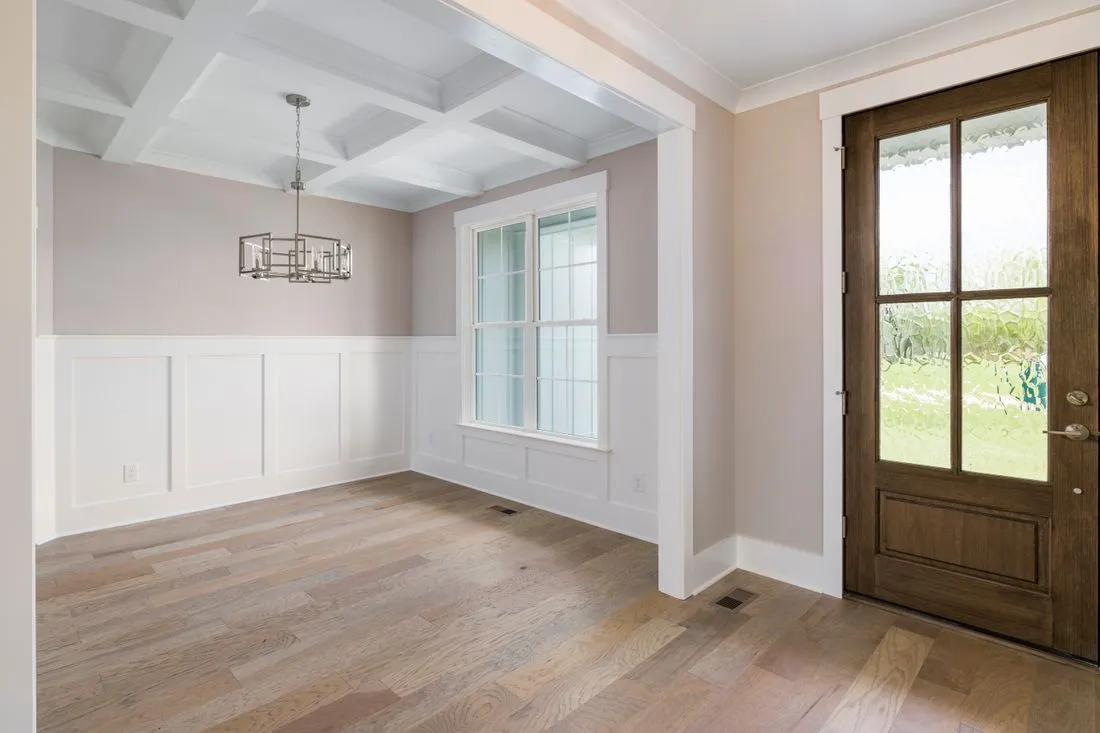
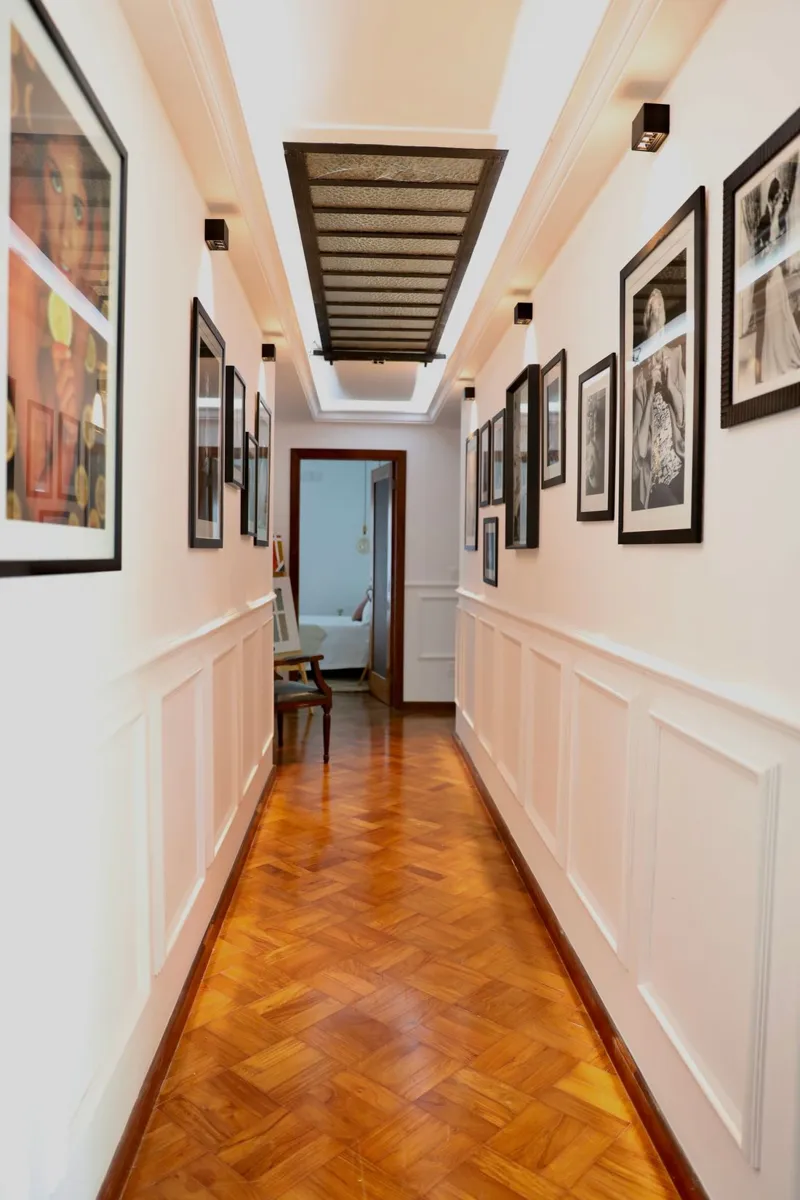
Quiet does not have to mean plain white or no ornament. Repetition, restraint and well-chosen proportions matter more than a particular color. Dark painted trim can feel settled when its lines are consistent; pale trim can feel fussy when too many unrelated profiles meet.
Mark the bed, bedside tables and dresser on an elevation of the wall. Include the height of the headboard rather than just the mattress. If a panel frame is mostly hidden, decide whether it still serves the layout or whether the spacing should respond to the visible area. Avoid creating a composition that only works with the bed removed.
Leave room for sockets, switches and lamps. A decorative frame positioned directly behind a bedside lamp can create several overlapping outlines. Moving the frame or simplifying that section may help. Changes involving electrical boxes or wiring belong with a qualified electrician; trim should not conceal access to them.
Bedrooms often use lamps rather than bright overhead light. A lamp close to a wall sends light across the surface, making deeper molding cast distinct shadows. Test an actual profile offcut near the planned lighting. A shallow frame that seems almost invisible by day may provide plenty of detail in the evening.
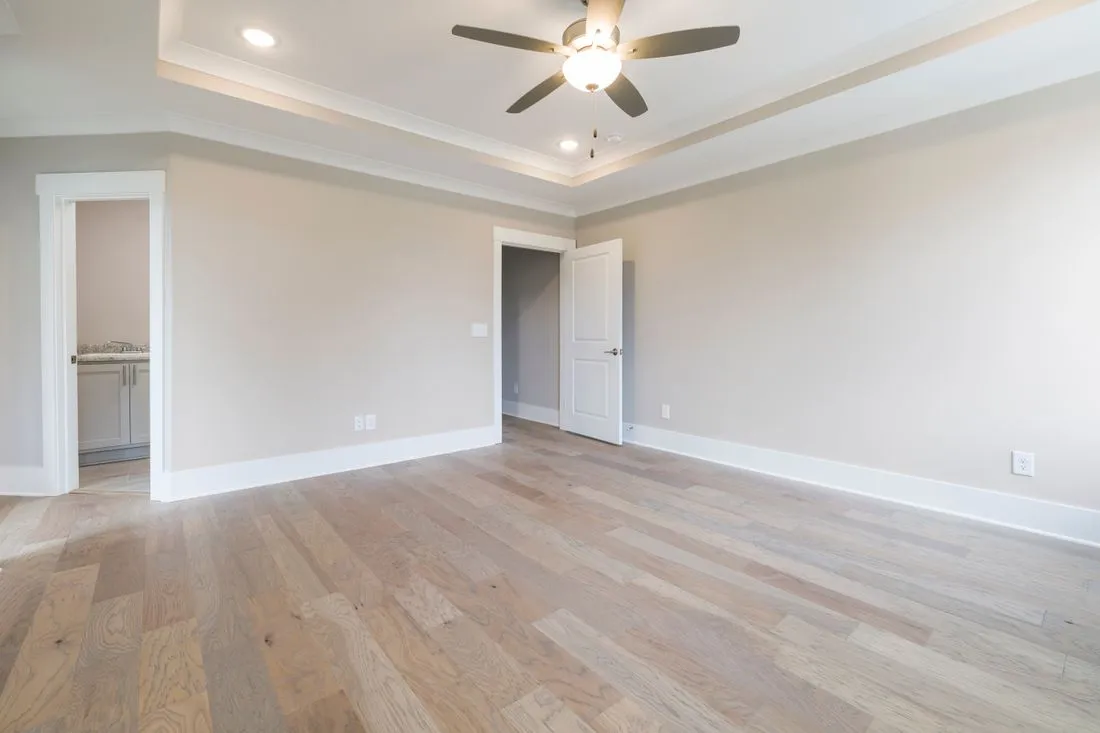
Closet doors add another set of lines. If they are already paneled, a simple surrounding casing can stop that part of the room becoming crowded. In a bedroom with several doorways, consistent paint and casing profiles may produce a calmer result than adding more wall decoration.
Before buying material, remove one element from the proposed scheme on paper. Try the bed wall without the extra horizontal band, or the closet wall without small frames between openings. If the room still feels complete, that piece may be unnecessary. The aim is woodwork that belongs to the room even when the bed is unmade and the reading lamp is the only light on.