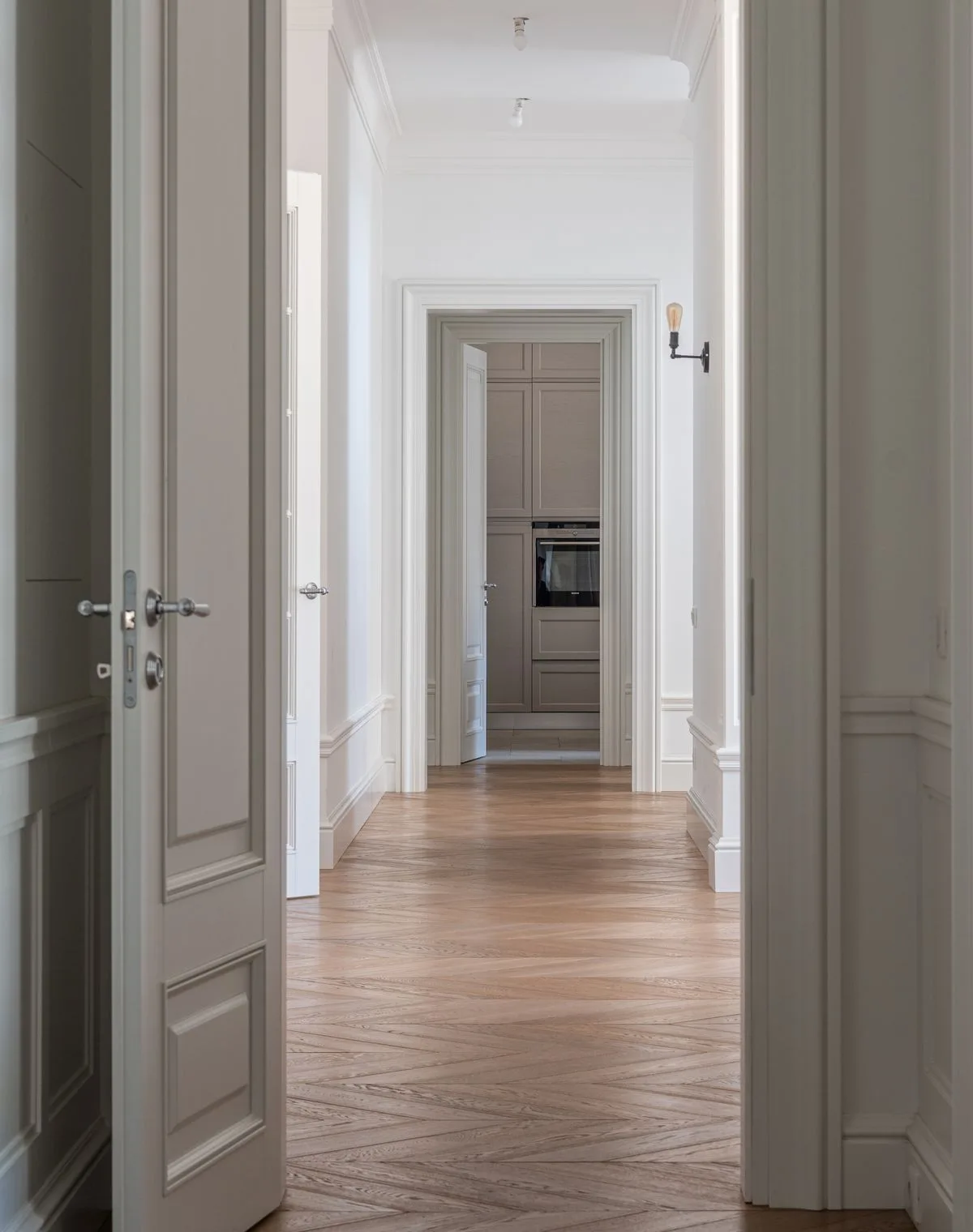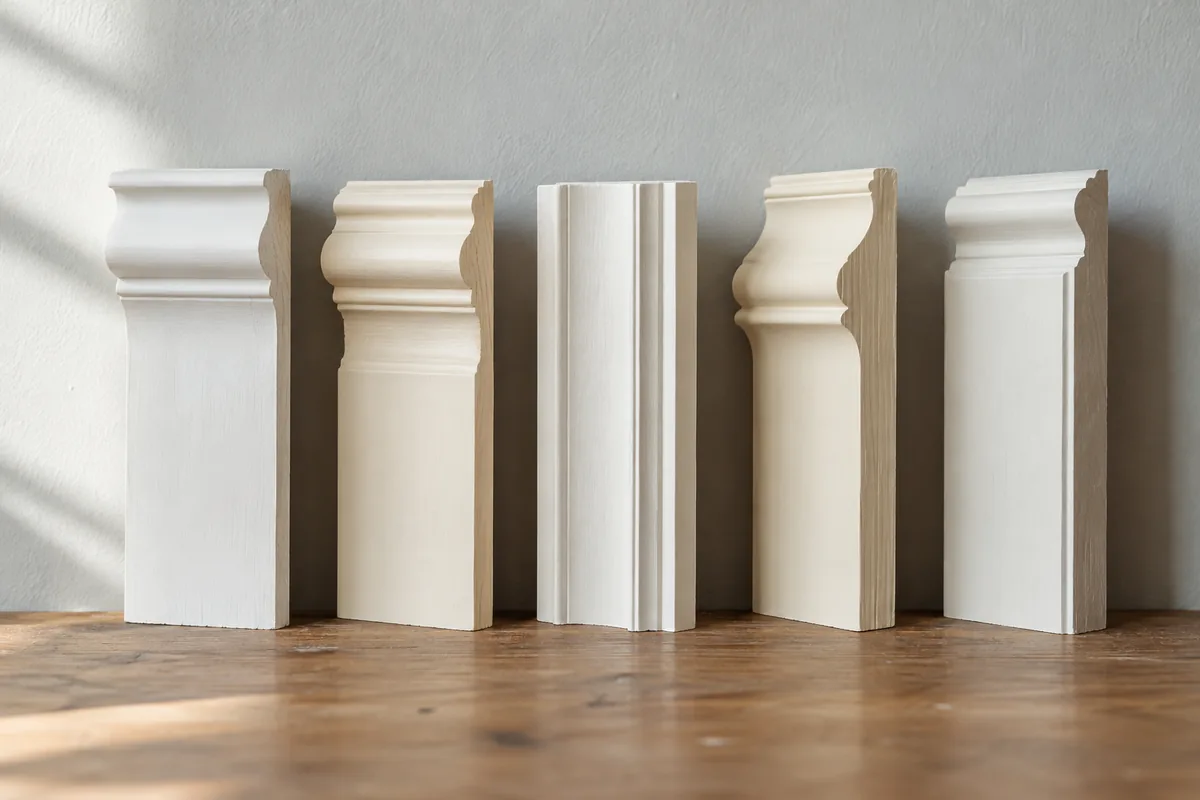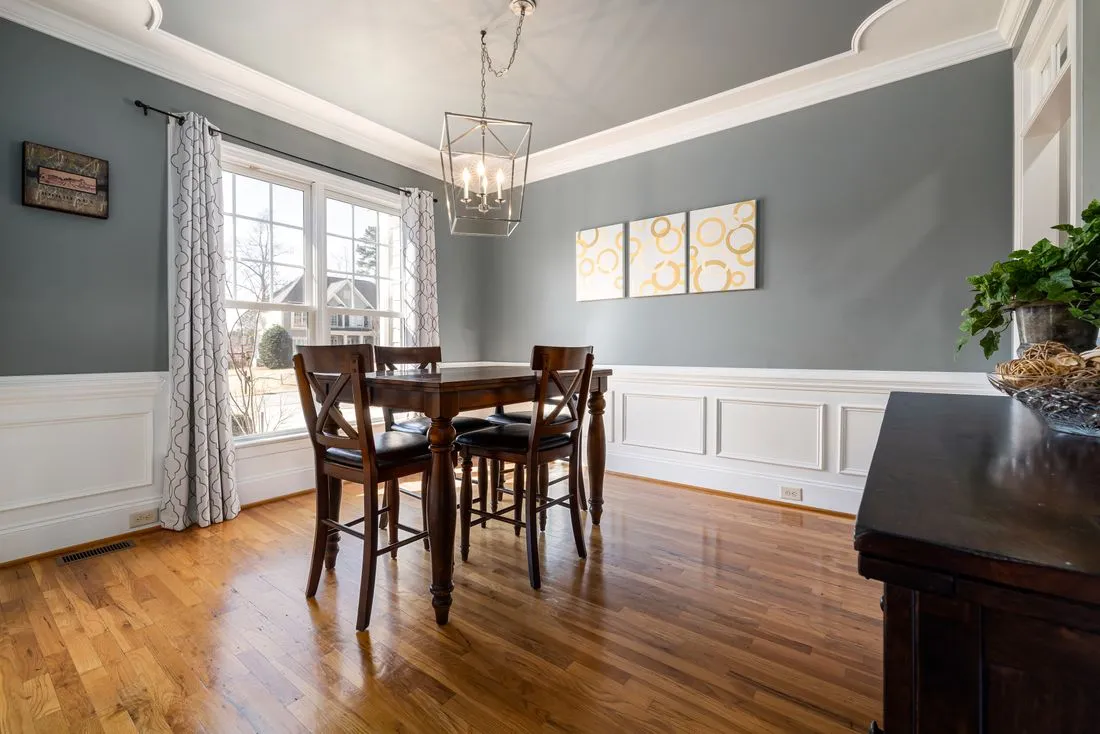
Painting the walls and trim the same color does not make the trim disappear. Raised profiles still cast shadows, and different surfaces can reflect light differently. The effect is often a room with fewer contrasting outlines, rather than a flat surface with no detail.
Decide what should become quieter. A small room with many doors may benefit from less contrast around the openings. An ornate profile may remain expressive even in a single color. A very simple flat casing can blend more closely with the wall.
Same color does not require the same product
Wall and trim coatings have different performance demands. Choose suitable products for each surface rather than using leftover wall paint everywhere solely to keep the formula identical. Confirm how the intended color appears in both products and sheens.
A higher-sheen trim can catch light while sharing the wall's color. A closer sheen match can produce a softer distinction. Neither result is automatic: the profile, room lighting and quality of preparation all affect what remains visible.
Make a sample that includes the wall surface and a short molding piece. View it from the doorway and under evening light. A paint card cannot show the way light travels across the two planes.
Decide the boundaries beyond the wall
Doors, window frames, ceilings and built-ins need their own decisions. If the casing shares the wall color but the door remains bright white, the opening may still become a strong focal point. That can be desirable, but it is different from a fully unified treatment.
At a doorway between rooms, plan where one color stops and the other begins. Use a consistent, intentional boundary that respects the door assembly. Avoid an improvised change halfway across a visible trim face.
Surface defects do not vanish simply because contrast is reduced. A glossy ridge, poorly filled hole or uneven joint can remain conspicuous under side light. Prepare the trim for its chosen coating, with appropriate lead precautions before disturbing old or uncertain finishes.
Consider maintenance too. A wall scuff and a trim impact may need different repair products even though both are painted the same color. Keep separate labels for the coatings and record which surface receives each one.
The strongest version of this approach is deliberate about what stays visible. Let the molding's shape provide the detail, use compatible coatings for the different jobs, and allow color to connect the surfaces without pretending that they are all the same material.