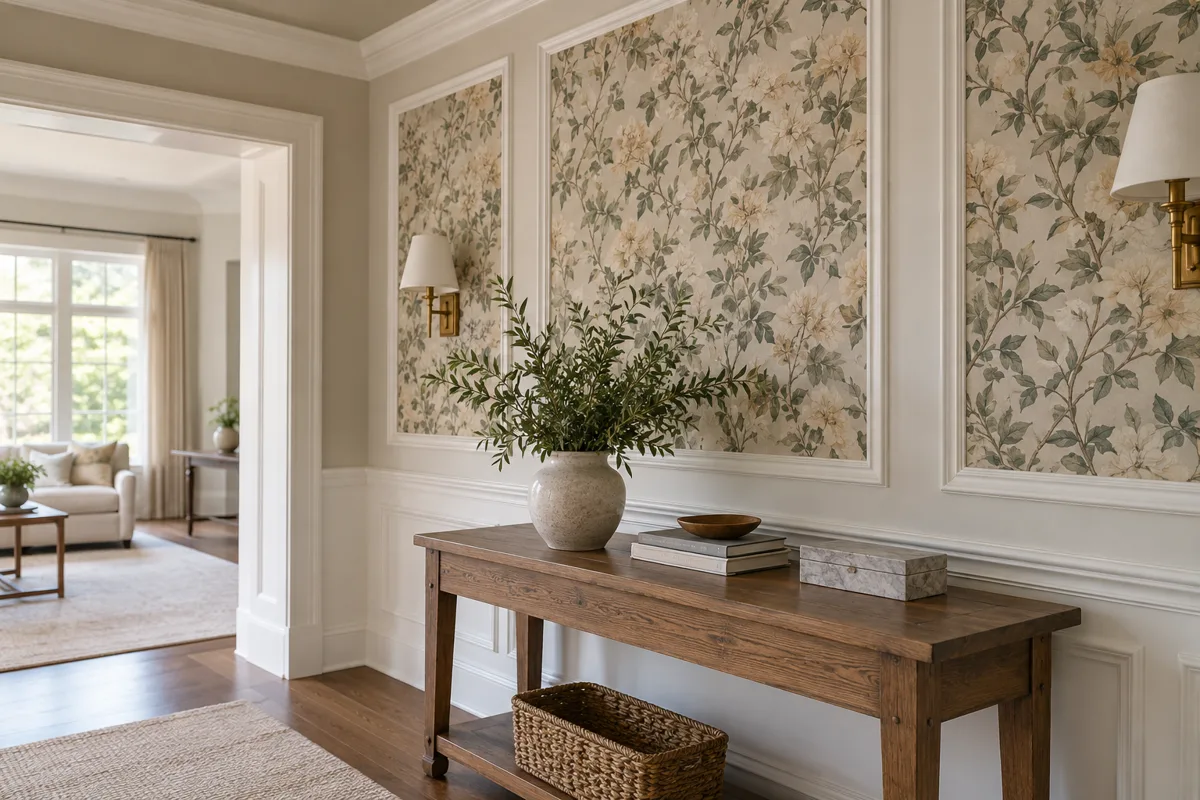
Wallpaper inside molding frames can introduce pattern without covering an entire wall. The frame gives the paper a clear boundary, but it also makes the placement of each motif more noticeable. A bird, flower, or geometric repeat that lands awkwardly at the edge may look cut off rather than intentionally cropped.
Choose the paper and the frame layout together. A large repeat needs a larger visible field than a small all-over texture. Ordering a favorite wallpaper after the rectangles are installed can leave no good place for the main motif.
Work with the visible opening
Measure the clear area inside the molding, not the frame's outside dimensions. That is the space the pattern will occupy. If the paper continues behind part of the trim in the selected assembly, account for that separately in the installation plan.
Use a scaled image or actual sample to test the pattern. For a prominent motif, decide whether it should center in each insert, repeat continuously across the wall, or vary deliberately from panel to panel. These choices have different material requirements.
A continuous pattern interrupted by molding can be attractive, but it needs planning across all frames before the first piece is hung. Repeating the same centered motif in every panel creates a more formal rhythm. Neither should be left to chance at the cutting table.
Budget for the repeat
Do not estimate wallpaper only by adding the visible square footage of the inserts. Pattern matching, trimming, panel arrangement, and the manufacturer's roll dimensions affect what must be purchased. A paperhanger or supplier can help calculate the actual quantity from the chosen layout.
Keep a spare matching piece where possible for later repair. Record the product and batch information, because a future roll may not match the original color exactly.
The substrate and adhesive must suit the specific wallpaper. Do not assume a trim frame makes an unsuitable or damp wall acceptable. The surface inside each rectangle is still a wallpaper installation and needs proper preparation.
Consider the molding's profile and paint color as part of the pattern. A very busy border around highly detailed paper can compete with the image. A simpler frame often gives the insert a clearer role.
Before committing, finish one full-size sample or a representative test panel. View it from across the room and beside the planned furniture. The paper should look composed within the frame, not merely confined by it.