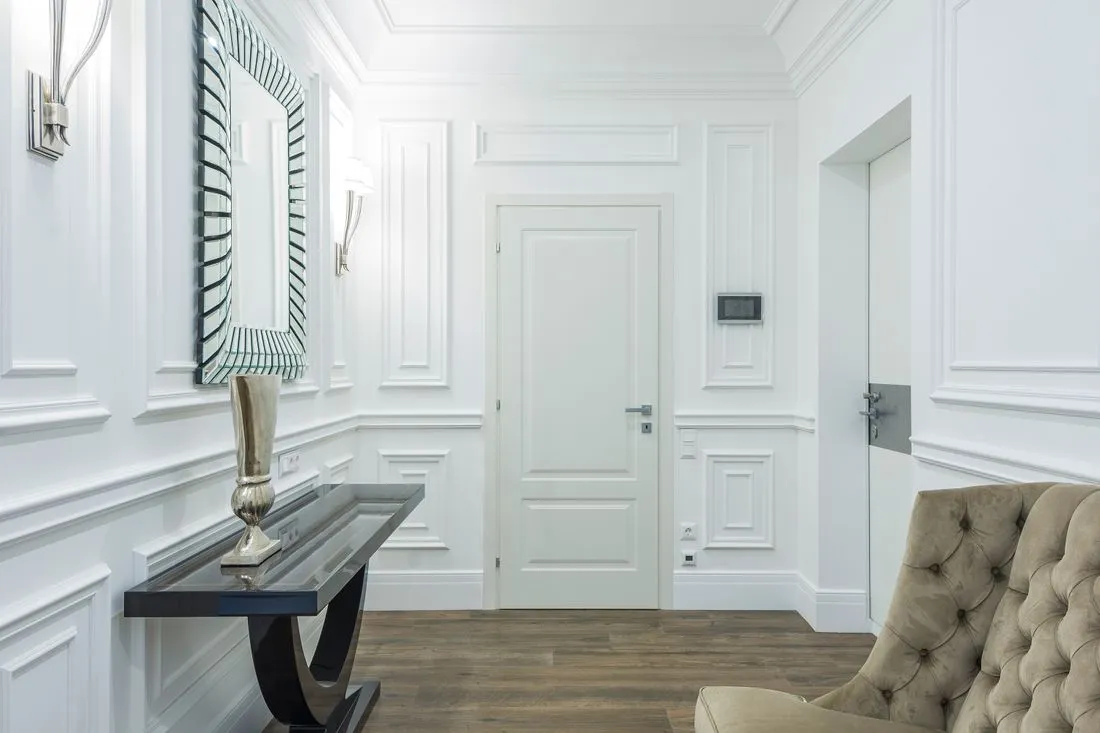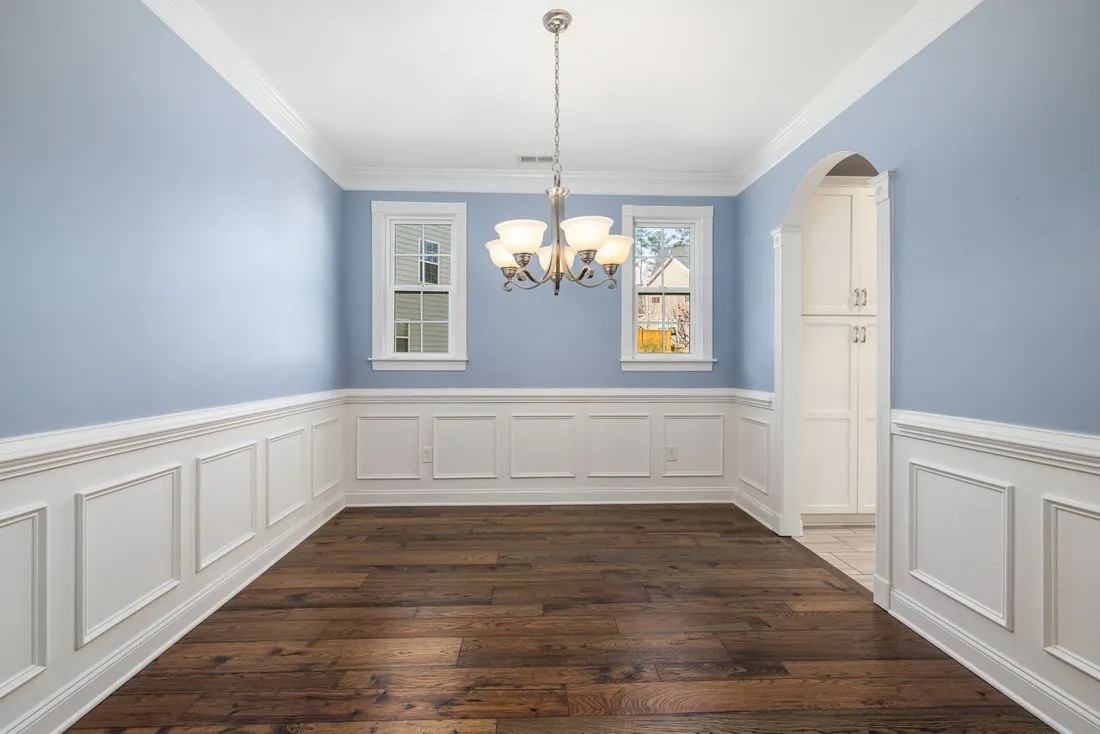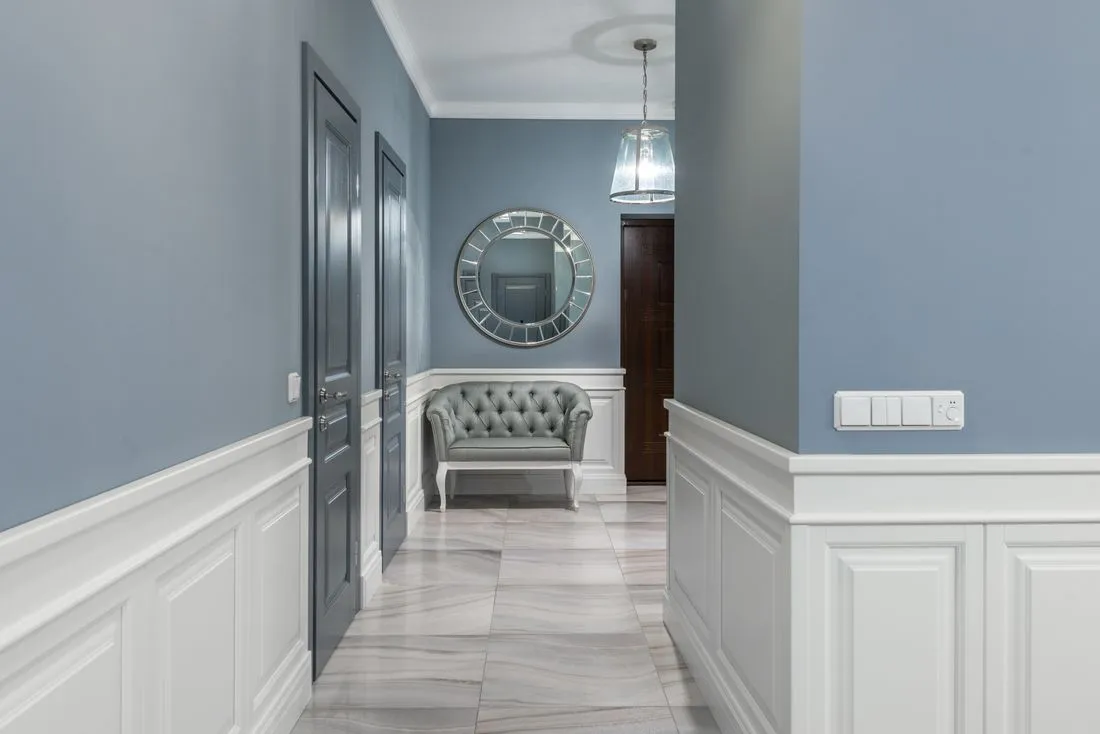
Outside corners show both the face and the edge of wall paneling. They are also vulnerable to everyday knocks. A paneling plan that includes only the flat walls leaves one of its most visible details undecided.
The material determines which options are available. Applied molding on drywall, sheet paneling, individual boards, and manufactured slat panels do not share one universal corner treatment. Check the product's intended edge components and installation guidance before inventing a cover strip.
A corner piece can make a clear vertical boundary, but its width and projection should relate to the rest of the wall. An oversized angle trim may be durable yet look unrelated to fine picture-frame molding. A very thin edge may look tidy but leave a vulnerable substrate exposed.
Draw the corner in plan
A top-down sketch shows how the two wall faces meet and where the finishing pieces overlap. Include every backing layer. This helps prevent one side from appearing deeper than the other simply because the layers were counted differently.
For patterned paneling, decide where the repeat ends. A very narrow final board beside a broad corner piece can look accidental. Adjusting the starting position of the wall pattern may produce a better endpoint without adding more trim.
Horizontal rails and caps need to turn the corner as well. Their joint should look continuous from both approaches. Check the upper surface and the underside, where small mismatches can remain visible even after the face is painted.
Consider circulation. A projecting corner cap in a narrow hallway is not merely a decorative choice; it occupies space people pass close to. Keep the detail appropriate to the location and avoid sharp, fragile projections.
Sample the complete height relationship
A short corner mock-up should include the panel face, corner treatment, and cap or base where relevant. Finishing just two loose edges together will not reveal how the vertical piece ends.
Inspect the intended coating and substrate suitability for the room. A painted edge is not necessarily resistant to repeated moisture or heavy impact. If the area needs a more robust system, select one designed for those conditions.
An outside corner looks most convincing when it is treated as an intentional part of the paneling system from the start. The final edge should not be the only piece chosen after everything else is installed.