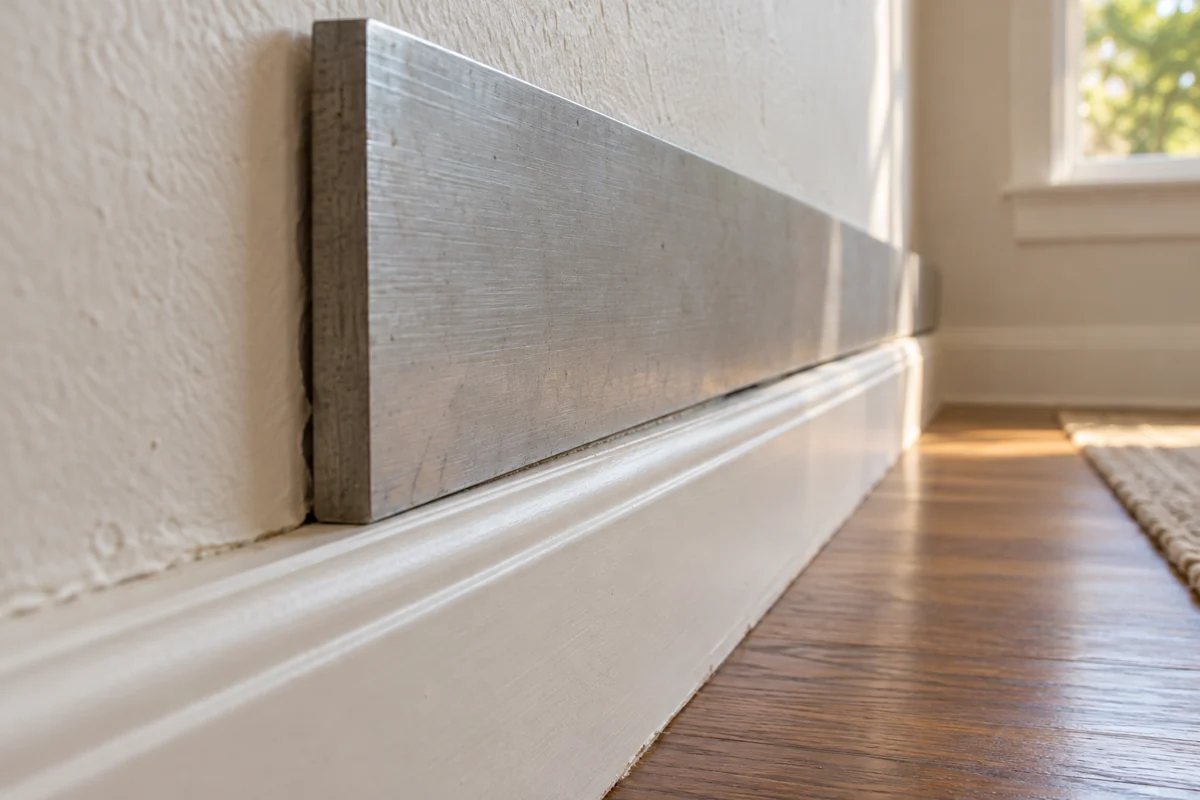
A baseboard can be straight while the wall behind it wanders. When the two meet, a narrow shadow may widen and close along the top edge. The temptation is to fasten the board harder at every hollow, but that can bend the face into a visible wave and leave the joints under strain.
Check the condition with an appropriate straightedge at the trim line. Also inspect the molding itself. A twisted board against a reasonably flat wall and a straight board against uneven plaster can look similar until they are considered separately.
Read the gaps in context
A small, stable finishing seam may be handled with a compatible paintable product. A deep void, a sharp bulge or a repeating change in alignment needs a fitting decision first. The width and behavior of the gap matter more than the fact that it can be hidden from a few feet away.
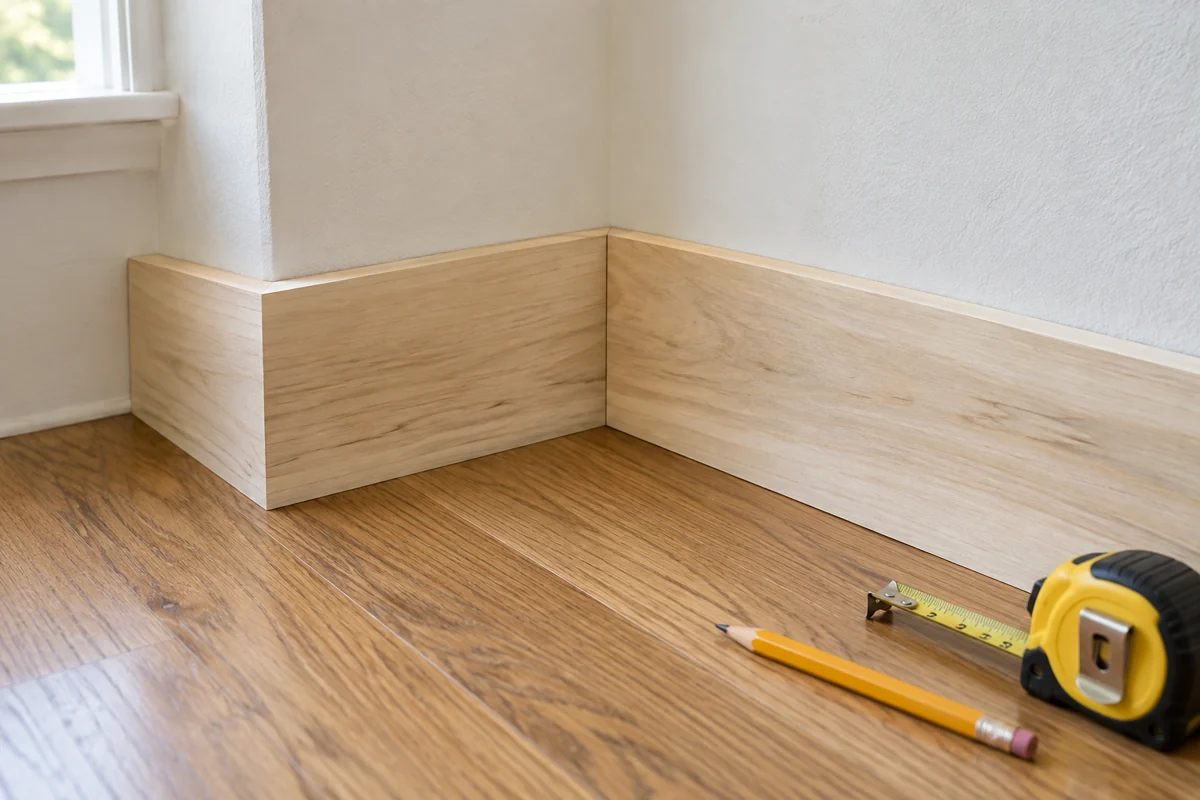
Look along the front face from the room's main approach. A board that has been pulled into every depression can create a more noticeable defect than the original top seam. Broad flat profiles are especially good at showing that distortion under side light.
At a corner, check whether the wall condition tips the molding. A joint that opens from top to bottom may be caused by the backing rather than the end cuts. Repeatedly adjusting the cut can waste material while leaving the actual cause in place.
Choose a correction within the right scope
An installer may need to fit the trim, address a localized backing problem or choose a suitable detail that accommodates the surface. The appropriate method depends on the wall, material and fastening system. Do not improvise by removing plaster or driving fasteners into unknown locations.
Old painted walls and trim can require lead precautions before disturbance. Concealed pipes and wiring also remain relevant even though the project appears cosmetic. If the backing is soft, damp or loose, investigate that condition rather than simply covering it.
Use a short sample to evaluate a proposed relationship, then dry-fit the full run. The sample can reveal the local problem; the long piece shows how the solution looks across the wall.
If a finishing seam is appropriate, keep it proportionate and use the specified preparation and cure sequence. A broad band of caulk can gather texture and show differently through paint. Its job is to refine an accepted fit, not create an artificial wall edge several times wider than the intended joint.
Imagine a broad flat baseboard that touches the wall at both ends but has a shallow hollow behind its middle. Pulling the middle tight may make the front face visibly concave. Leaving it straight may produce a seam that needs an appropriate fitting or finishing detail. Now reverse the condition: a hard lump at the center can push the board outward and open both ends. The two walls may produce similar shadows in a photograph, yet they call for different assessment.
That distinction is why a straightedge and a complete dry fit are more useful than selecting a stronger adhesive from the outset.
The best result may preserve a straight visual line while accommodating small imperfections behind it. That is a deliberate fitting choice, not a contest to press every inch of molding against an imperfect surface.