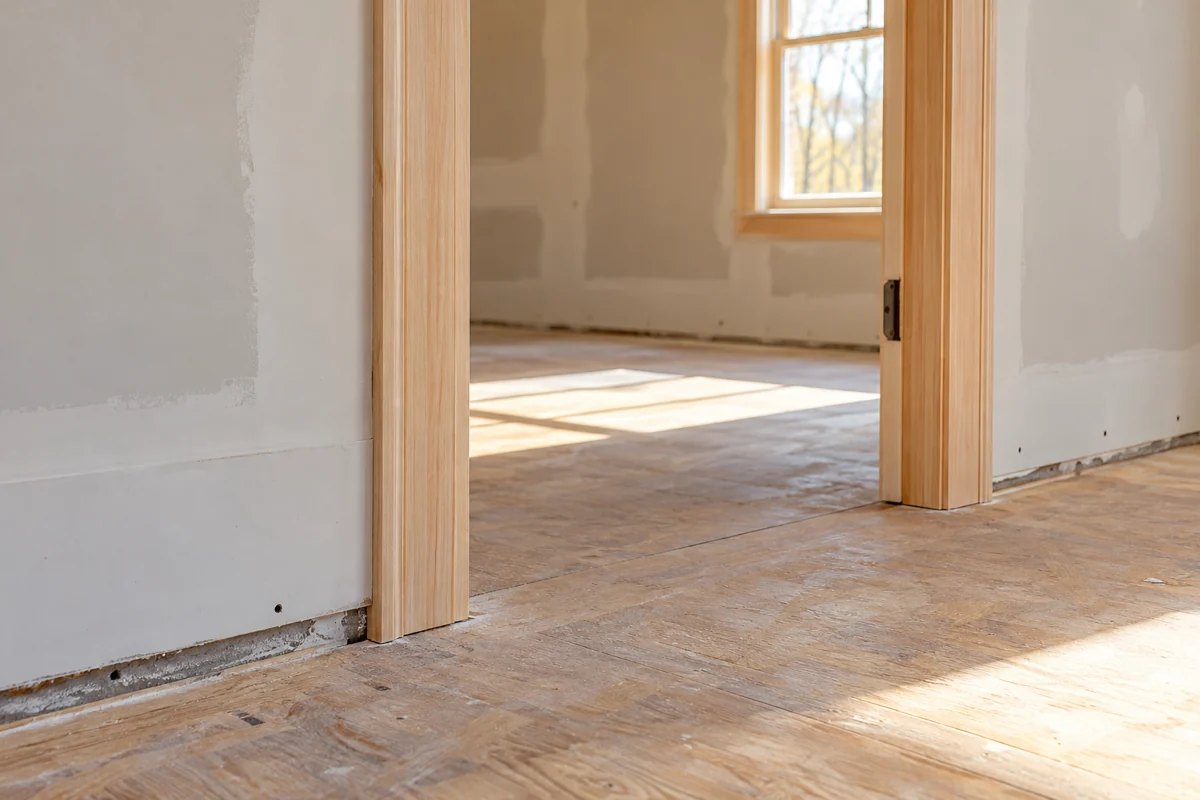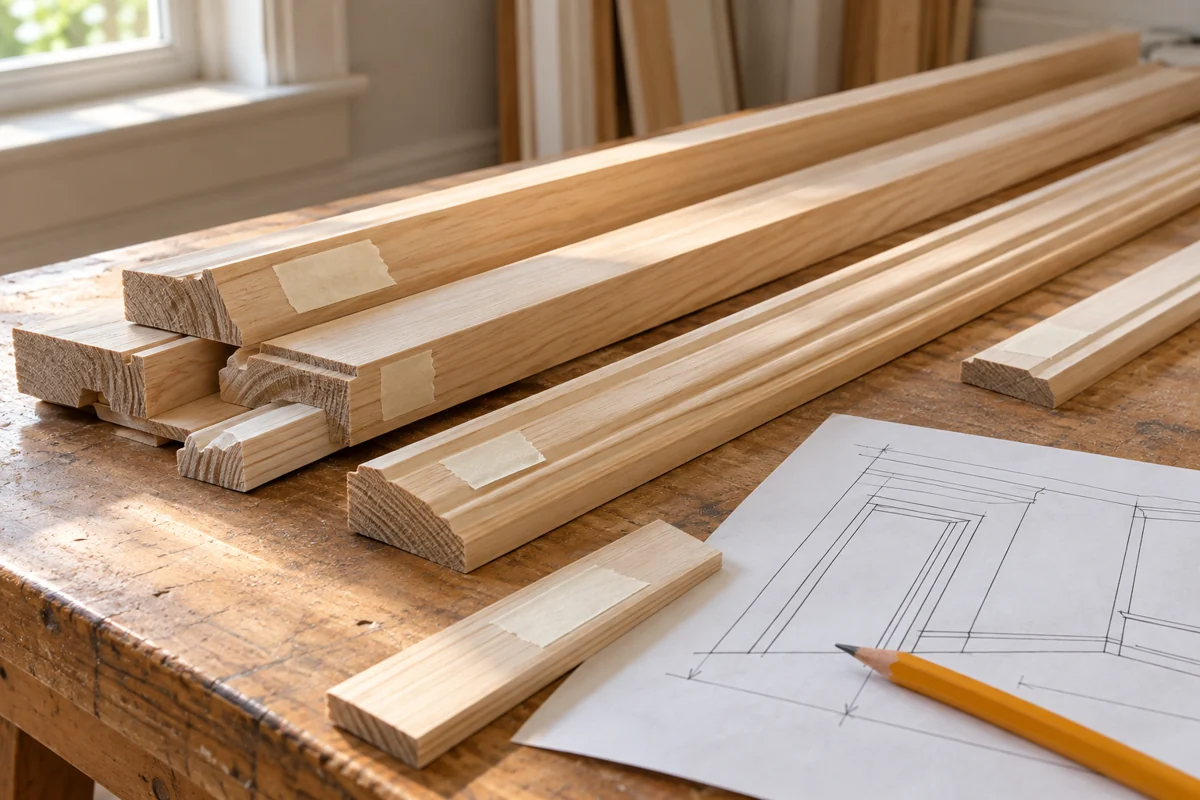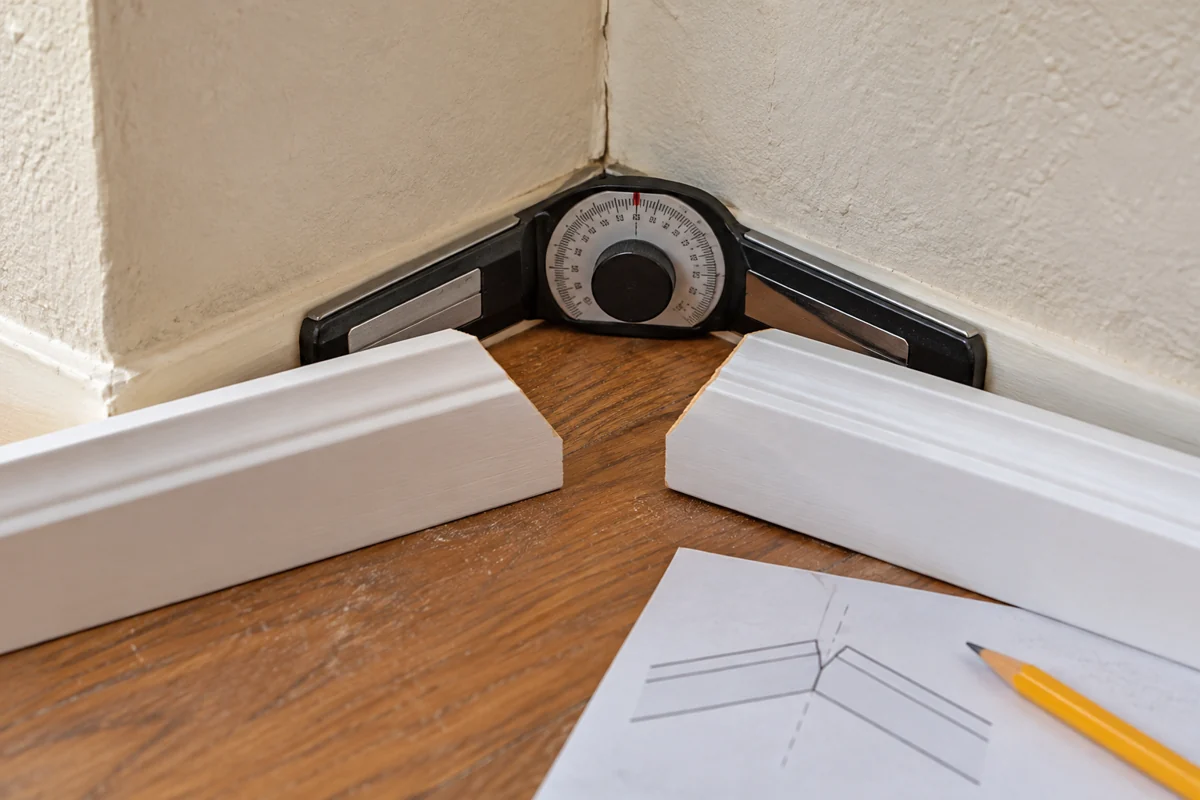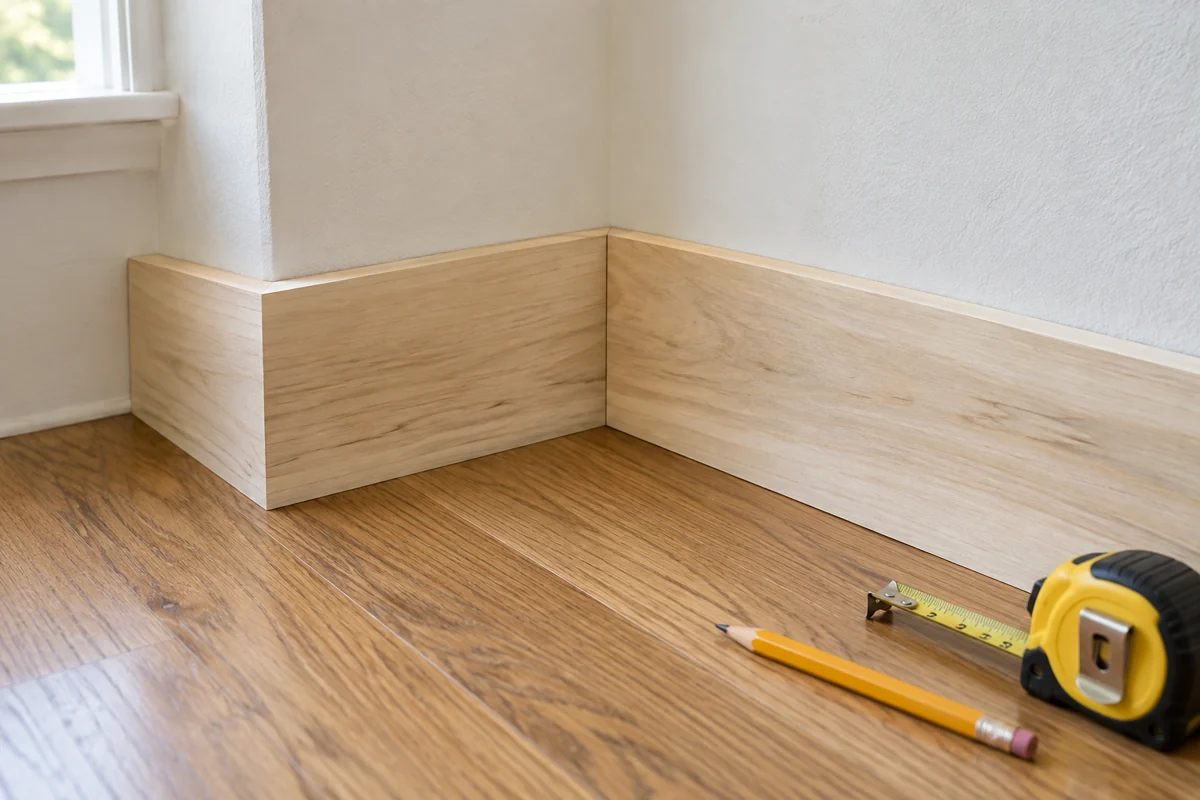
Two cut ends may fit neatly on a workbench and open up when the molding meets the room. The wall, floor and profile orientation all influence the joint. A dry fit brings those conditions together before fastening makes adjustments difficult.
Use the actual pieces in their intended locations, supported safely. Check that they are the correct way up and that their backs contact the surfaces as the product requires. A molding balanced on one projecting edge can give a misleading impression of its fit.
Examine the whole meeting
Look at the front edge, top edge and lower detail rather than judging only the most visible point. A joint that closes at the top and opens below may reflect an orientation or surface problem, not simply a piece cut too short. Pushing harder can distort the board without addressing the cause.
Check the adjoining run too. If closing one corner pulls the far end away from its casing, the piece is not ready. This is why dry fitting only the final inch of a long board is less useful than assessing the complete run.
For a complicated location, use short test pieces to establish the joint geometry before cutting full lengths. The samples need the same profile and orientation as the final material. A thin scrap of unrelated wood cannot always represent a deep or relieved molding accurately.
Decide what needs correction
A high spot behind the board, a damaged end, a measurement error and an unsuitable joint method require different responses. Identify which one you have. Cosmetic filler is not the first answer to a gap that changes when the board is moved.
If the wall or substrate needs repair, address that within the appropriate scope. Do not remove unknown old coatings or cut into an uncertain wall merely to make the trim sit closer. Lead paint and concealed services need their own assessment before disturbance.
Mark the final piece and location clearly once the fit is accepted. Similar lengths can be exchanged accidentally, particularly around several doors. Keep matching corner pieces together until installation.
The dry fit also lets you inspect a design decision. A return may look too abrupt, or a baseboard may project awkwardly past the casing. Those are easier to resolve before adhesive is applied and holes are made.
Allow enough time in the schedule for this stage. It is productive work, even though the room does not yet look finished. A few deliberate adjustments while the pieces are loose can prevent a sequence of larger compromises after they are attached.