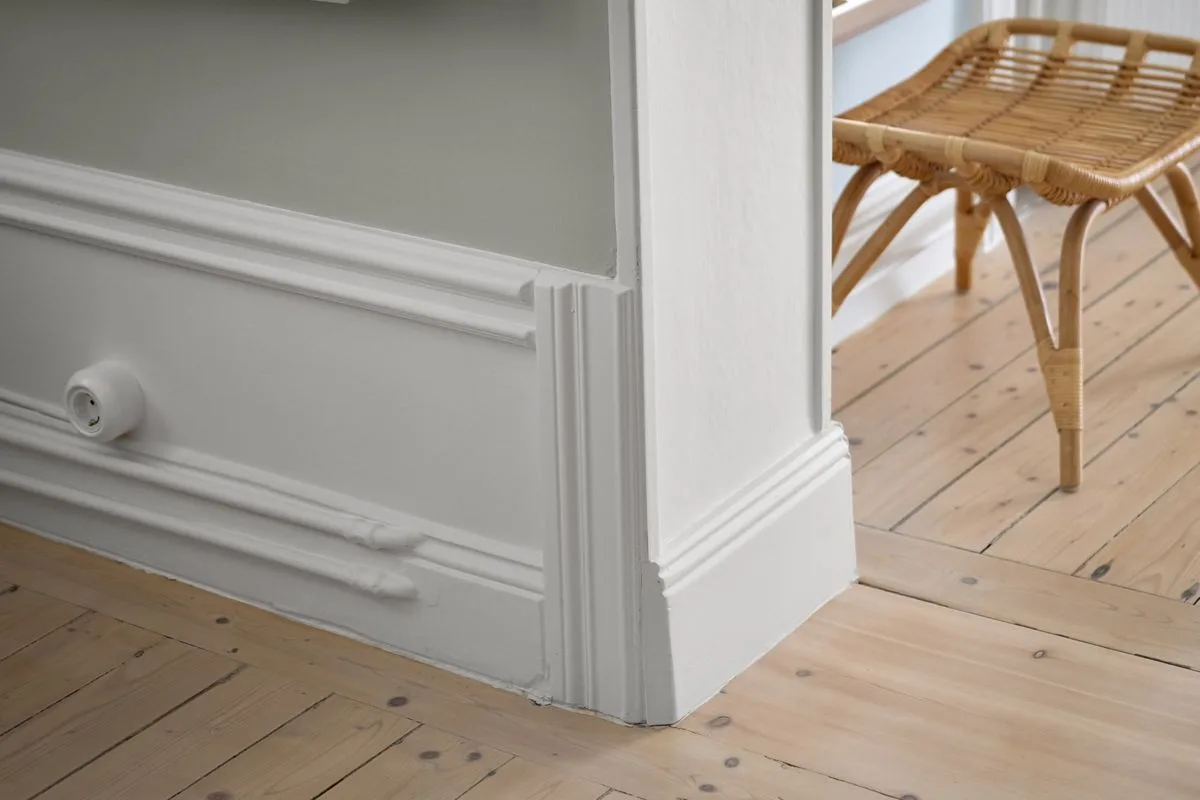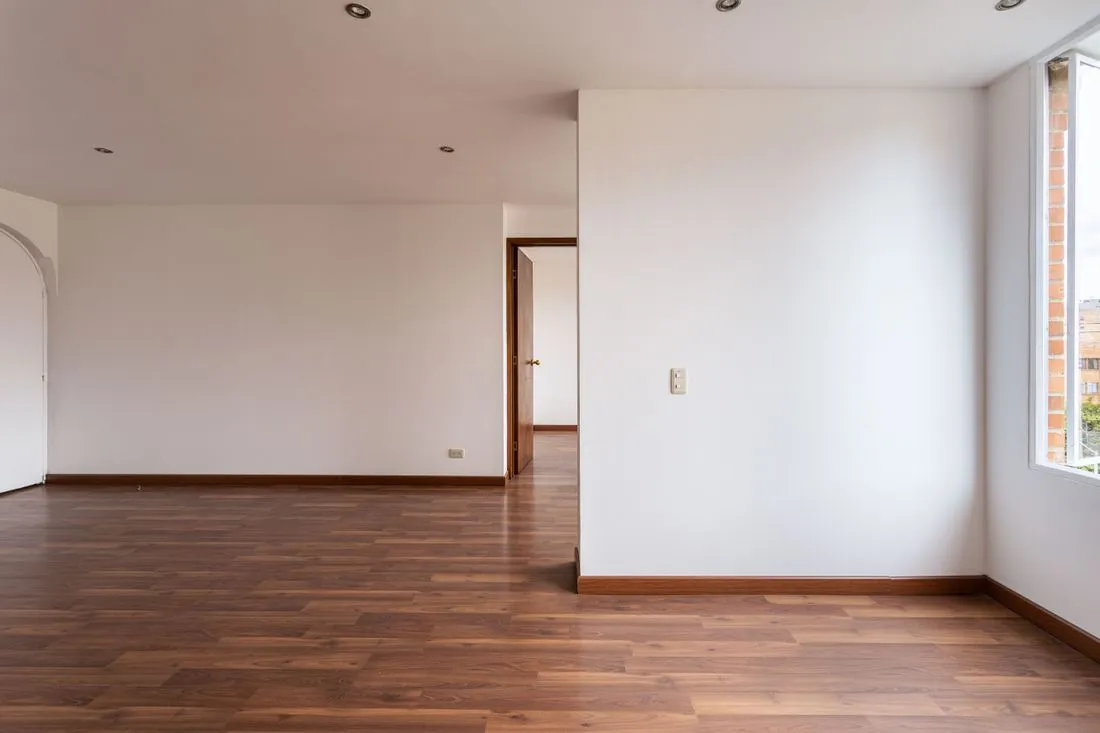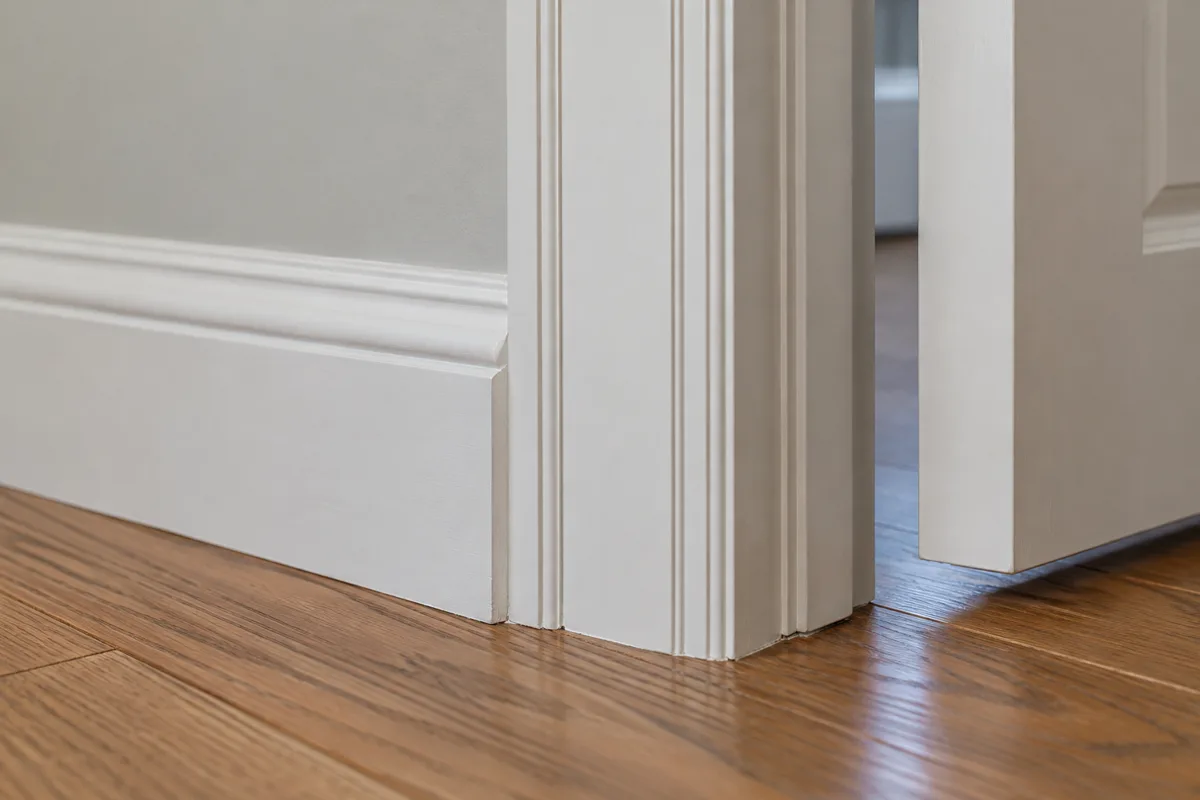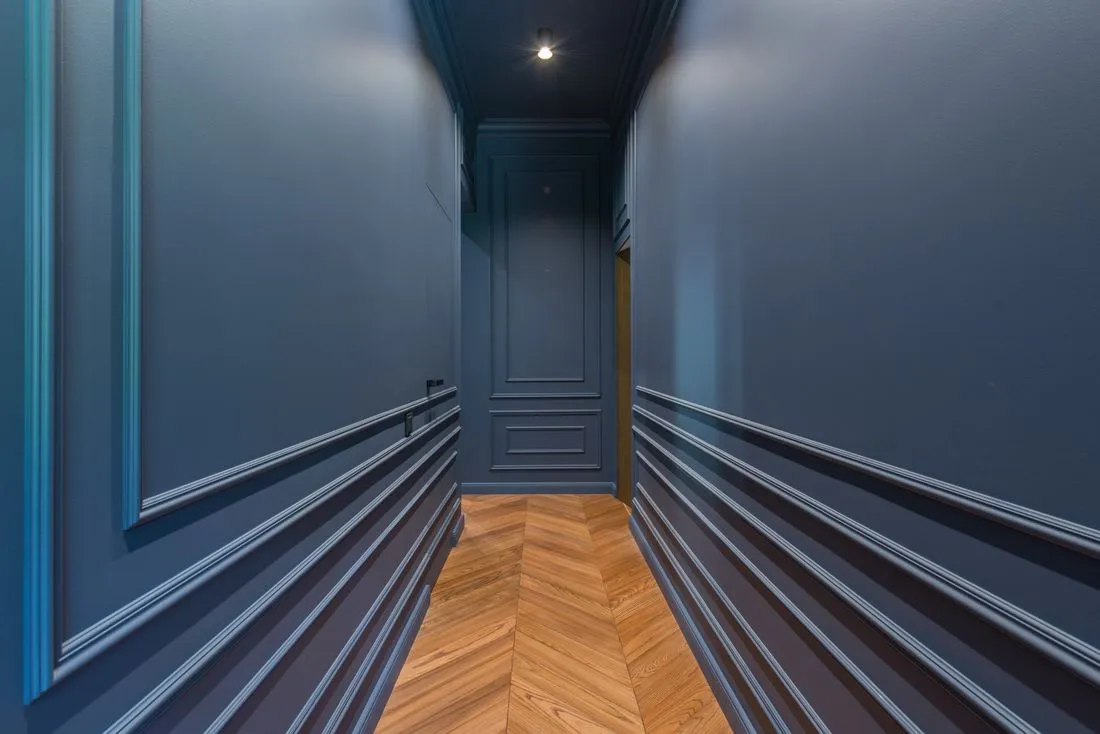
Painting the trim and walls the same color can make a room feel less divided by outlines. It does not make the trim disappear. Depth, sheen, and changing light still describe every projecting edge, often more clearly than expected.
The first question is what should remain visible. A room with well-proportioned casing may benefit from a quieter color relationship while keeping the architecture legible. If the real problem is a badly resolved junction or an oversized profile, matching paint is unlikely to solve it.
Set up a sample with the actual wall finish and a piece of the intended trim. Use the planned coatings, because different products can produce slightly different appearances even when labeled with the same color. Let the samples dry as directed before comparing them.
Watch the light move
Side light casts a shadow below a cap and along the edge of a casing. A flat board may read as a broad band; a shaped profile can produce several narrower lines. At night, lamps and ceiling lights create another pattern. Judge the detail from the locations where people actually sit.
Sheen changes the relationship too. A more reflective trim finish can make the same color look brighter or darker depending on the angle. That difference can be attractive, but do not expect an identical color code to produce an identical surface appearance.
Furniture supplies contrast of its own. A pale room with dark cabinets may not need strongly outlined doors, while a room with similar-toned furniture may welcome more definition. Put the sample beside the large pieces that will remain.
Keep the assembly disciplined
A single color can help unite different trim shapes, but it also makes the shadows at imperfect joints easier to compare. Dry-fit the baseboard-to-casing junction and resolve abrupt steps before painting. Do not rely on a thick coating to soften them into agreement.
Consider where the color stops. If a doorway leads to a differently colored room, decide which surfaces belong to each side, including the jamb and door edges. Document that boundary so the painter does not have to invent it midway through the job.
The most convincing result comes from choosing the trim proportions first and using color to adjust their emphasis. Same-color paint is a way to tune a sound design, not a substitute for deciding how the pieces meet.