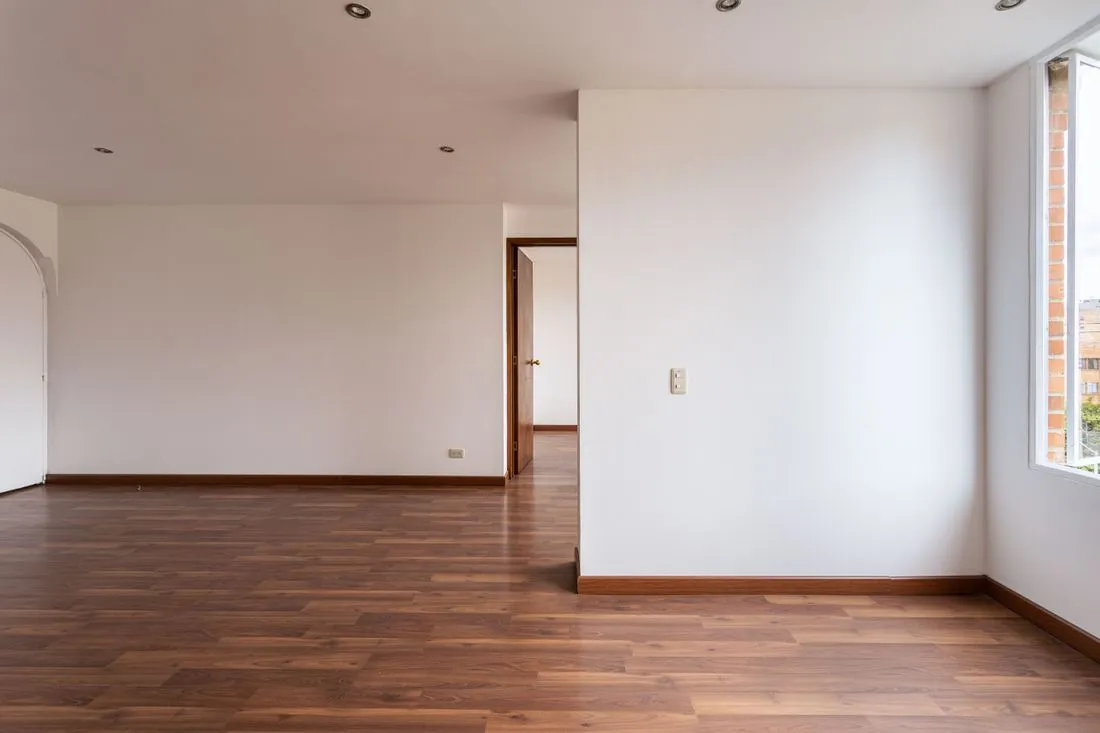
A baseboard is seen mostly in passing. You catch its outline beside a doorway, under a window, or along the clear strip behind a chair. That is why a profile that looks appealing in your hand can feel too busy once it repeats around four walls. Choose for the long line as well as the small cross section.
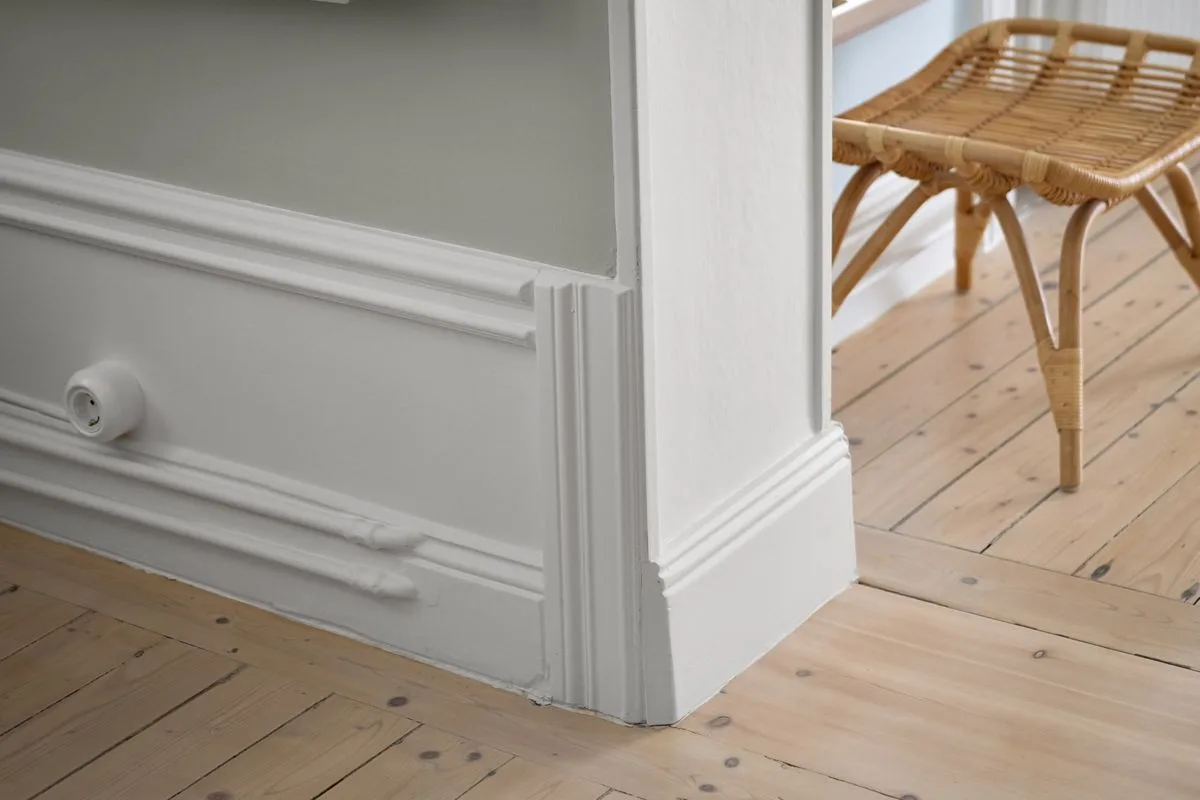
A flat board makes its height and top edge easy to read. A shaped board divides that same height into ridges, curves, and shadows. Neither belongs exclusively to one architectural style. A broad flat base can sit comfortably in an older room when the casing has similarly plain faces; a restrained curved profile can soften an otherwise spare interior.
Look at the neighbors
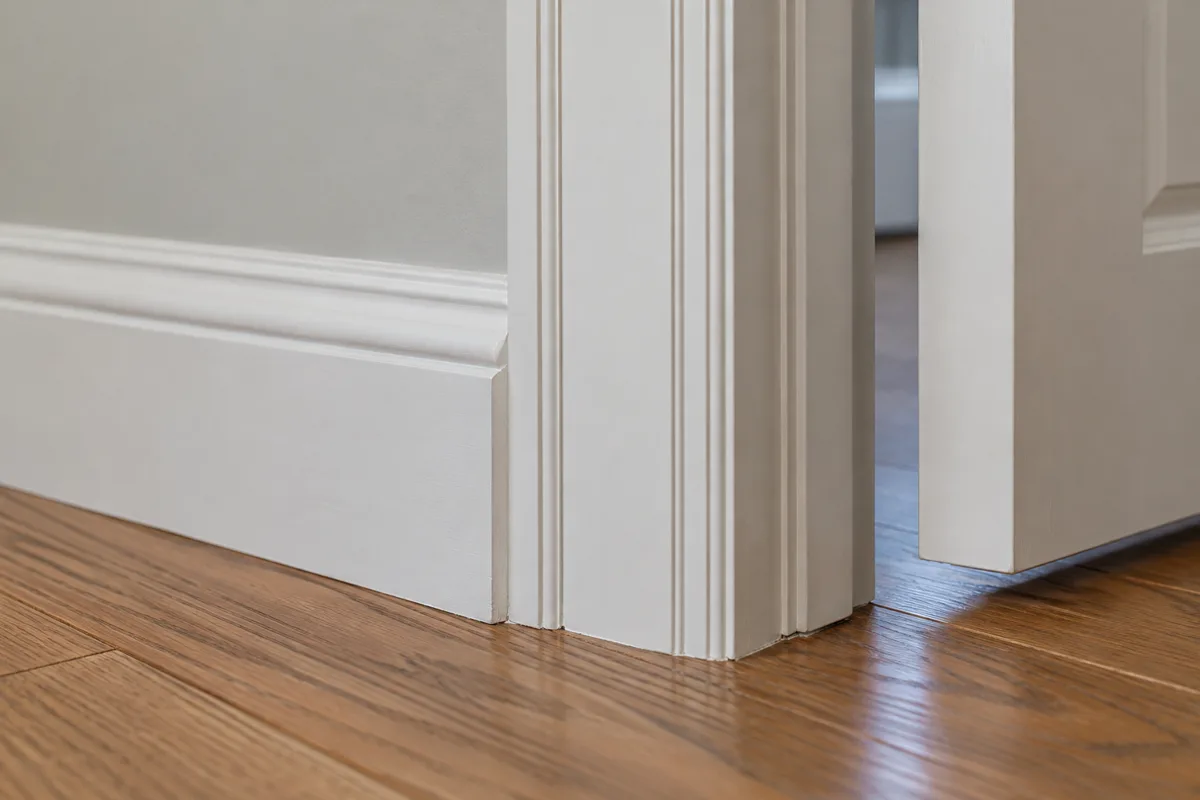
Put the sample beside the actual door casing. Compare the amount of detail, the thickness at their junction, and the size of the flat areas. If both pieces carry deep, unrelated curves, the junction may become the busiest part of the room. You do not have to buy matching profiles from a named collection, but the parts should appear to belong to the same vocabulary.
Then examine the floor. A patterned tile, expressive wood grain, or strongly contrasting rug already adds activity near the baseboard. A simple edge can give those surfaces room. On a quiet floor, a gently shaped baseboard may supply the detail the room otherwise lacks.
Make the comparison fair
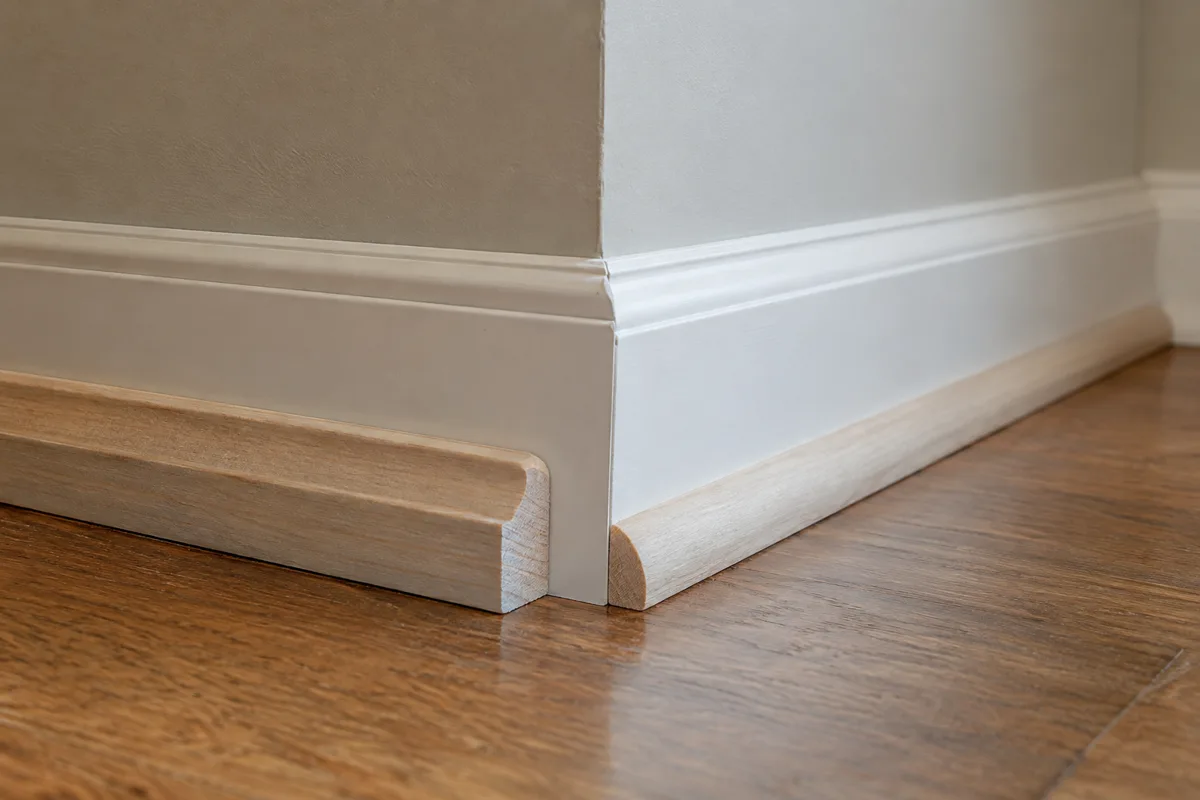
Compare samples of similar height first. Otherwise, a preference for the taller piece can be mistaken for a preference for its profile. Paint both in the intended finish and stand them vertically against the wall as they will be installed. Raw wood and factory primer give a misleading impression of the finished shadow.
A short piece is useful for inspecting the shape, but a longer sample shows how it reads from the doorway. Move a lamp across it in the evening. Strong side lighting reveals every groove, while diffuse daylight may make a shallow profile nearly disappear.
Cleaning is another small but real consideration. Horizontal ledges collect visible dust; intricate creases take more attention than a broad face. That does not rule out detail, but it helps explain why an elaborate sample may suit a formal room better than a heavily used passage.
Once you prefer a profile, check the whole system: corners, door junctions, open ends, and available lengths. A handsome straight section is only one part of a baseboard that looks settled into the room.