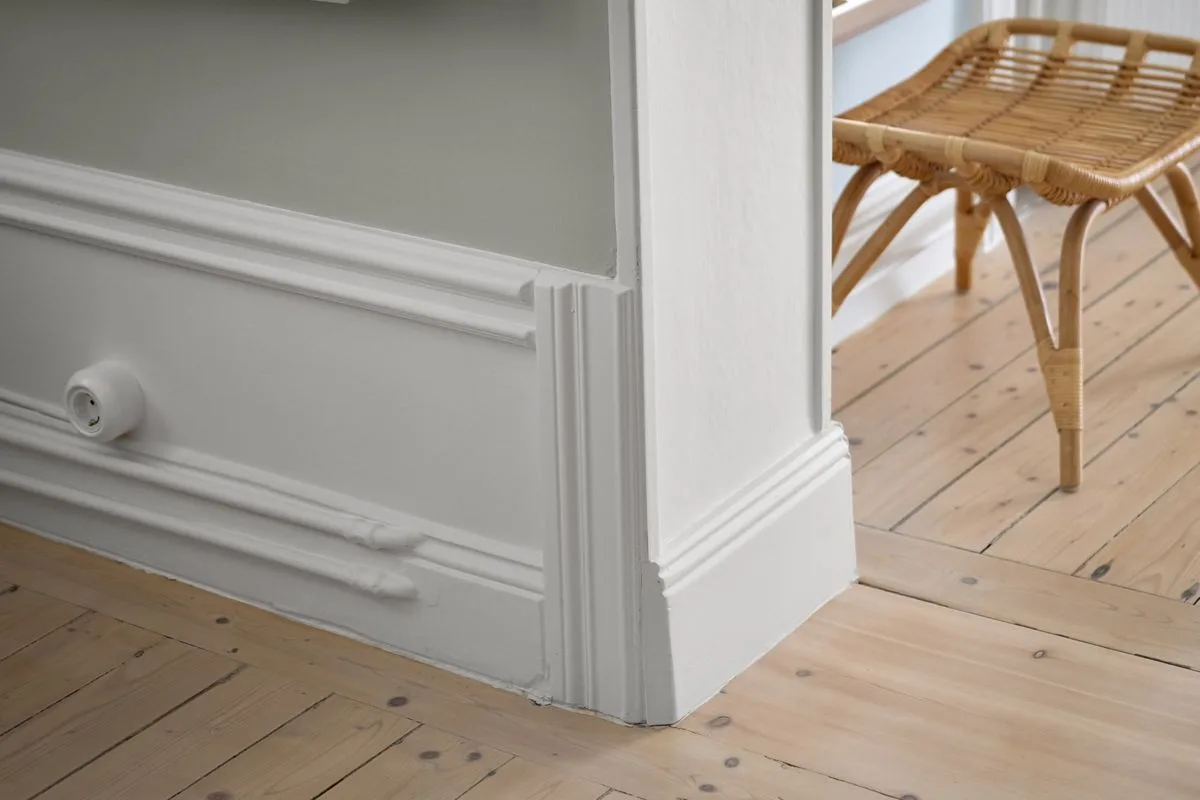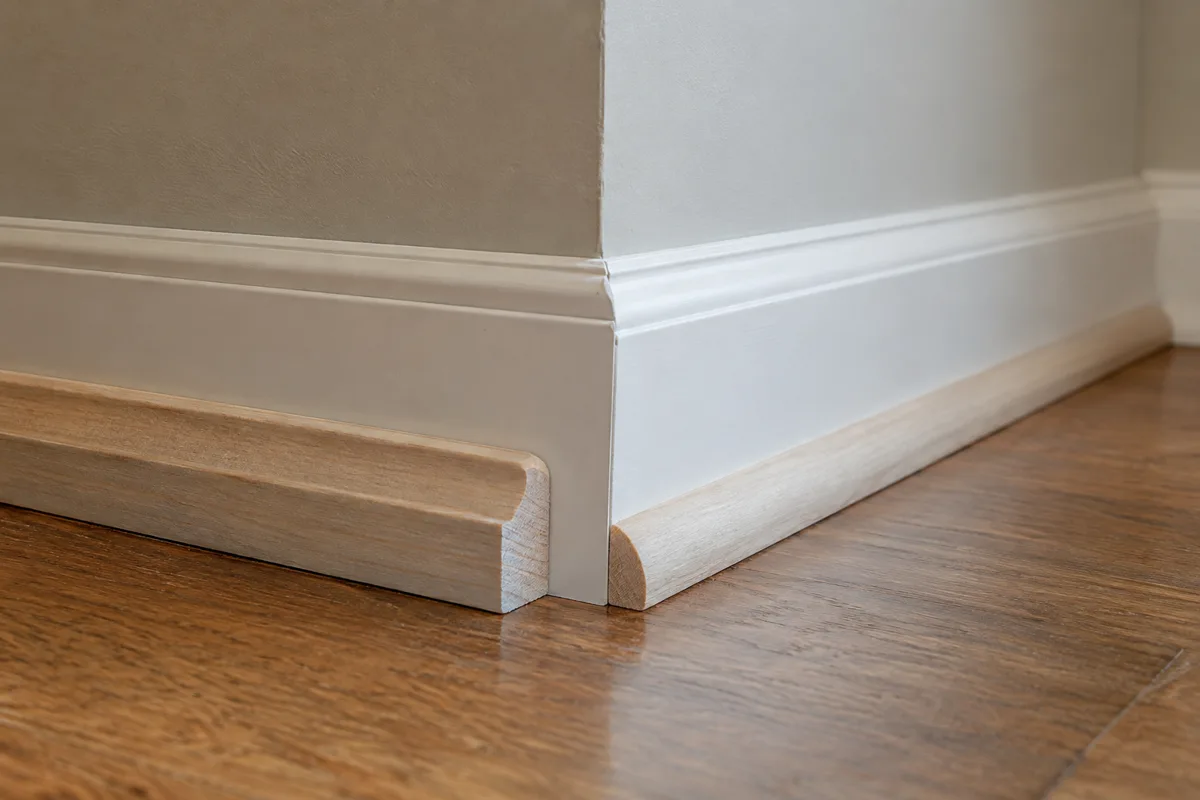
Shoe molding and quarter round both finish the meeting between baseboard and floor, but their silhouettes are different. A true quarter-round section forms a quarter of a circle, with equal flat sides. Many base-shoe profiles are taller than they are deep, so they cover a vertical gap while projecting less into the room. Actual products vary, which makes a cross-section sample more useful than the name alone.
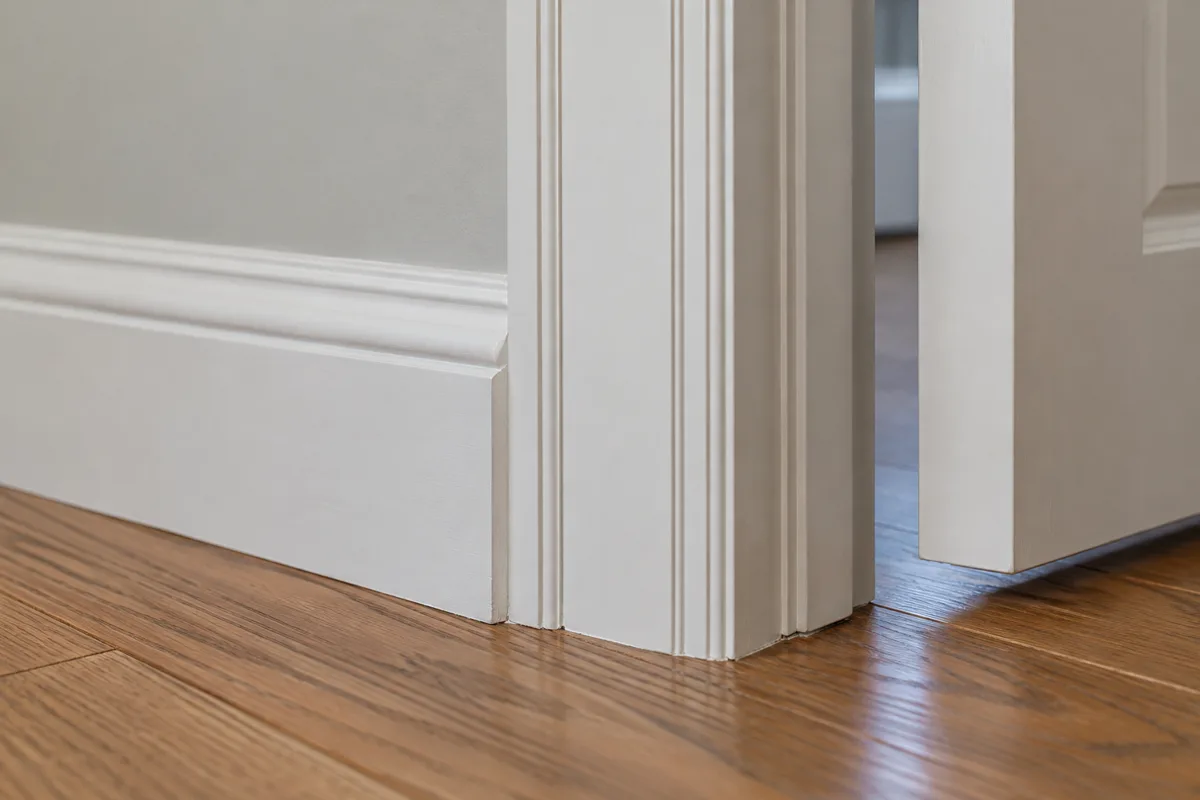
That reduced projection can be valuable beside narrow door casing or furniture that sits close to the wall. It can also leave more of the baseboard face visible. Quarter round has a fuller, more rounded presence; in a room with substantial, traditional trim, that may be exactly the effect you want.
Start with what needs covering
Inspect the finished floor edge around the room. The molding must cover the intended perimeter detail without interfering with the flooring system's required movement. A cosmetic strip is not a substitute for correcting a damaged floor edge, unresolved moisture, or an unsuitable installation gap.
Ask the flooring installer which clearances must remain and how the perimeter trim should be secured. In particular, do not assume that driving fasteners through a floating floor is acceptable. The flooring manufacturer's instructions govern that relationship.
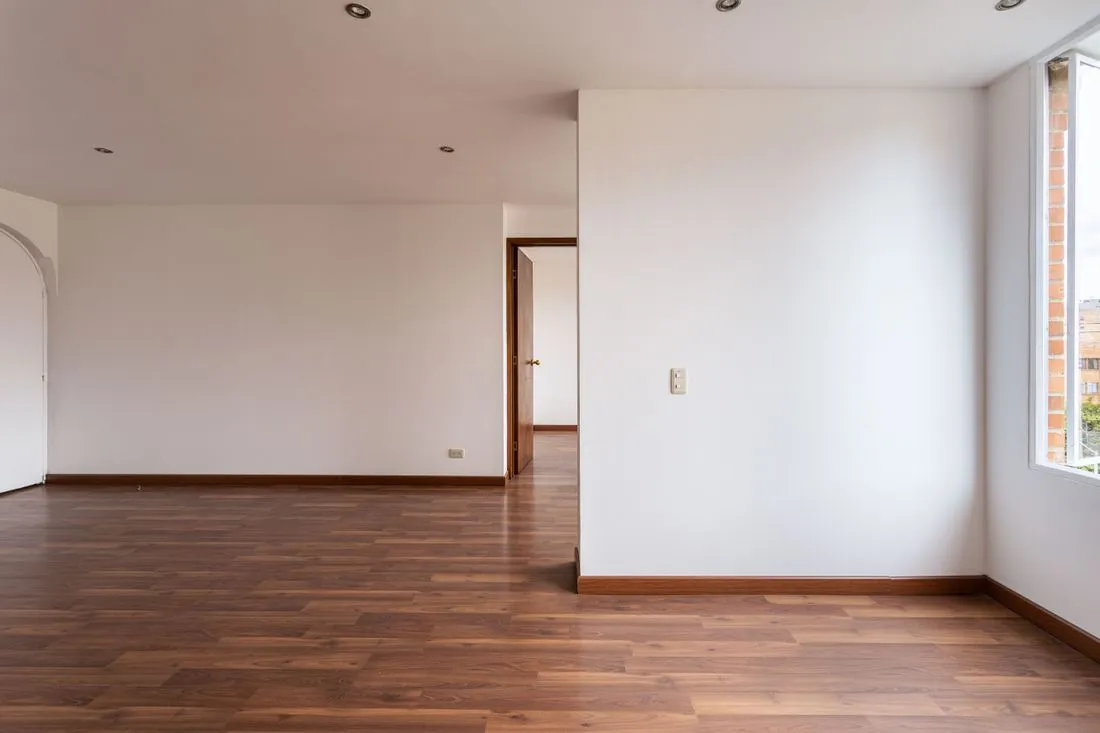
Try samples at both a straight wall and a doorway. The first location shows the long visual line; the second reveals whether the profile creates an awkward bump against the casing. Check any transition to tile, cabinets, or an open-ended baseboard run as well.
Decide whether it belongs to the wall or floor
Painting the small molding with the baseboard usually makes it read as part of the wall trim. A finish coordinated with the floor makes it seem closer to the flooring. Neither choice fixes an oversized profile, and a near-match in stain can be more noticeable than an intentional contrast.
If the floor has strong color variation, test the finish against several boards rather than only the most convenient one. For painted shoe, judge the sheen alongside the baseboard after both sample finishes have dried.
The small size of these moldings can make them seem like an afterthought. Their line runs around a large part of the room, however, and every exposed end attracts attention. Choose the profile and termination together, then record the exact product. Asking for “the little rounded piece” on a later shopping trip is an easy way to bring home a different shape.