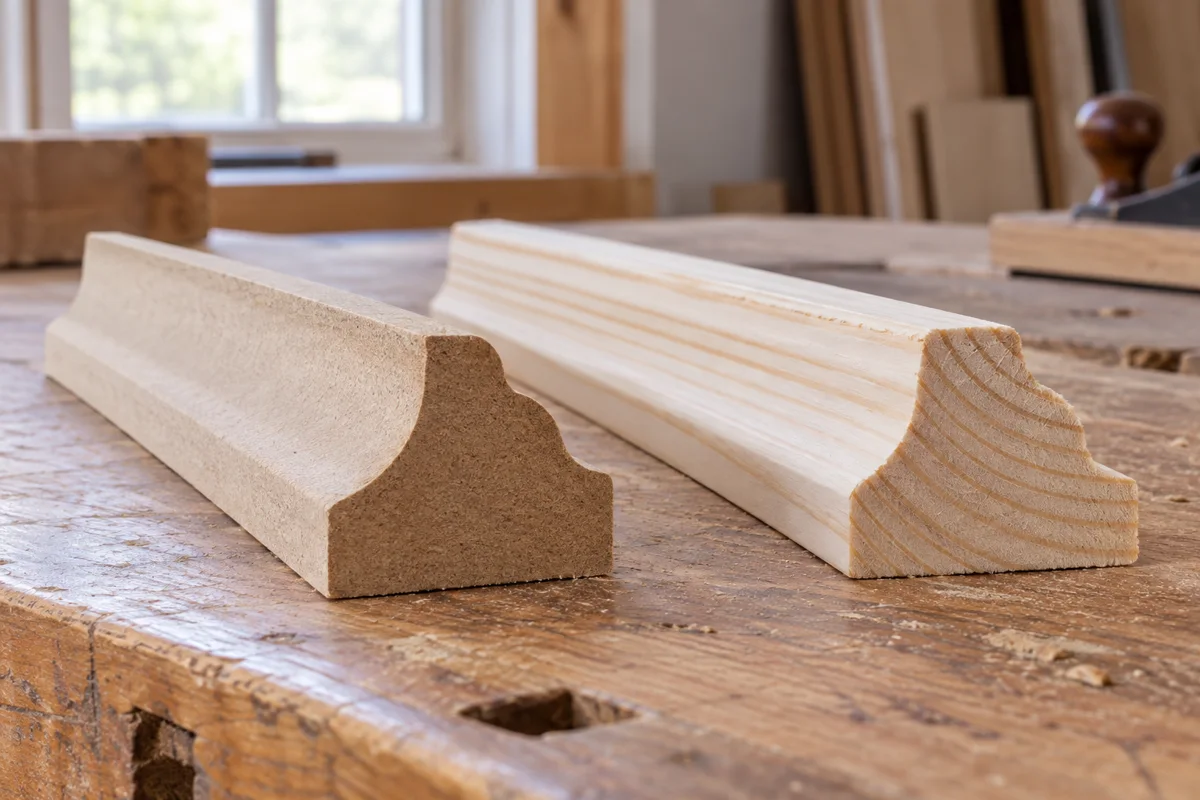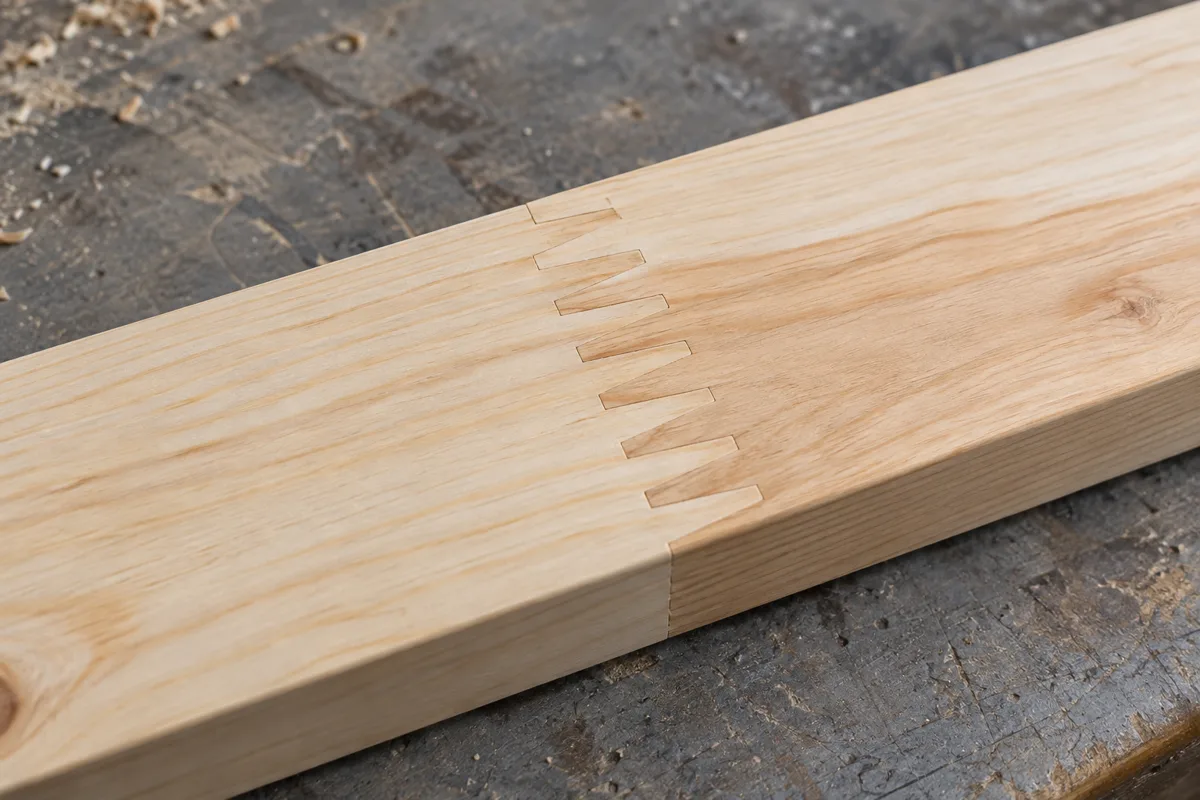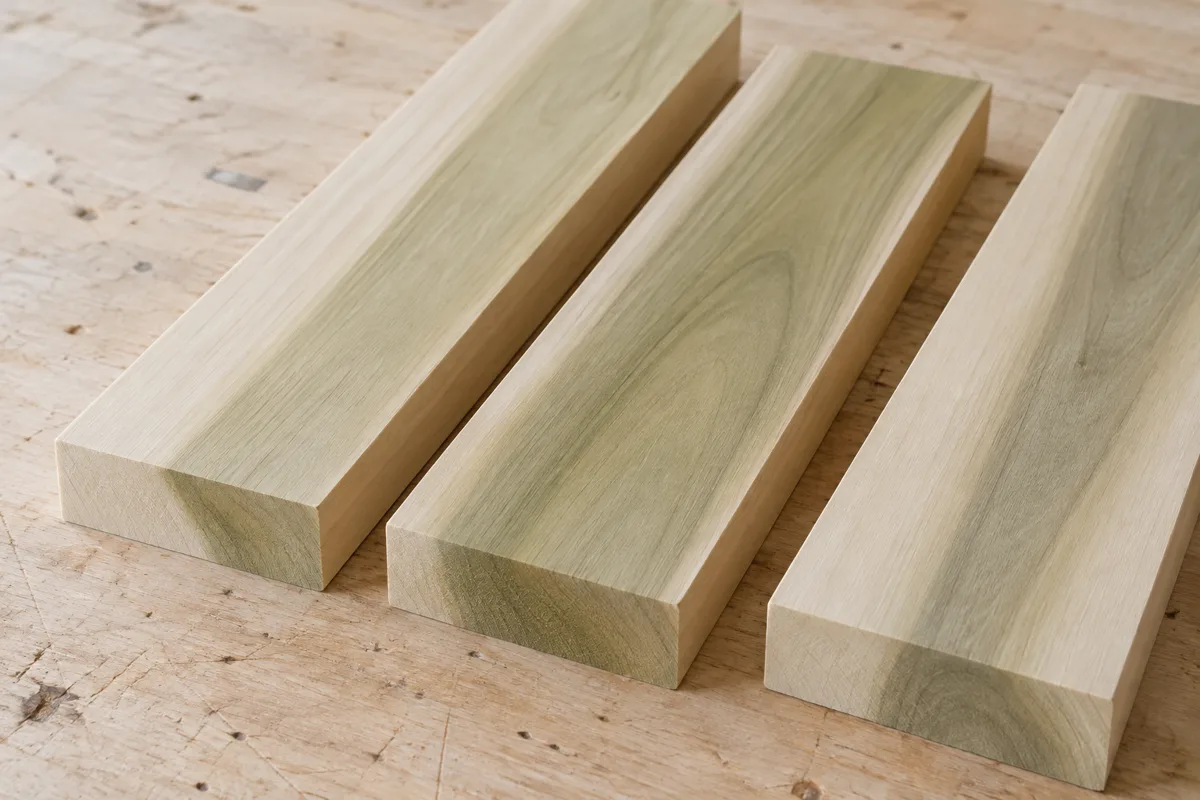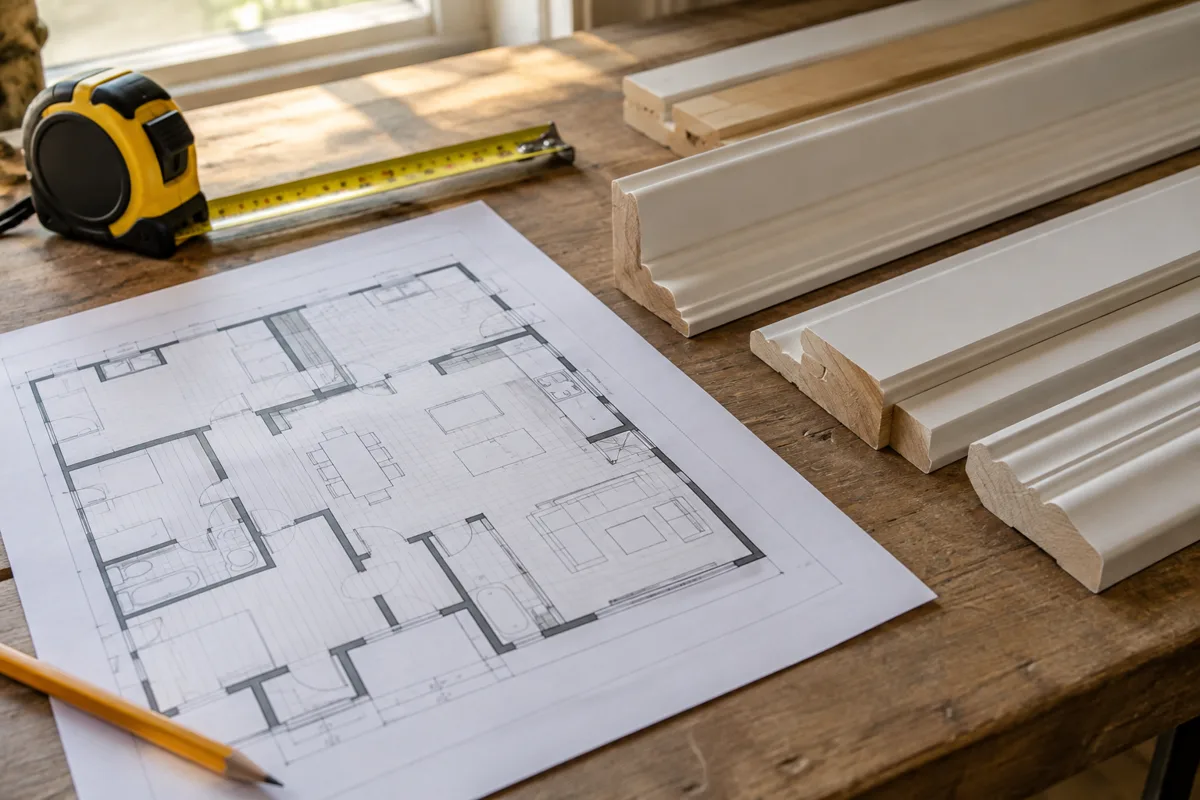
Buying trim by adding every wall length is a useful first calculation, but it is not a complete order. Corners, door openings, damaged ends and available stock lengths determine how much of each board becomes part of the room. Two orders with the same total footage can produce very different amounts of waste and visible joining.
Draw each uninterrupted run separately. Mark the location and type of its ends: an inside corner, an outside corner, a casing or a return. Include the pieces needed around openings as individual parts. Avoid combining every dimension into one long number too early.
Compare actual stock combinations
Suppose several runs are slightly longer than a common short stock length. Buying that length may force joints throughout the room, even if the total footage seems generous. A longer available length could reduce joins and simplify the layout. In another room, shorter lengths may divide efficiently among several small sections.
Ask which lengths the supplier actually sells and whether they are fixed or random. A price per foot on a random-length order does not guarantee that the delivered pieces will suit your longest wall. Clarify this before paying for a large quantity.
Allow material for the joinery and for reasonable fitting corrections. The allowance should follow the design, the stock and the installer's needs, rather than an arbitrary percentage treated as correct for every room. Patterned molding may need extra material to align a repeating detail.
Keep important runs intact
Decide where a joint would be least distracting and where support is available under the installation instructions. This helps distinguish a deliberate join from one created only because the last remaining board is too short.
Do not assign a visibly damaged section to an obscure spot and hope it becomes harmless. Separate usable lengths from defects. A small end defect may be removed within the cutting plan, while a failing manufactured joint can make the whole piece unsuitable.
Check transport as part of the purchase. Very long stock needs appropriate support and secure handling; a length that cannot be delivered safely is not a bargain. Delivery can be worthwhile when it preserves the material and avoids improvised transport.
A simple planning example shows why totals can mislead. Imagine three separate straight runs, each about seven feet long. The visible total is about twenty-one feet. Three suitable eight-foot lengths could potentially provide one run each, with allowances checked for their end details. Buying twenty-four feet as two twelve-foot lengths would not produce three unjoined seven-foot pieces. The purchased total is the same, but the distribution is wrong for that aim.
Now imagine the room also contains several short returns. Some offcuts from a different length combination may serve those pieces, provided the profile, orientation and usable ends are suitable. Write those assignments on the cut list before counting them as saved material. A scrap that is long enough in a rough calculation may become too short once a damaged end and the required joint are considered.
Use the example as a planning method, not a cutting prescription. Actual measurements, saw kerf, end cuts, stock condition and the installer's fitting allowance still have to be included. The point is to buy pieces that can yield the required parts, rather than buying an impressive total that cannot be divided into the room.
Retain one suitable spare if the order and storage allow. A later repair is easier when the profile is still available in your own supply, especially if the manufacturer changes its range. Record the order details so that any additional material has a chance of matching.