The room needs a long uninterrupted run, and the supplier has a board long enough to cover it. That does not mean the board can reach the room. Stair turns, narrow hallways and apartment elevators deserve a place in the plan before the order is placed.
Check the route, not just the destination
Measure the restrictive parts of the delivery route and think about how a long rigid piece has to turn. A doorway's height is only one part of the problem. A low landing ceiling or a tight corner can prevent a board from rotating into position. Discuss delivery conditions with the supplier if access is uncertain.
Shorter stock may be easier to handle but can introduce more joints. Decide where those joints could reasonably occur before asking for boards to be cut down. A supplier's convenient transport length is not necessarily a useful installation length. Label any agreed cuts so that the pieces remain identifiable.
Prepare a dry, supported storage place
Different products have different storage and acclimation instructions. Check them before delivery, especially for wood-based moldings and panels. Do not assume every material needs the same waiting period or that leaving stock in a damp garage counts as acclimating it to a heated room.
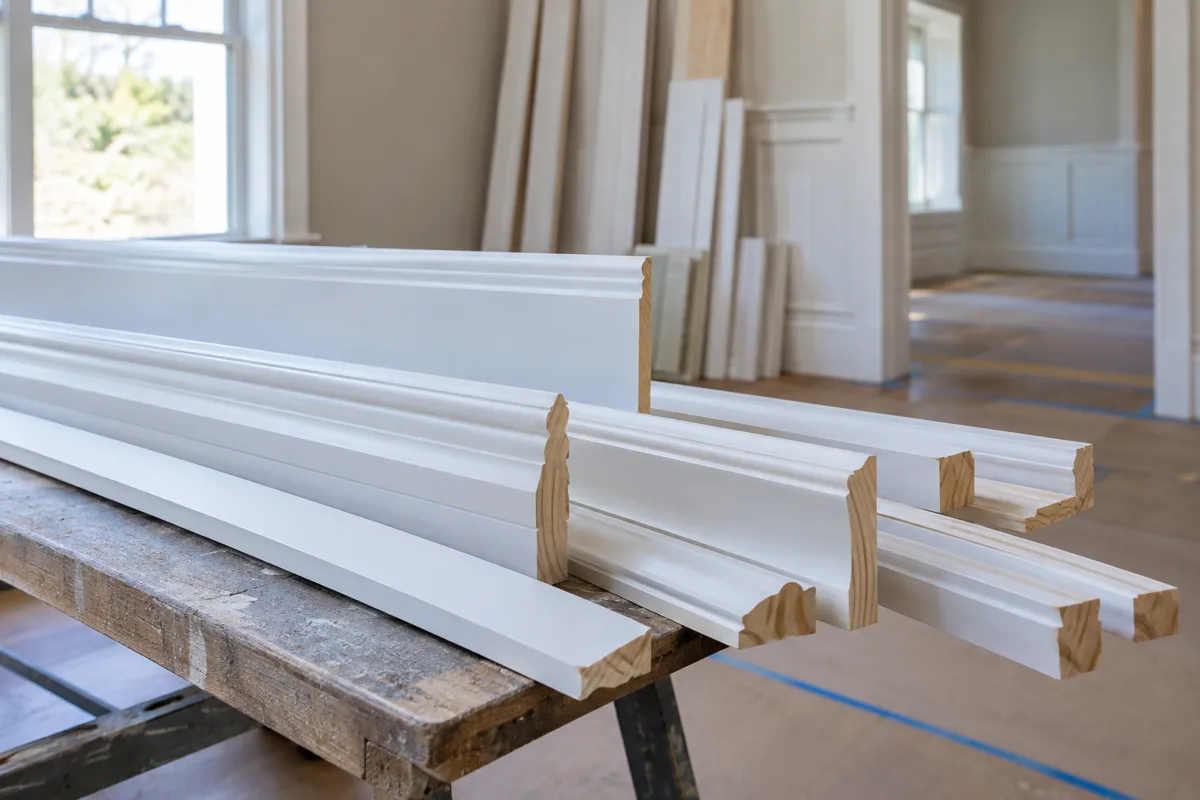
Long pieces need suitable support along their length. Follow the supplier's storage guidance rather than leaning them in a corner where they may bow or be knocked over. Keep the storage area away from wet work, leaks and traffic. Protect finished faces without trapping moisture in a way the manufacturer warns against.
Inspect while the delivery is identifiable
Check profile, material, lengths and quantity against the order. Examine ends and visible faces for transport damage, and photograph problems before mixing the delivery with existing stock. Keep packaging labels until you are certain the material is correct. Similar-looking products can differ in thickness or coating even when their names are close.
Put aside pieces that are clearly damaged or unsuitable and contact the supplier about the next step. Do not start cutting everything simply because the installation date is approaching. It becomes harder to resolve a delivery issue once the material has been altered.
A labeled cutting plan and a prepared storage area make the first working day calmer. They also protect the long, clean pieces for the places that truly need them, instead of using them early for short sections that could have come from offcuts.