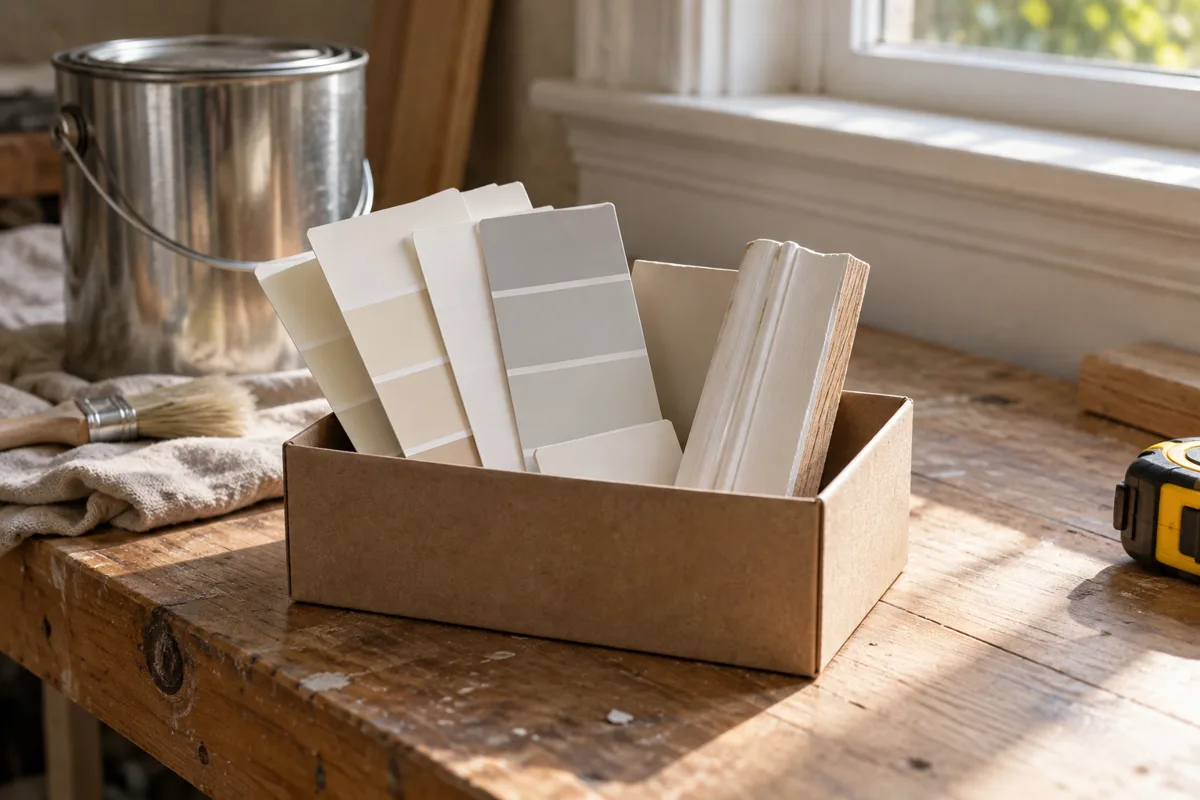
The most useful time to record a trim finish is while the cans, labels and samples are still in the room. Months later, several similar whites and half-remembered product names can turn a small repair into another selection project.
Write down the manufacturer, product line, color name or formula, sheen and base where relevant. Include the primer and any special blocking or repair product. A color code without the coating line does not fully describe the surface, and “satin” can look different across products.
Connect the finish to a location
Note exactly where each system was used. A room may have one coating on the walls, another on painted trim and a clear finish on a wood window. If a doorway has different colors on its two sides, record the boundary rather than assuming it will be obvious later.
Add the material and profile number when known. A paint repair on MDF can need a different preparation approach from one on solid wood, even when the finish looks identical. If a particular joint adhesive or filler was important, include that information too.
Keep a small finished offcut labeled on the back. It shows color, sheen and texture together. Store it away from damage and note that installed trim may age differently with light and use. The sample is a reference, not a promise that fresh paint will remain an exact match forever.
Preserve useful instructions
Save the product data or a clear label photograph with the application date and any relevant conditions. Record the final coat date so that anyone returning furniture or cleaning the room knows when the coating was applied.
Store leftover materials only as their labels permit, in a suitable secure location. Do not assume an old can remains usable simply because its lid is closed. Check condition and follow the manufacturer's guidance before a later touch-up. Never transfer an unidentified coating into a food container.
If a repair required a special successful method, note it briefly. “Spot-primed filler, then recoated whole casing leg” is more useful than “fixed mark.” Include any known coating assessment or professional treatment records where older materials were involved.
The record can be a single page and one sample, not a maintenance manual. Its value comes from specificity. When a chair chips the baseboard two years later, you want to know what the surface is and how it was finished—not begin by guessing which of three almost-empty white paint cans belongs to the room.