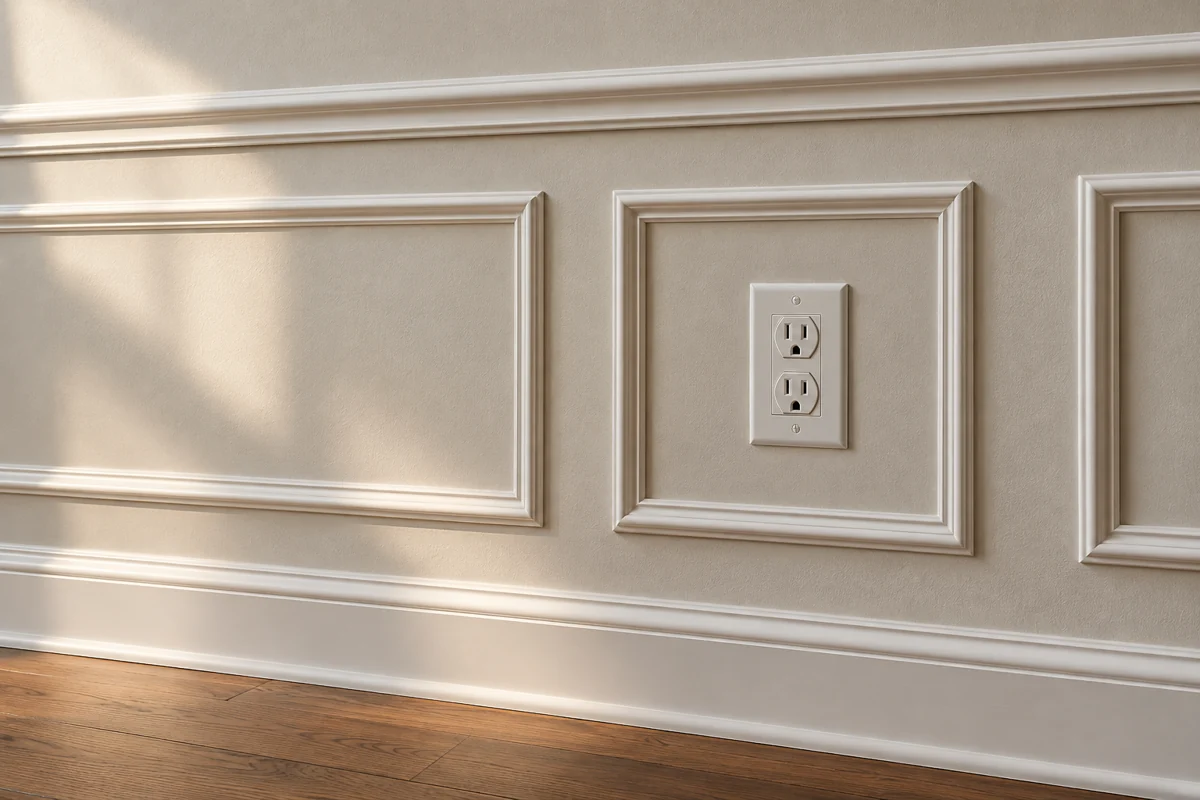
A wall-frame layout can look balanced on paper and put a molding directly through an outlet cover in the room. Treat the electrical devices as real constraints from the beginning. Their location, cover size and accessibility matter more than preserving a perfect repeated rectangle.
Measure the visible cover and its position without opening or modifying the device. Include switches, data outlets, thermostats and other controls in the elevation drawing. A wider cover fitted later can also change the available clearance, so use the actual intended hardware where possible.
Adjust the design before the wiring
Often the simplest solution is to shift the frame layout, change a panel width or leave a deliberate clear field around the device. Test the arrangement with removable layout marks suitable for the wall. View it from the doorway rather than judging only the panel containing the outlet.
Avoid a narrow sliver of wall trapped between the molding and cover. It can be difficult to paint and can make routine cover removal awkward. The necessary clearance is not a universal decorative number; it must allow the actual device and cover to function and be serviced properly.
Do not notch, bury or overlap a cover merely to preserve the pattern. If added paneling changes the finished wall depth around a box, have a qualified electrician assess the required compliant detail. Extending a box, moving a device or altering wiring is electrical work, not a trim adjustment.
Fastening locations need a separate check
The visible outlet is only one clue to concealed wiring. Cables may run in directions that are not obvious, and a stud finder does not guarantee a safe fastener path. Have uncertain areas assessed and use the appropriate installation plan rather than driving a short test nail nearby.
Adhesive is not an automatic workaround. The molding system may still require mechanical fastening, and the wall coating may not provide a sound bond. Choose a design and installation method that are appropriate together.
After the trim is fitted, confirm that all controls remain accessible and covers can be removed as intended. Check that doors, furniture and plug bodies have the room they need. A beautiful frame should not force a cord into an awkward bend or obstruct a commonly used switch.
The most convincing decorative layout often makes small adjustments to the room's real conditions. A slightly varied panel width can look natural, while a perfectly repeated pattern interrupted by improvised electrical cutouts almost never does.