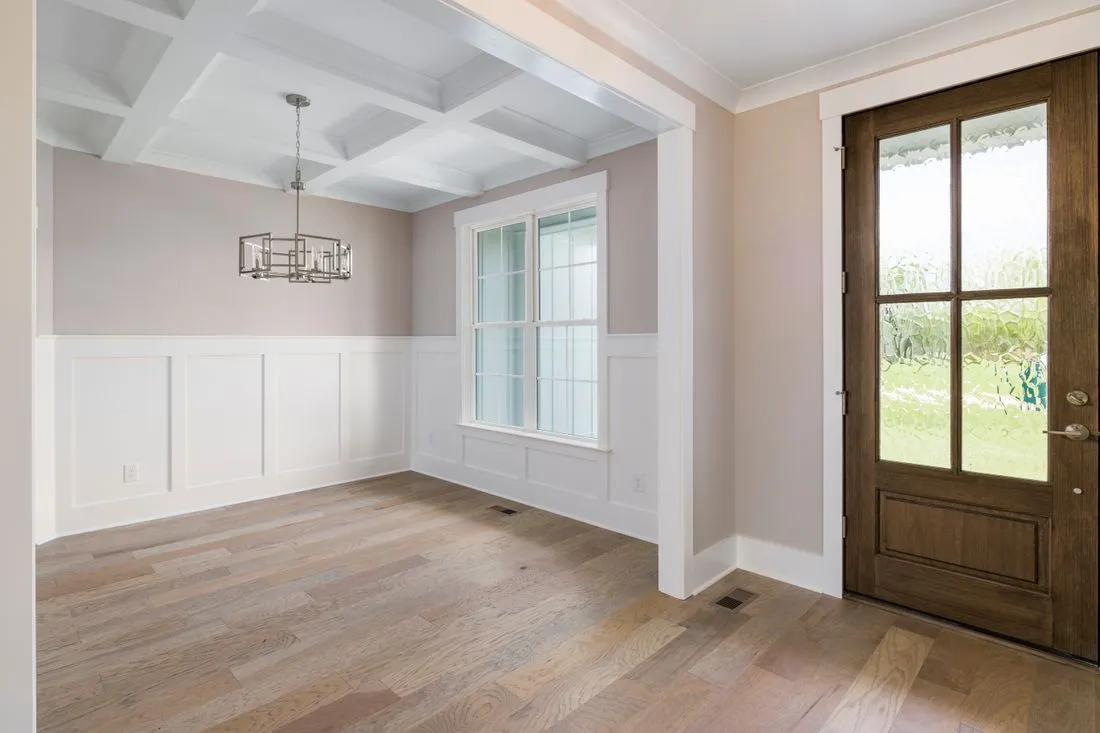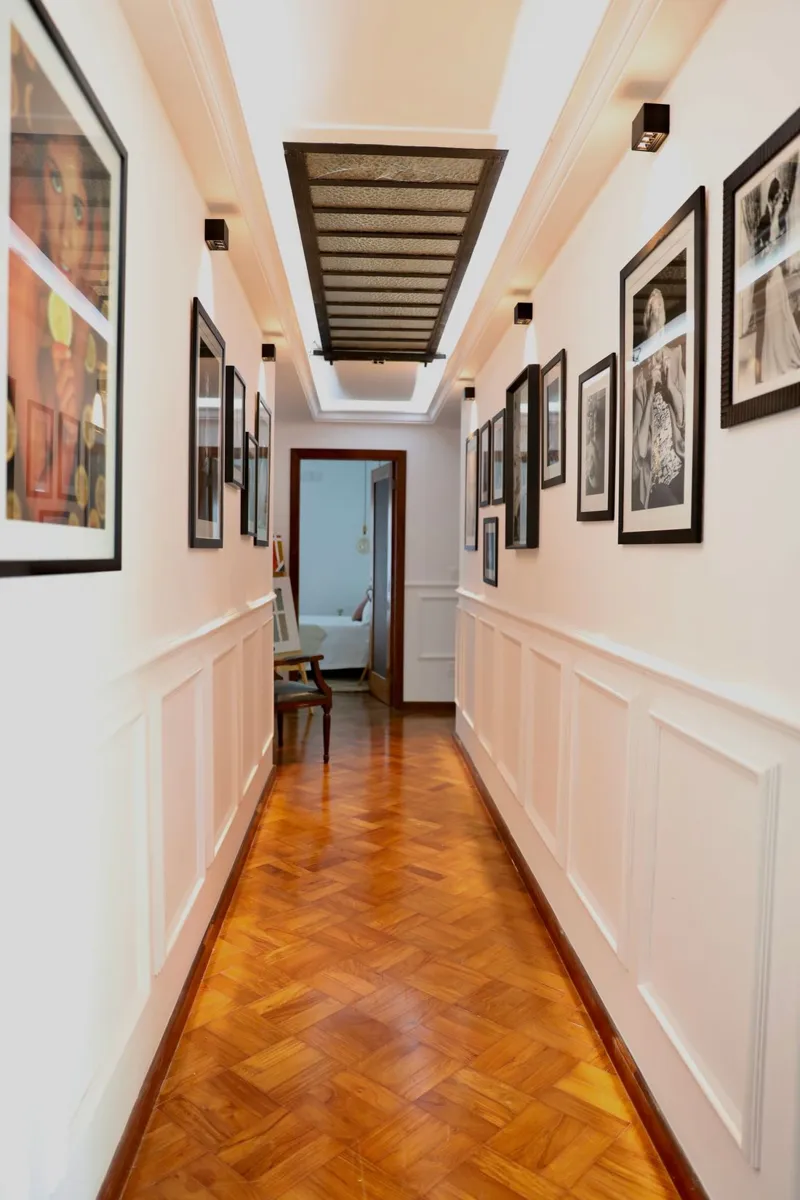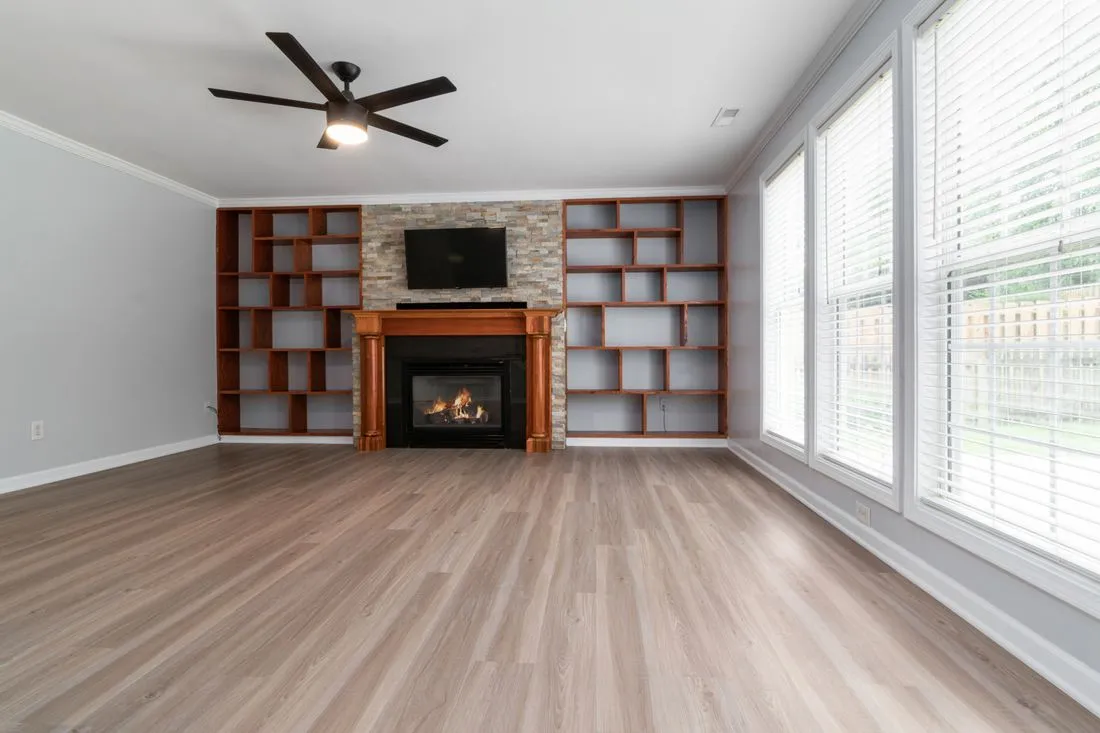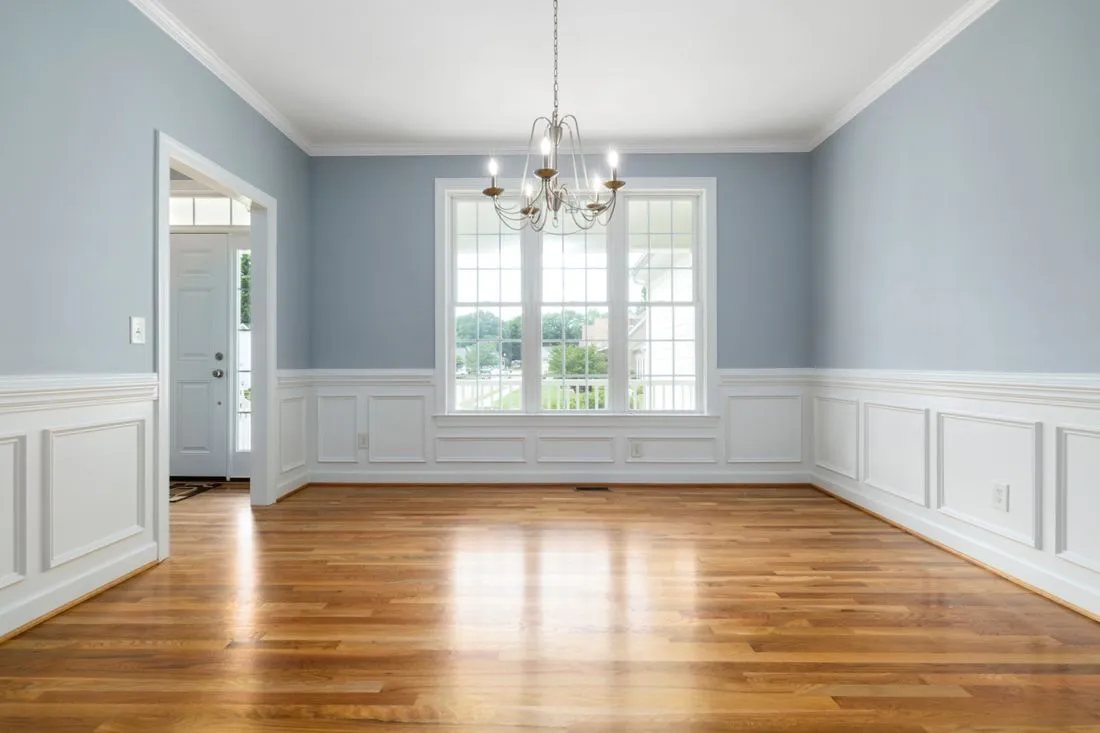
A tall narrow door and a low wide window cannot be made alike simply by wrapping both in the same molding. They occupy different parts of the wall and have different functions. What they can share is a clear relationship: a similar edge, a consistent finish or a deliberate change in scale.
Begin by looking at all the openings visible from one position. A room with a single door and two windows presents a different problem from a hallway with six doors and one small window. The repeated elements will establish the dominant pattern even if an individual opening is larger.
Choose what repeats
Using the same casing profile for doors and windows is a straightforward starting point. Check that the profile can actually fit each location, especially near corners and adjoining cabinets. If it cannot, choose an intentional narrower companion rather than trimming a complex profile in a way that leaves it visibly incomplete.
A shared color can connect openings that retain different original shapes. Similar thickness at visible junctions can help too. You do not have to add a window apron to a door or a deep door header to every window merely to make the parts match.
Be cautious about chasing a common top line
Different opening heights are common. Adding decorative material above a lower window to imitate the top of a door may produce a heavy band rather than balance. Try the idea on a wall elevation and with a full-size paper mock-up. Include curtains, because their upper edge may already provide a useful connection between windows.
The aim is not to disguise the actual construction. Deep extensions, altered openings and changes to window operation can introduce more than a decorative problem. Keep functional clearances and leave structural alterations to the appropriate professionals.
Use the wall between them
Plain space can make two different openings feel comfortable together. If you add wall frames, avoid forcing a tiny panel into every leftover gap. A larger clear margin beside the window may make the door casing easier to read. Stand back until you see the whole wall rather than each trim piece separately.
Before ordering, lay the chosen door and window samples beside the baseboard sample. The three do not need identical shapes, but their meeting points should be understandable. A coordinated set of edges usually brings more balance than trying to make unlike openings share every measurement.