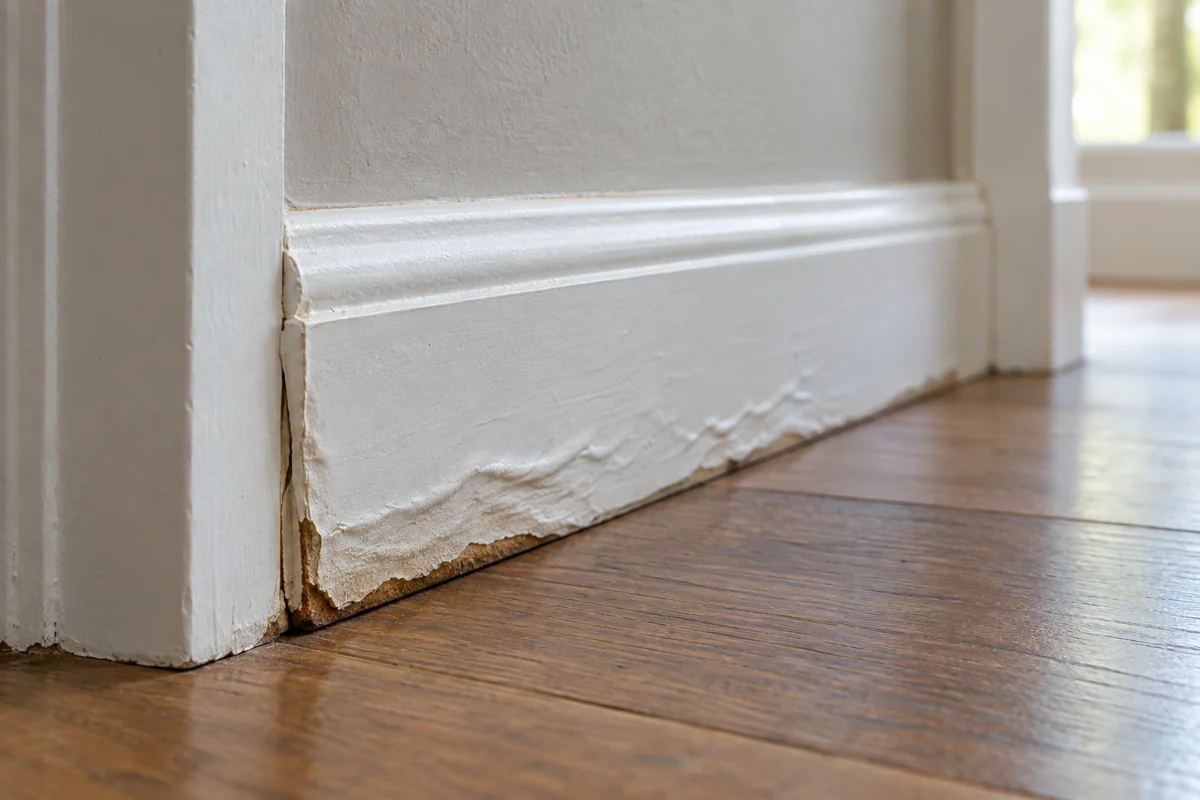
MDF damage often first appears at a lower edge or cut end. The painted face lifts, the profile thickens and the fibers become rough. It can be tempting to sand the area flat and paint it, but the more important question is how moisture reached it and whether that exposure is continuing.
Do not judge solely by whether the surface feels dry today. A leak may be intermittent, a floor may be repeatedly wet during cleaning, or condensation may occur only under certain conditions. Photograph the damage and note nearby plumbing, windows, exterior walls and recent events.
Find the source before choosing a replacement
A plumbing leak needs appropriate repair. Water entering from outside may involve the window, wall or drainage assembly. Persistent room humidity may need a ventilation or building assessment. These are different causes and should not be grouped under a vague instruction to seal the trim better.
If the wall or floor is soft, stained or musty, have the affected area evaluated. A more water-resistant baseboard can hide the same damage behind a cleaner face. It is not a substitute for drying and repairing the surrounding construction appropriately.
Avoid disturbing uncertain old coatings during inspection. Where the building or paint history raises lead concerns, establish the safe process before removal, scraping or sanding.
Decide whether the material is recoverable
A small surface mark and an expanded fiber core are not equivalent. Once the profile is distorted, making the face smooth may remove so much material that its shape no longer matches the run. The repaired area can also remain weaker or absorb coating differently.
Replacement is often the more predictable option for visibly swollen sections, after the moisture source is resolved. Match the profile carefully and decide where the replacement can end at sensible boundaries. A short patch in the middle of a prominent run may create two conspicuous joints; replacing a complete section can sometimes be cleaner.
Before buying another MDF product, describe the actual exposure to the supplier. A moisture-resistant grade has stated limits and finishing requirements. It should not be selected as if the words mean waterproof. Other materials may suit the location better, but they also need compatible joints, coatings and installation.
Rebuild the detail rather than repeating it
Examine the vulnerable edge. Was a cut end left untreated contrary to the product instructions? Was the board installed where standing water regularly reaches it? Did a floor-cleaning routine repeatedly soak the lower edge? Correct the relevant condition rather than simply applying more paint to the face.
For example, a laundry-room baseboard damaged after an appliance leak needs the leak and surrounding moisture addressed first. Selecting a different trim may improve tolerance to future incidental exposure, but it does not make a continuing appliance leak acceptable. The replacement decision follows the building repair.
Keep the new material and finish information with the room records. Check the repaired area after normal use and after any event related to the original damage. A successful repair remains dry and stable; it is not merely the same swollen outline hidden beneath a fresh white coating.