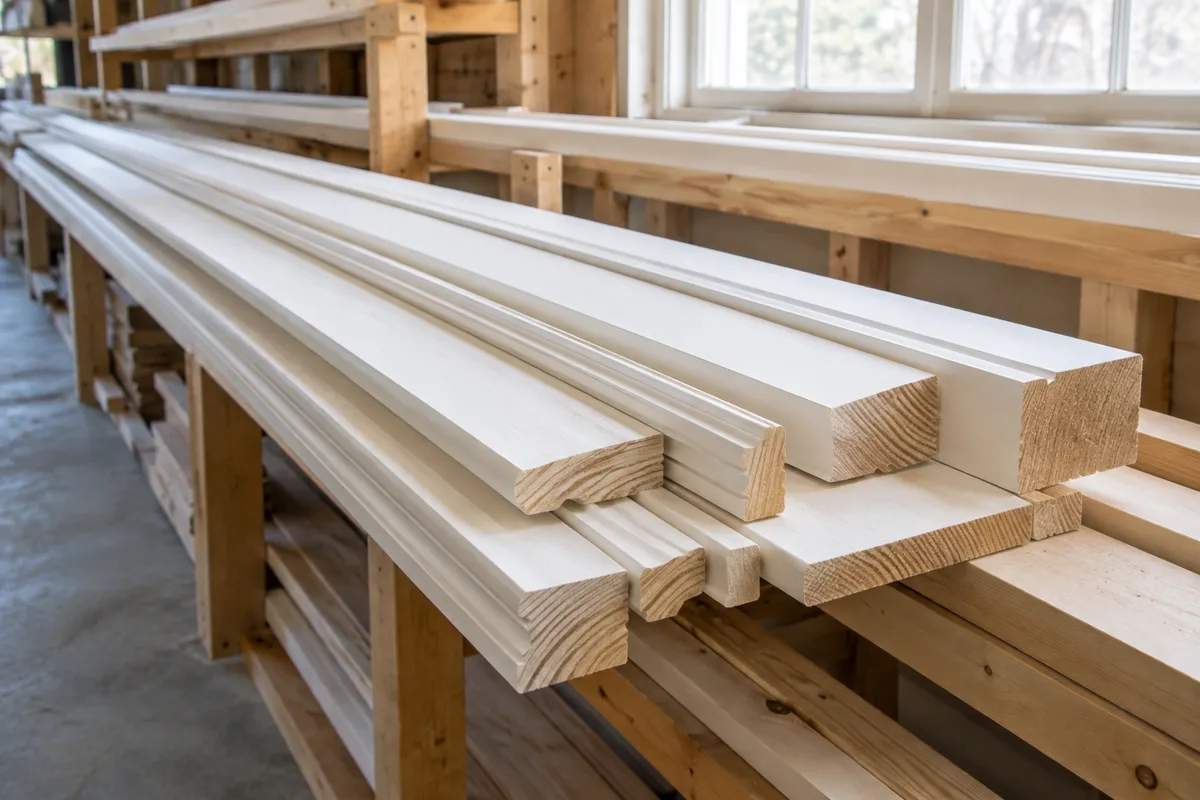
The cleanest face in a stack does not always belong to the best trim board. A long molding can have a pleasing profile and still be twisted, damaged or difficult to seat against the wall. Inspect before cutting or accepting delivery, while replacement is straightforward.
Handle long lengths with enough space and assistance to avoid striking people or nearby stock. Support the piece instead of balancing it precariously on an end. If the store has a suitable viewing area, use it rather than pulling boards into an active aisle.
Read the shape from more than one direction
Look along both a face and an edge. A bow curves along the length; a twist changes the orientation of the cross-section. A modest curve may be manageable in some installations, but a twisted profile can leave one edge proud while the other contacts the wall. Do not assume additional fasteners are the answer.
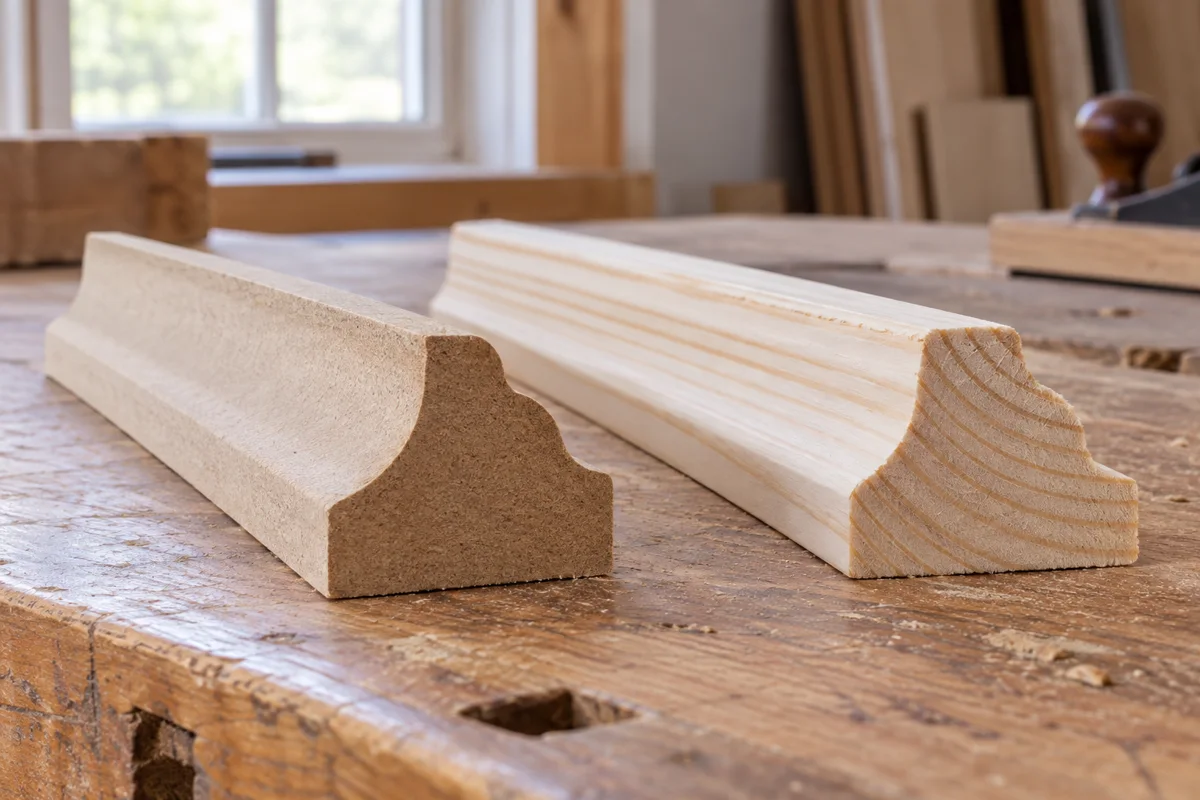
Set the piece on suitable supports if permitted. Check whether it rests consistently without forcing it. Compare several lengths of the same product to distinguish a deliberate back relief from accidental distortion.
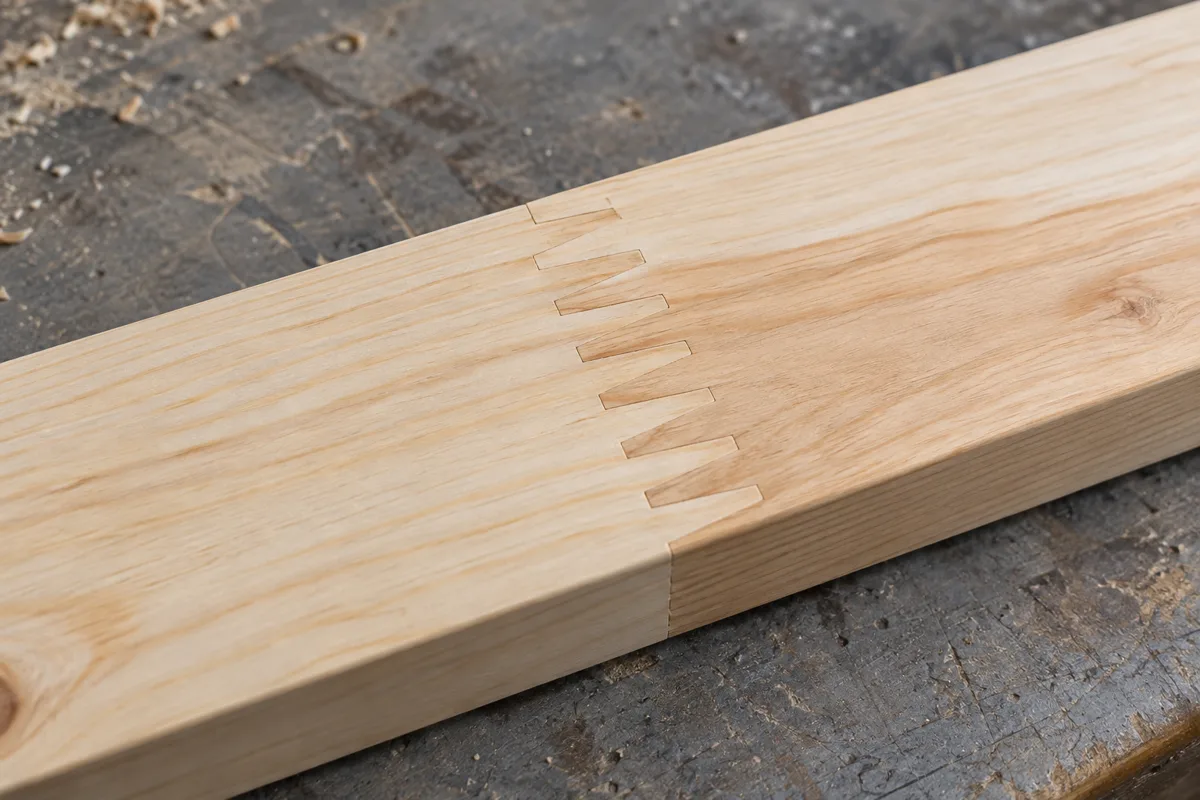
Inspect the ends, especially on finger-jointed material. Look for splits, crushed corners and open joints. A damaged end can sometimes be cut away within a planned layout, but that reduces the usable length. Count the remainder, not the number printed on the shelf tag.
Match quality to the visible run
Reserve sound, clean lengths for long uninterrupted walls and prominent doorways. Shorter sound portions can suit smaller sections if the cutting plan allows. Avoid building a project around an unusually defective discounted piece unless its usable sections are clear and the savings justify the extra handling.
Paint-grade does not mean defect-free, nor does it mean every flaw is acceptable. A small surface mark may be repairable; a failing joint or distorted thin edge is a different issue. Ask the supplier to clarify its grading and return policy.
For an online order, inspect the package when it arrives. Photograph damage before separating the shipment and keep the labels. Storage after delivery matters too: a straight board left leaning in a damp corner may not remain in the condition you selected.
A careful inspection takes less time than persuading unsuitable trim to behave on the wall. Buy material that begins reasonably close to the shape you need, then use fitting work to address the room rather than defects in the stock.