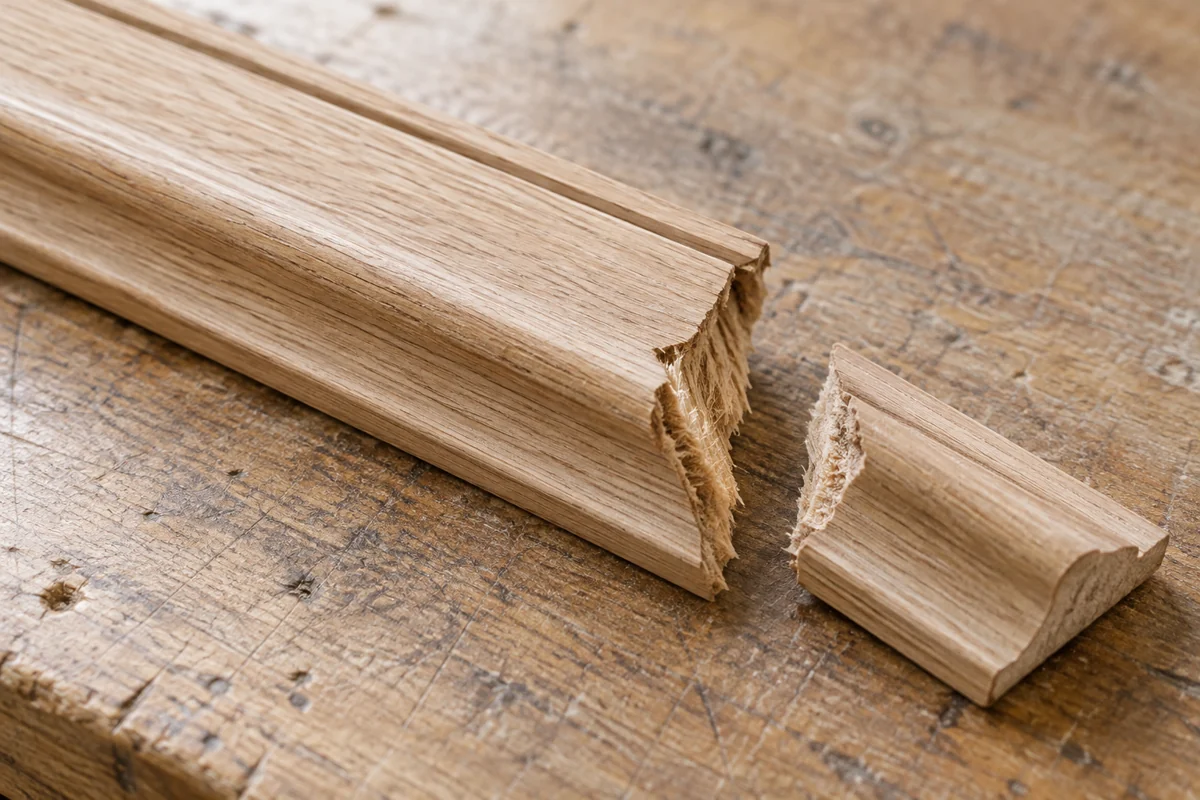
A split near the end of a molding can appear during handling, cutting or fastening. Before filling it, determine whether the piece is still sound enough for its role. A crack that opens when the end is moved is different from a shallow surface check that remains stable.
Inspect the split's length, direction and relationship to the profile. Does it run through a thin bead, reach the joint or separate the section that carries a fastener? Look at the back and cut end if they are accessible without unsafe disturbance.
Recut when the layout allows
If removing the damaged portion leaves enough sound length for the intended run, a recut can be more reliable than rebuilding a compromised end. Recheck the entire measurement and joint allowance before shortening anything. A repair that saves the end but leaves the board too short has not saved the piece.
When the split reaches a delicate detail or an important connection, replacement may be sensible. Paint can conceal a line but cannot restore the behavior of an unsound fragment by itself.
A compatible adhesive repair may be appropriate for some sound wood splits under an experienced method, but it is not a universal recommendation for MDF, PVC or other manufactured trim. Follow the product guidance and use a repair that can be held safely while it cures. Avoid forcing a split closed in a way that distorts the profile.
Find the cause before repeating it
An unsuitable fastener, too little edge distance, an unsupported cut or damaged stock can contribute to end splitting. Have the installation method checked rather than repeating it on the replacement piece. Required predrilling, fastener selection and positioning depend on the material and system.
Powered fastening equipment adds its own hazards and should be used only with appropriate instruction and protection. Do not try to rescue a thin damaged end by adding more fasteners in a crowded area.
For an installed old piece, assess the coating before sanding, cutting or removing it. If the split is associated with moisture, investigate the source as well. Replacing the trim without correcting wetting may produce the same problem later.
After the sound repair or replacement is complete, inspect the face and joint under side light. Use finishing material only to refine a stable surface. Keeping a short matching spare can make this decision easier in the future: when replacement is available, there is less pressure to preserve an end that no longer deserves to stay.