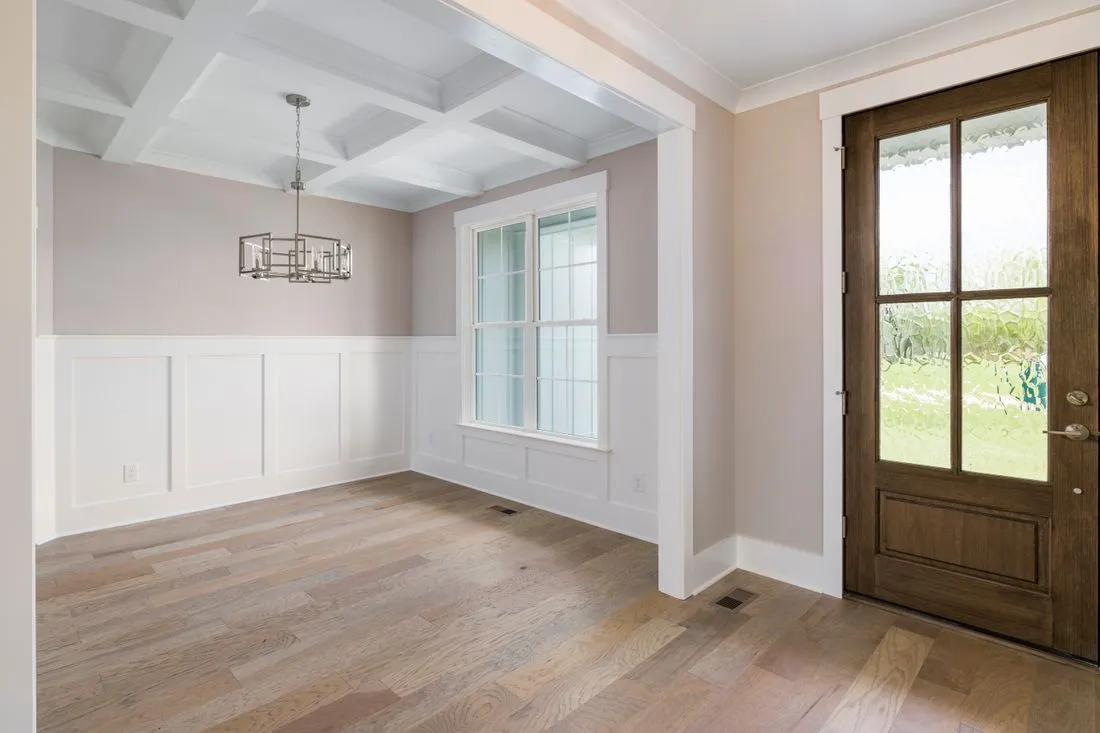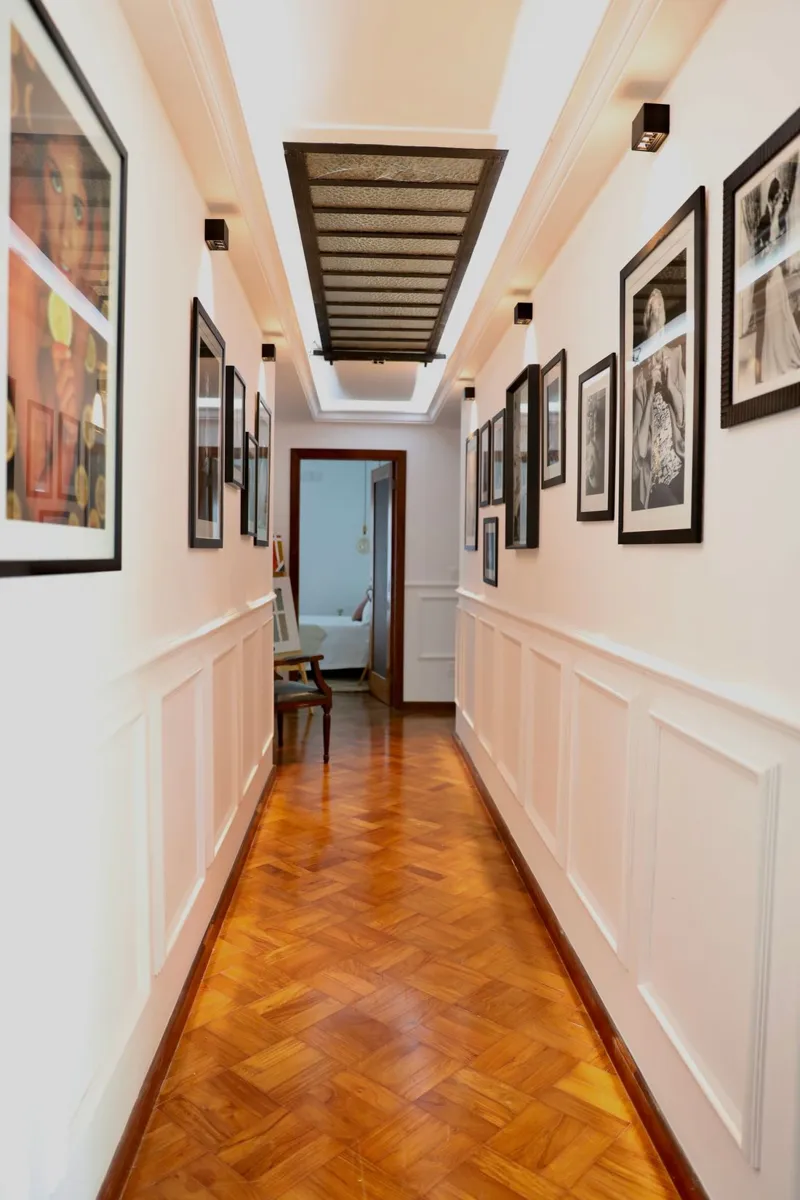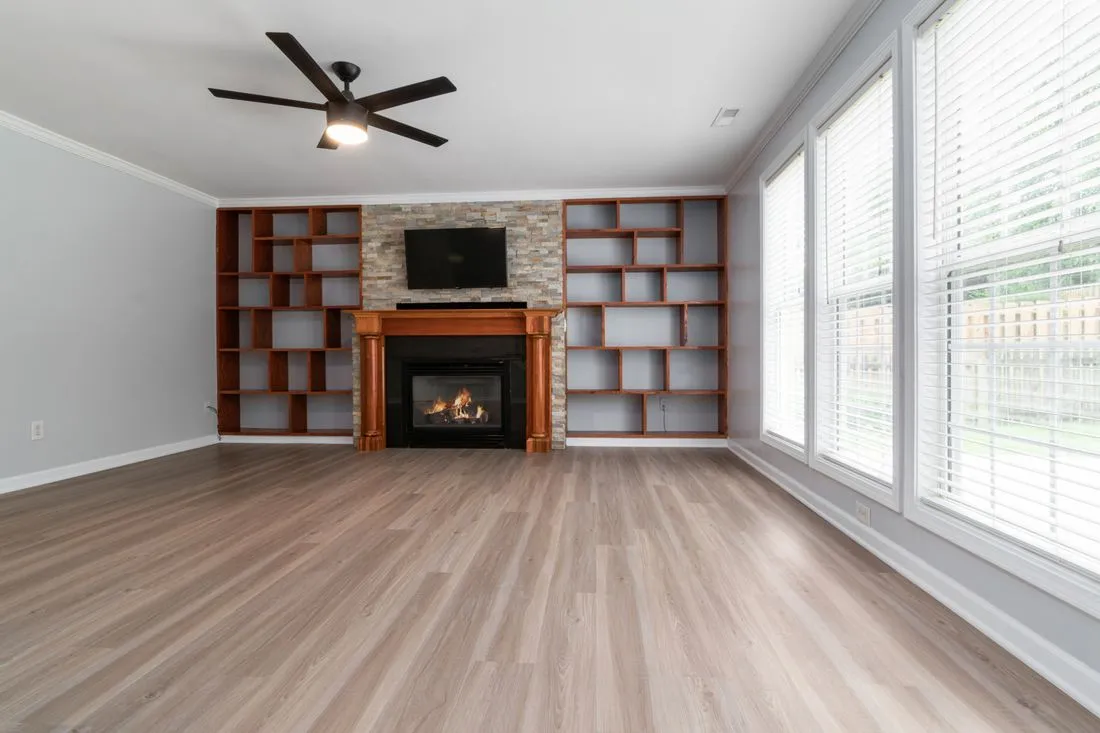
A compact room with tall doors and a deep window recess can make a thin baseboard look accidental. The floor area is small, but the architectural elements are not. Matching trim only to the room's square footage misses that relationship.
Separate visual weight from physical projection
A taller flat baseboard can have a strong presence without projecting far into the room. Several stacked profiles may be lower overall but extend farther from the wall. Those are different choices. Where space is tight, measure the depth of the complete assembly as carefully as its height.
Depth becomes important behind furniture and beside doors. A cabinet may need to sit close to the wall; a door may open toward a narrow pier. A sample held in the intended position can reveal a conflict that is invisible on a product page. Include any shoe molding, cap or backband in that sample.
Give a large detail something quiet beside it
Substantial casing can work well in a small room if the neighboring surfaces are restrained. Pairing it with numerous tiny wall frames often creates more visual clutter than the size of the casing itself. Choose which element should define the room and let the remaining trim support it.
Color influences this balance. Trim painted close to the wall color tends to read through its shadows and edges. A contrasting finish makes the outline more explicit. Neither approach changes the actual dimensions, so do not rely on a color choice to rescue a profile that collides with hardware or leaves an awkward termination.
Make two longer mock-ups instead of comparing short offcuts side by side. Place one candidate around a doorway or along the wall beneath a window. View it from the room's entrance, then from the normal seating position. The larger version may relate better to the door even if it initially seems bold in your hand.
Stop before every edge becomes a feature
In a small space, there may be very little plain wall between furniture, windows and doors. Preserve some of it. One coherent trim family, thoughtfully joined, often feels more spacious than a collection of delicate but unrelated details. If a proposed addition creates a narrow leftover strip of wall, redraw the layout before trying to decorate that strip too.
Keep the winning mock-up in place for a day. A proportion that continues to look settled as the light changes is a stronger guide than the assumption that small rooms always need small trim.