An interior plank wall looks unfinished when its boards stop with exposed edges that were never meant to be seen. The issue is especially obvious beside a doorway or on a partial-height feature. Choose the end treatment at the same time as the planks, because it affects the width available for the pattern.
The term shiplap is used loosely in decorating. Some products have a genuine overlapping joint; others use a different machined connection or simply imitate the look. Their edge details and movement requirements are not interchangeable. Identify the actual product before planning the finish.
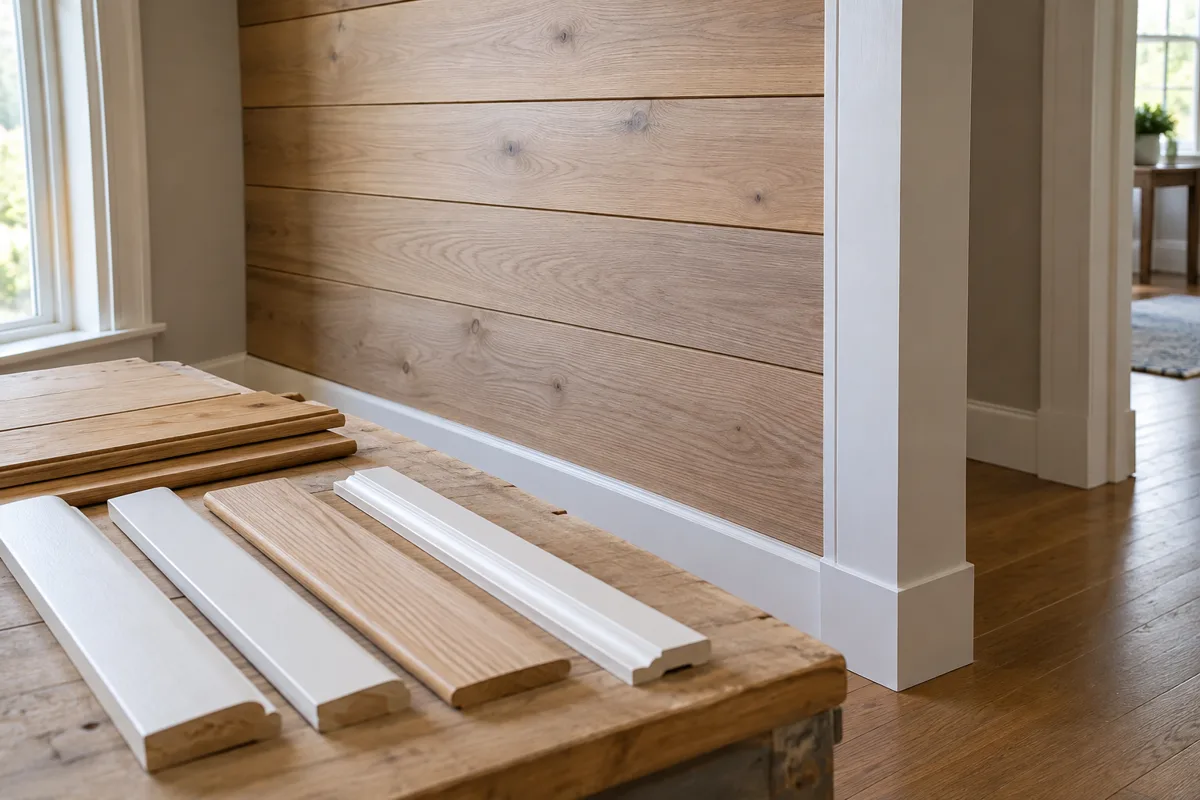
A vertical trim board can create a clear boundary at the end of horizontal courses. An appropriate channel or manufacturer-supplied edge may suit another system. A carefully finished exposed end is possible with some materials, but not every core or cut surface is intended to remain visible.
Compare the finished depths
The end piece needs to receive the plank face and any backing layer. If it is too shallow, board ends remain proud of it. If it is disproportionately deep, it can look like an unrelated post.
At a door casing, compare the complete plank build-up with the casing thickness. The wall treatment may need a separate boundary rather than running directly into the existing trim. Do not assume a decorative edge can be made neat with a wide bead of filler.
Outside corners require another decision. The end treatment on one face must work with the adjacent surface, whether that is another plank wall or plain drywall. Draw the corner from above so the overlap is clear.
Let the pattern finish comfortably
A narrow last course near the top or bottom can make an otherwise careful end detail feel awkward. Test the course layout before fixing the starting position. Sometimes a small change at both boundaries produces a more balanced result than leaving one full board and one sliver.
Check material suitability and the product's instructions for gaps, substrate, fastening, and finishing. Decorative plank walls should not be described as waterproof or structural merely because they cover the surface.
Paint or finish a corner sample before deciding. The cut edge, trim face, and recessed joints may absorb or reflect the coating differently. A complete mock-up shows whether the boundary reads as part of the wall, which is the real purpose of the end treatment.