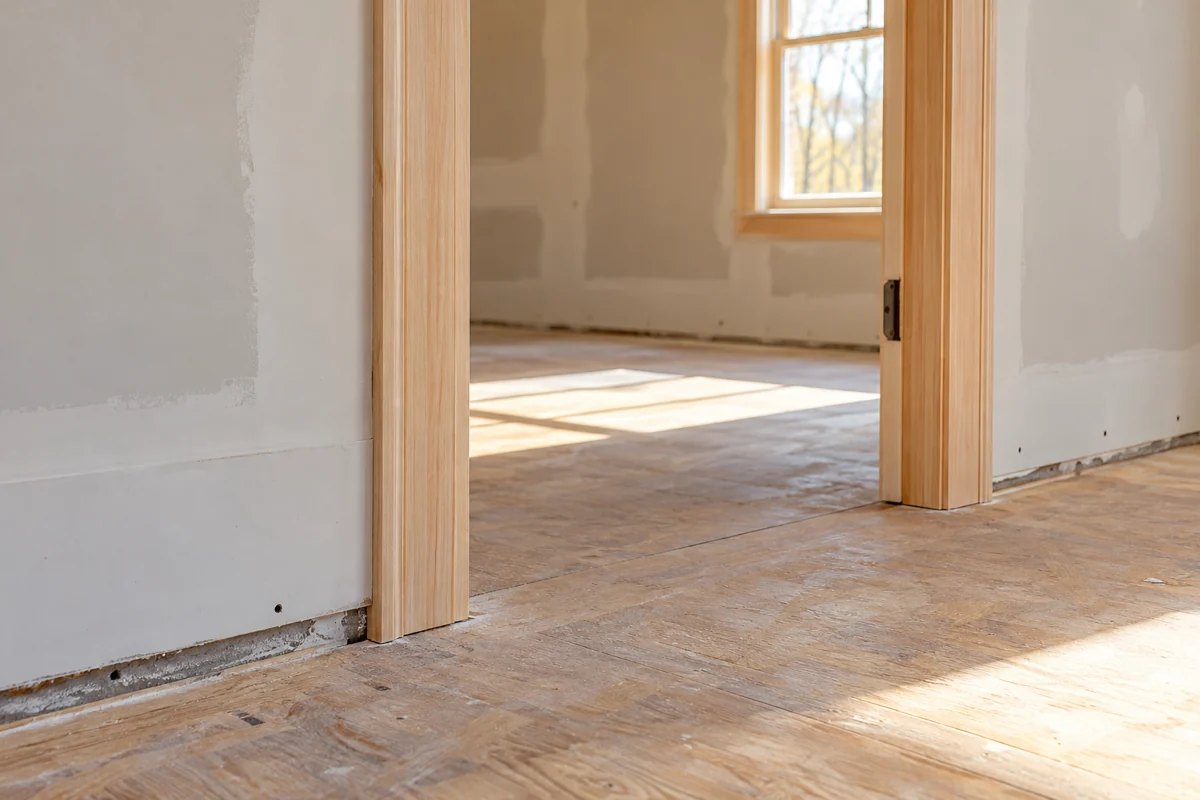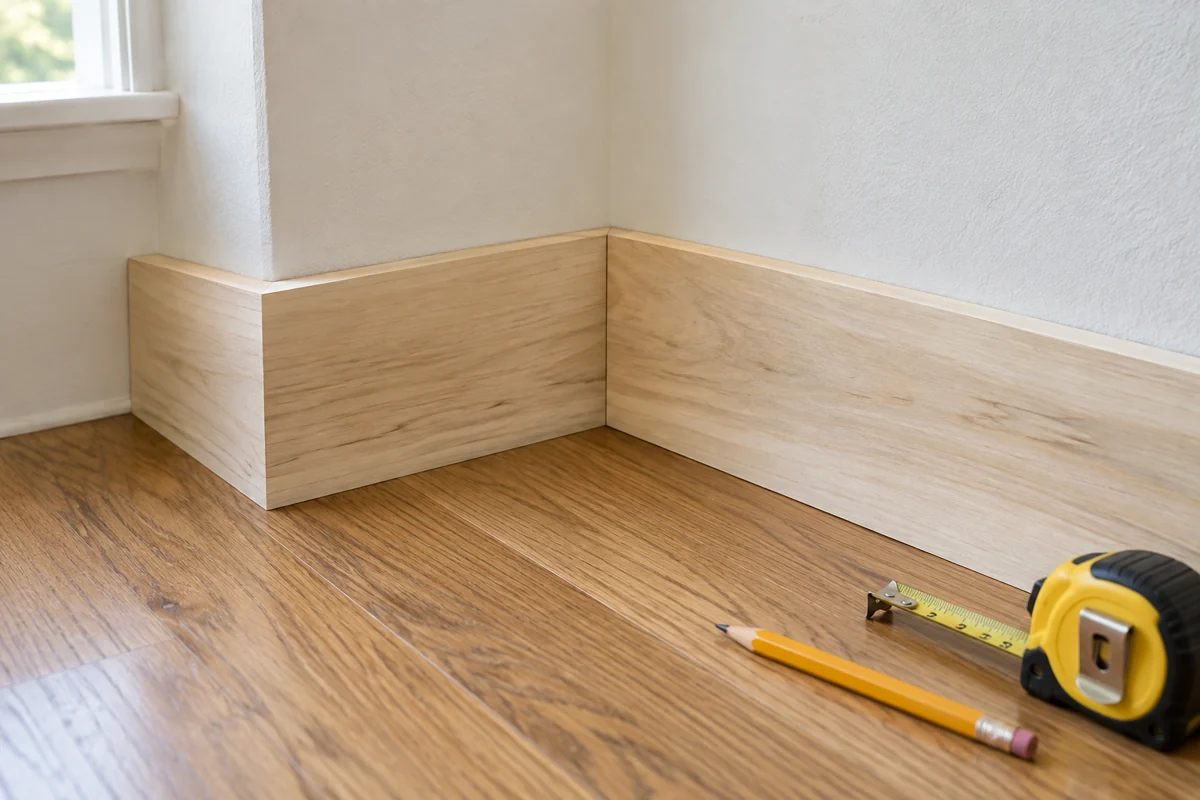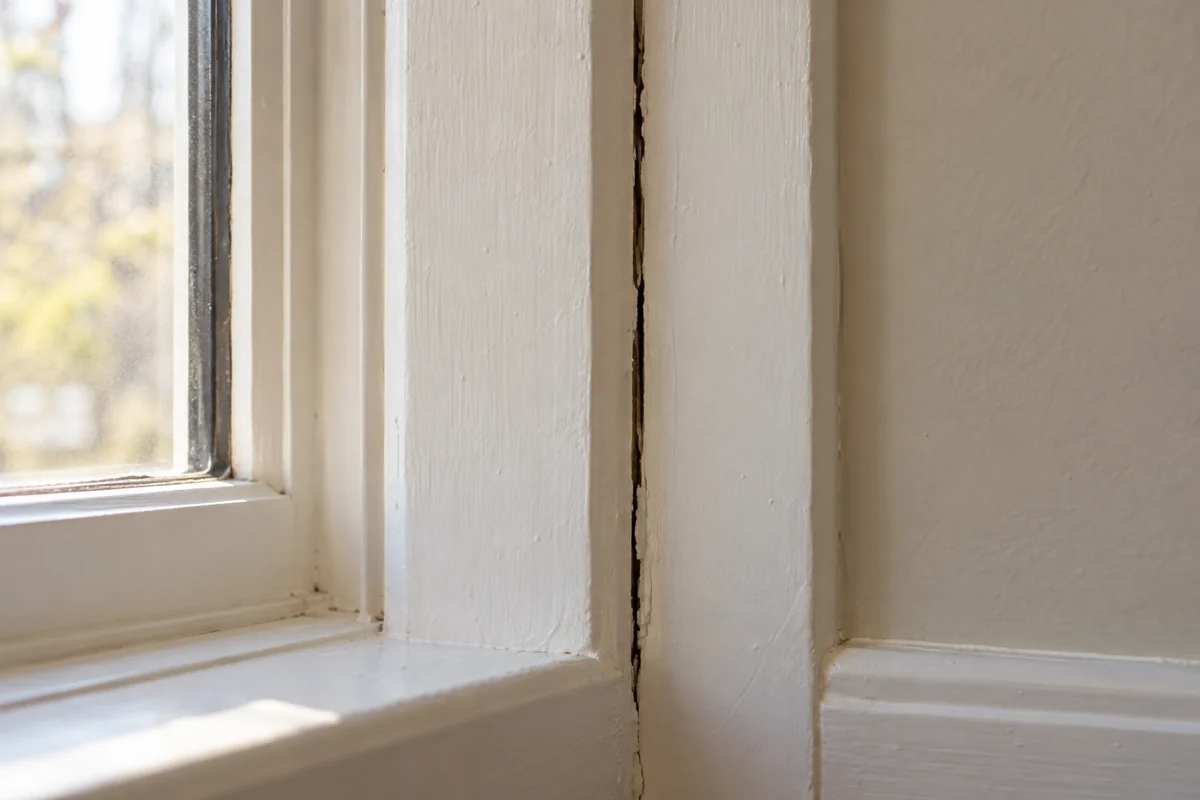
A hairline gap that appears in a dry season and becomes less visible later can be frustrating precisely because it seems too small to justify much attention. Filling it repeatedly may create a thicker, more obvious repair without changing the movement that caused it.
Start a simple record. Photograph the same joint from the same distance, note the date and room conditions if known, and compare nearby joints. This helps distinguish a recurring pattern from a gap that is steadily worsening.
Separate movement from damage
Wood and wood-based materials can respond to changes in moisture conditions; synthetic products may have different movement behavior. The joint system and installation matter as much as the material label. A gap can also result from poor fit, loose fixing or damaged backing rather than normal seasonal change.
Look for accompanying signs: staining, softness, a board pulling away, a door changing operation or a crack extending into the wall. Those conditions deserve assessment rather than being dismissed as seasonal. Sudden changes following a leak or building work need particular attention.
Do not infer a structural diagnosis from one trim seam. If movement is substantial, progressive or accompanied by broader cracking, obtain an appropriate building assessment. Decorative filler is not a way to establish that the structure is sound.
Choose a repair after understanding the joint
An intended movement allowance should remain functional. A joint designed to be bonded needs the specified bonding method. A wall-to-trim finishing seam may call for a compatible flexible product. Those are different details, so a single hard filler is not a universal answer.
If the board is poorly seated or inadequately fixed, correct that installation before refinishing. If the room experiences extreme humidity changes, investigate the cause and appropriate environmental management rather than expecting a coating to stop material movement.
On stained trim, even a small repair can change color and grain appearance. Test the proposed finish on a matching sample. On painted trim, avoid building up broad ridges around a narrow opening; side lighting can make the repair more visible than the original line.
Old coatings need their own safety assessment before sanding or removal. Where lead may be present, use the appropriate qualified process.
A modest stable seam does not always require immediate intervention. Recording its behavior can lead to a better timed, better matched repair. The aim is a detail that accommodates the actual assembly, not a briefly seamless surface achieved by forcing every joint to behave as though the room never changes.