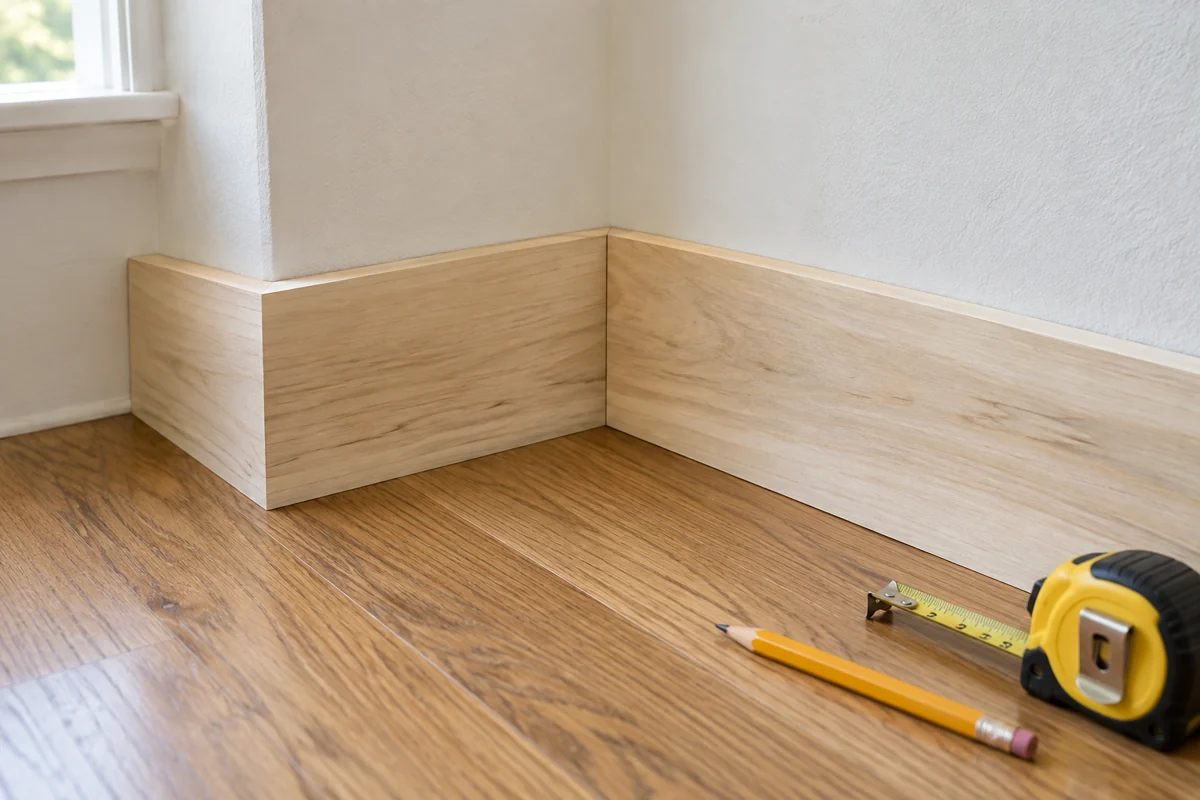
Caulk is useful because it can create a neat transition between compatible surfaces. That usefulness sometimes encourages it to be used as a substitute for fitting. A wide, uneven band around a molding often tells the eye that something is wrong even after the color is matched.
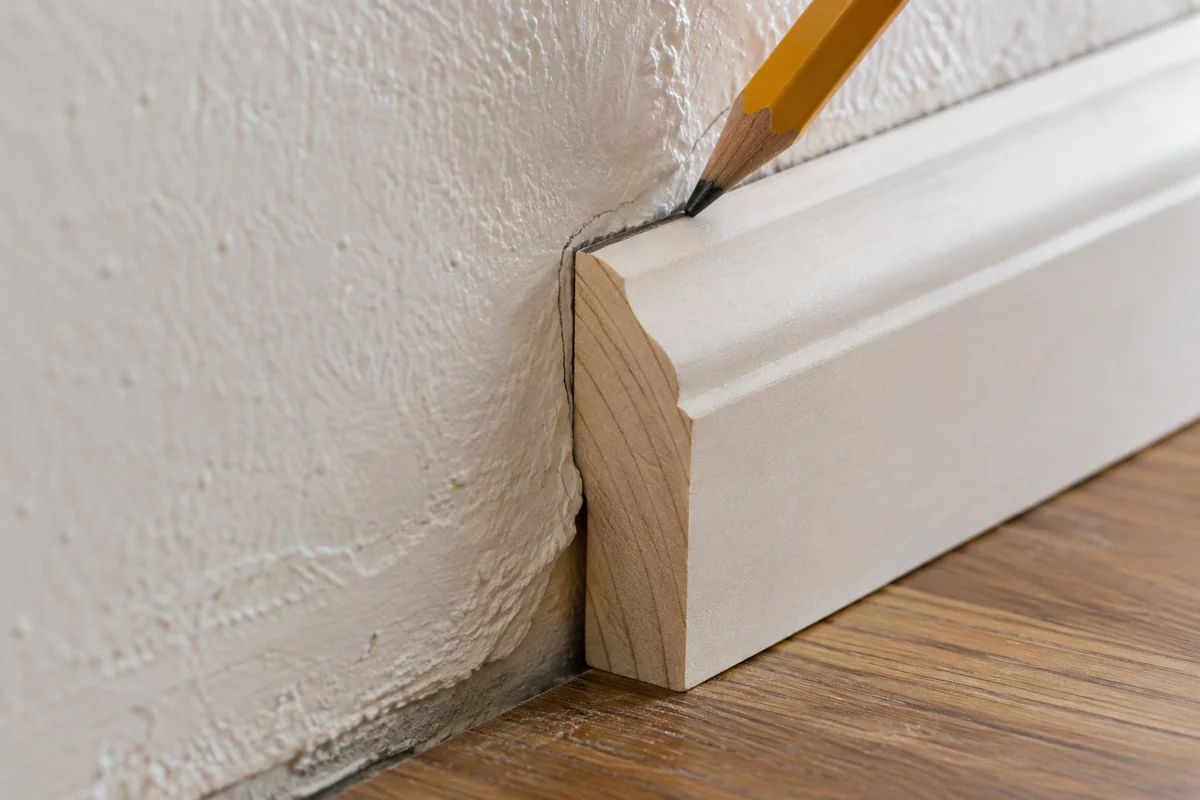
Scribing is a fitting method that transfers the shape of an adjacent surface to a suitable piece so the edge can be adjusted. It removes material to improve the fit. Caulking fills an accepted joint with a compatible product. Neither is automatically the correct response to every gap.
Ask why the opening exists
A wall can be irregular, a floor can dip, a board can be twisted, or a measurement can be wrong. The gap may also be intentional, as with a floor expansion space. Identify the cause before closing it. A movement clearance should not be filled merely because it looks unfinished before the trim detail is complete.
Check whether the molding has enough material to be fitted without destroying its profile. A broad flat baseboard offers different possibilities from a delicate shaped edge. Some manufactured products restrict cutting, sanding or altering their surfaces; those instructions take precedence over a familiar woodworking technique.
Use a sample to judge the visible result
Hold the piece in its intended orientation and look at the whole run. If a proposed fitted edge would leave the top line visibly inconsistent, the solution may need reconsideration. A short test can show whether there is enough material, while a complete dry fit reveals the relationship to corners and casings.
For a small stable wall-to-trim seam, a paintable caulk appropriate to both surfaces may be sensible. Follow the product's joint-size, preparation and painting instructions. A product designed for a narrow bead should not be spread across a deep cavity in the hope that multiple layers will behave the same way.
If the board is loose, secure it with the correct system before cosmetic finishing. If moisture is changing the material, resolve that problem first. Repeatedly filling a moving gap is a maintenance loop, not a repair.
Fitting work on old trim also needs a coating assessment before sanding or cutting. Unknown or pre-1978 paint should remain undisturbed until appropriate lead precautions are established.
A useful dividing line is whether you are refining a sound connection or trying to invent one. Caulk belongs in the first situation. When the missing shape is large enough to define the appearance of the joint, fitting, replacement or substrate correction deserves attention before any cartridge is opened.