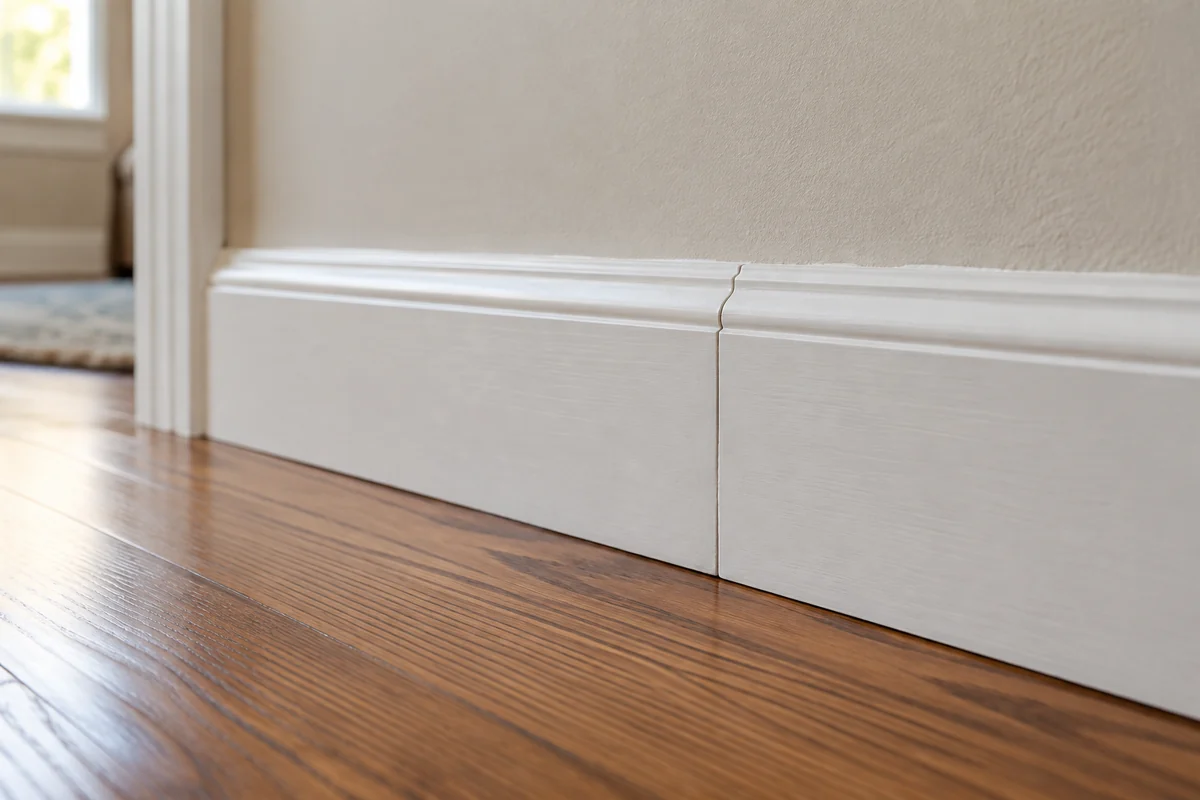
A long wall sometimes needs two lengths of trim. A scarf joint uses angled mating ends to connect the run, but a neat-looking cut is only part of a successful detail. Material, backing, fastening and movement requirements determine whether that connection will remain satisfactory.
First ask whether a suitable single length is available and practical to handle. Avoid adding a joint solely because it was the first stock length you noticed. If a join is necessary, plan its position before dividing the wall into pieces.
Choose a location with a reason
Consider the main viewing direction, nearby light and the available backing under the installation instructions. A seam directly beneath a strong window reflection can be more visible than one in a less exposed portion of the run. That does not justify placing it where it cannot be properly supported.
Avoid creating a tiny leftover piece at the end of a wall just to use every inch of stock. A cutting plan with two useful lengths may be more forgiving than a long board and a fragile short addition. Include the neighboring corners in the calculation.
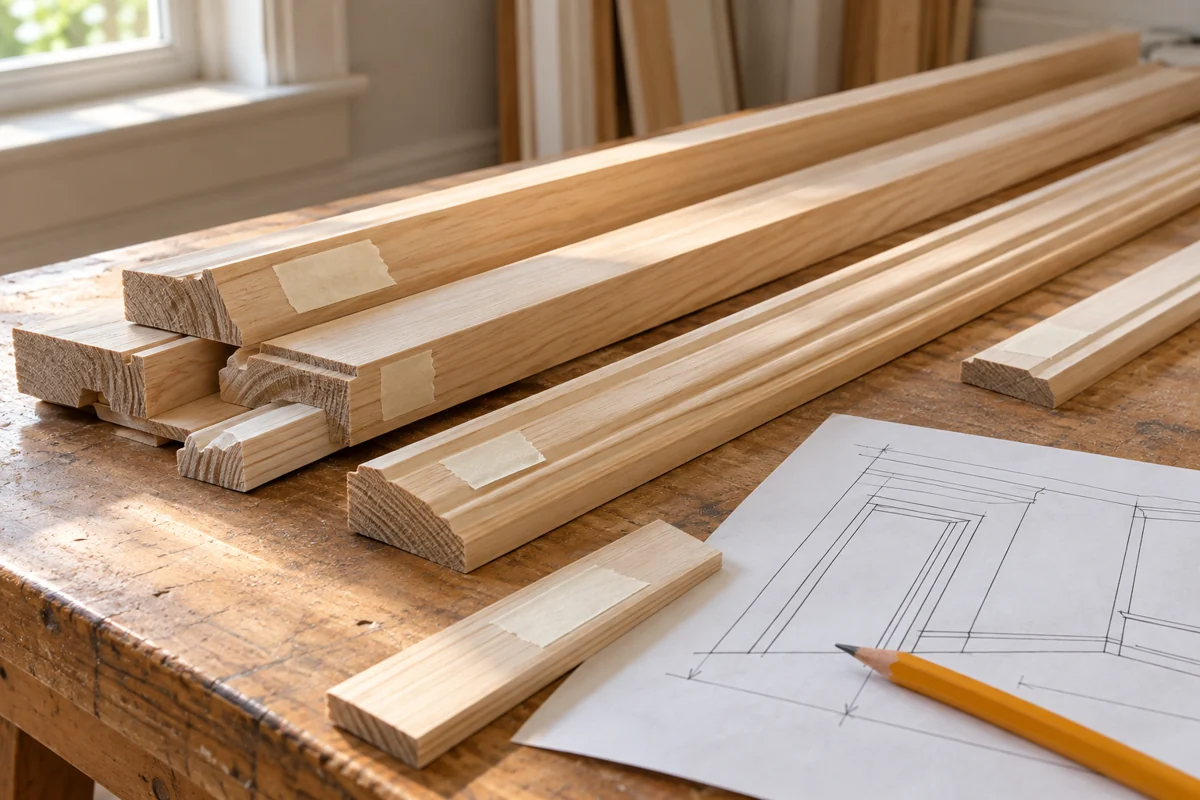
For patterned or stained molding, the face matters too. A change in grain or repeated ornament may draw attention to the join even when the surfaces align. Lay out the pieces and examine the meeting before cutting.
Follow the material's joint system
Wood, PVC and other manufactured molding can have different movement and bonding requirements. A method intended for one should not be transferred to another automatically. The manufacturer may specify a joint adhesive, fastening pattern or allowance elsewhere in the run. Do not substitute a universal gap or glue recommendation.
Dry-fit the complete assembly. Check that the faces align and neither end sits proud. A joint can be tight at the cut while the molding twists away farther along the wall. Resolve the seating before applying permanent adhesives or fasteners.
On paint-grade trim, a small finishing operation may reduce a visible seam, but paint does not prevent material movement. If the joint repeatedly opens, investigate the cause rather than adding a wider repair each season.
Record where the join is and what system was used. This can help during future repainting, when a faint line might otherwise be mistaken for a crack in the board. The best long-run joint is deliberate: chosen for support, material behavior and appearance together, not hidden wherever the last board happened to end.