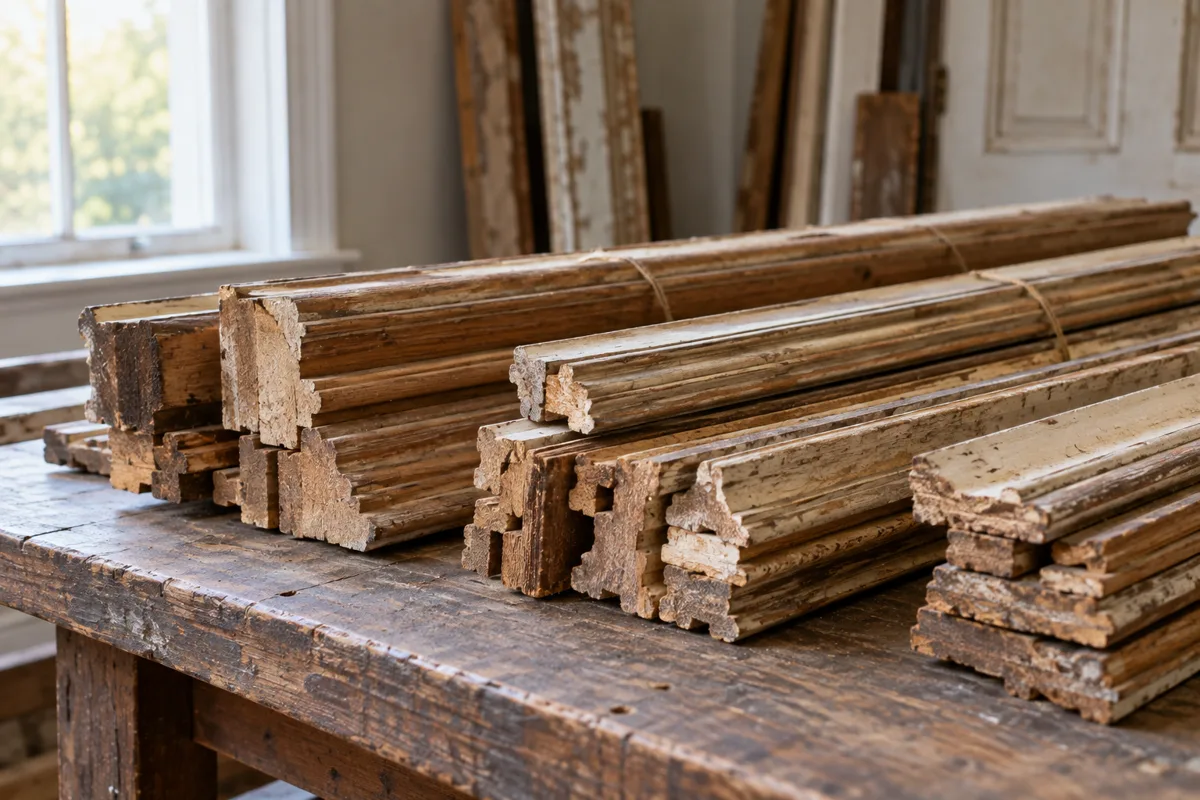
A stack of salvaged trim can contain profiles that are difficult to find in a modern store. It can also contain short lengths, hidden fasteners, damaged edges and unknown coatings. The useful price comparison is the cost of enough usable material after those complications are understood.
Start by measuring the available lengths and the amount your room actually needs. A collection of attractive short pieces may work for a small framed detail but create too many joins around a doorway. Check whether the seller has more of the same profile, and do not assume a later visit will produce a matching bundle.
Leave unknown paint undisturbed
Painted salvage may come from a pre-1978 building or have no reliable history at all. Do not sand, scrape or cut it to discover what is underneath. Arrange appropriate lead assessment and handling before disturbing uncertain old coatings. A casual visual inspection cannot establish that they are lead-free.
Unpainted wood is easier to inspect, but it can still have an old clear finish, contamination or embedded metal. Ask where it came from and how it has been stored. Avoid bringing visibly damp or pest-damaged material into the house while you decide what to do with it.
Count usable edges, not just feet
A molding can have a beautiful face and a missing lower bead. Check every piece along its length. Nail removal may have left splits, and a crushed edge may prevent a tight joint. Mark the sections that could actually be used without extensive reconstruction.
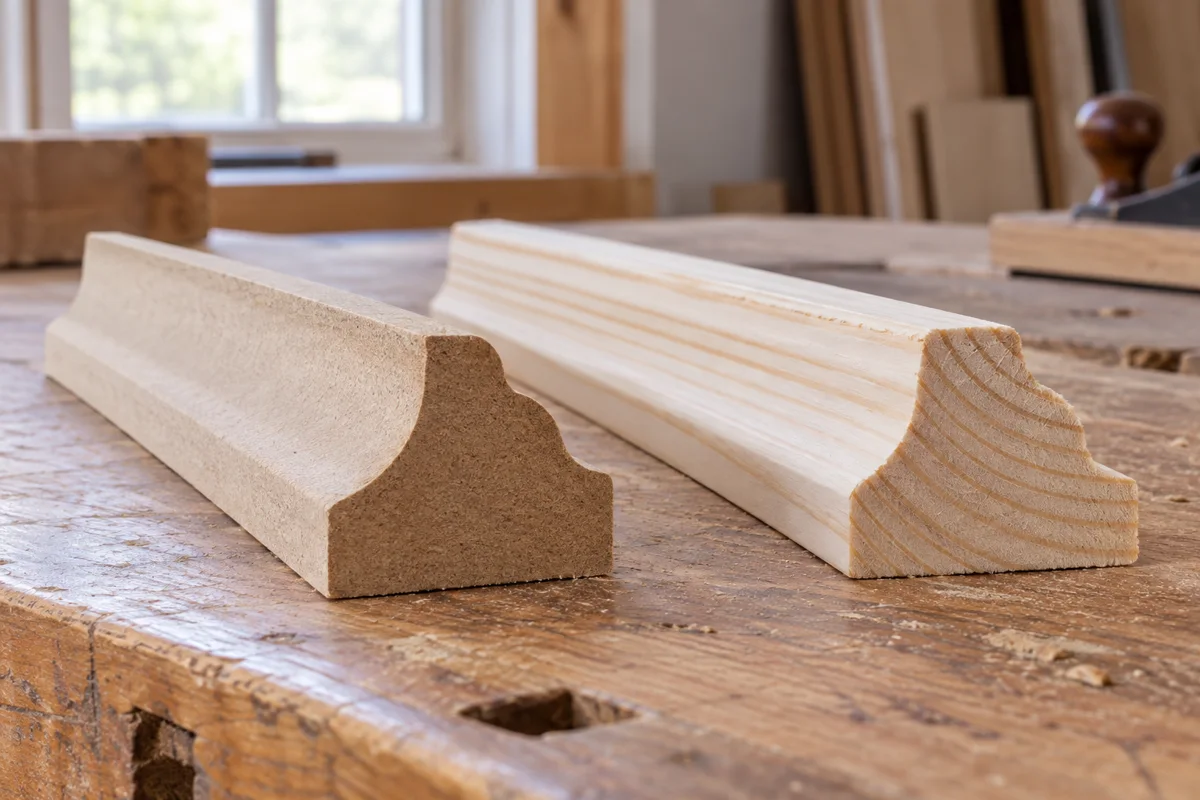
Also compare profiles against one another. Old buildings often contain several generations of millwork. Pieces bundled together may be close rather than identical, and a slight difference becomes obvious when they meet end to end.
For a small project, selective use can be more successful than trying to stretch salvage across an entire room. A single complete doorway or a discrete decorative frame gives the material a clear boundary. A millwork shop may be able to reproduce a missing profile, but obtain that estimate before committing to an incomplete supply.
Keep the material's history with the project records. Note any testing, treatment and finish decisions, together with the dimensions of the surviving profile. Salvage is most useful when its uncertainties have been resolved deliberately, rather than hidden beneath a fresh coat of paint and passed on to the next repair.