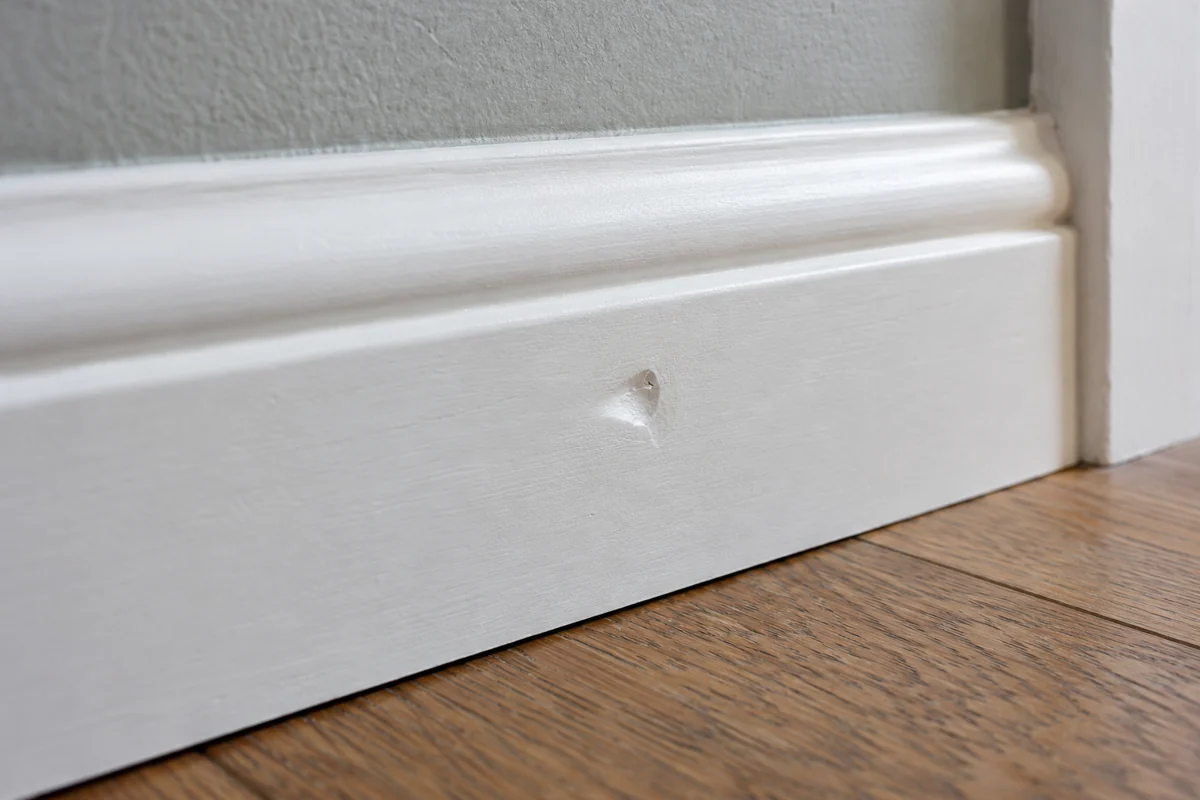
A small dent in painted trim can catch the light more than a larger mark on the wall. The repair needs to restore the local contour without turning a crisp profile into a rounded patch. Begin by identifying the material and the depth of the damage.
A compressed area in sound wood is different from a torn MDF edge, a cracked synthetic surface or missing material at a corner. Check the repair instructions for the product. A method that works on bare solid wood should not be transferred automatically to an engineered or coated molding.
Make sure it is only a dent
Inspect for looseness, splitting and moisture. If the board moves or feels soft around the damage, a cosmetic filler is not the first step. Resolve the underlying condition and determine whether the section remains sound.
Before sanding or otherwise disturbing an old finish, establish whether lead precautions are required. Unknown coatings and paint in pre-1978 homes should not be treated as ordinary dust. Once safe preparation is established, keep the work limited to the affected area.
Select a filler or repair system compatible with the trim material and intended finish. Follow its depth and application limits. Do not choose a hard product solely because it sounds durable; a repair that is unsuitable for the substrate can separate or become difficult to shape.
Use the intact profile as a guide
Look at undamaged molding immediately beside the dent. The repair should continue that surface. On a flat face, an appropriate small block can help avoid creating a hollow. On a bead or cove, use a suitable shaping method that preserves the curve rather than flattening it.
Inspect from the side under light that grazes the surface. Touch alone can miss a subtle ridge. Stop when the repair is flush with the intended contour instead of continuing to work a larger and larger area.
Prime or seal the repair as the coating system requires before applying the finish. A patch can absorb paint differently and remain visible even when its shape is correct. Test the touch-up color and sheen; an aged finish may not blend perfectly with paint from the original can.
If a small touch-up flashes visibly, repainting a logical complete section may produce a calmer result. Use natural boundaries such as a corner or joint rather than feathering an ever-expanding patch indefinitely. The goal is a repaired detail that disappears into the run, not a flawless spot surrounded by a noticeable halo.