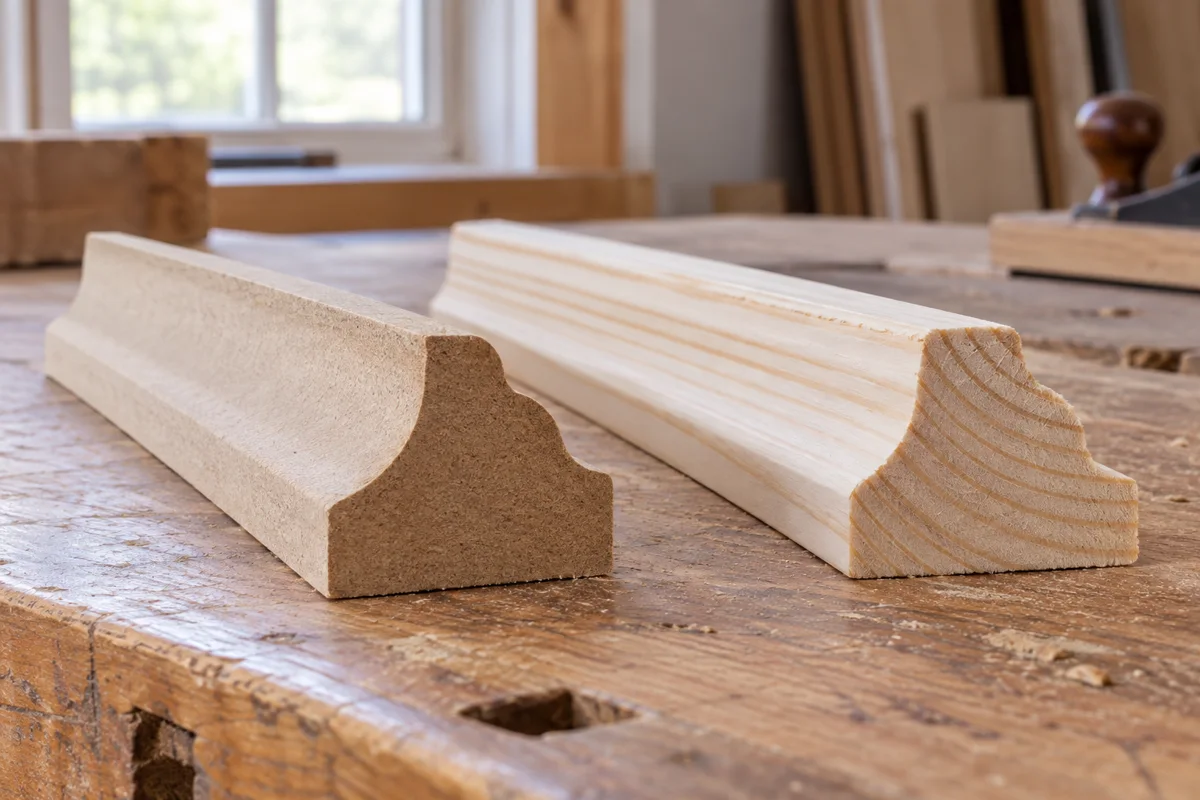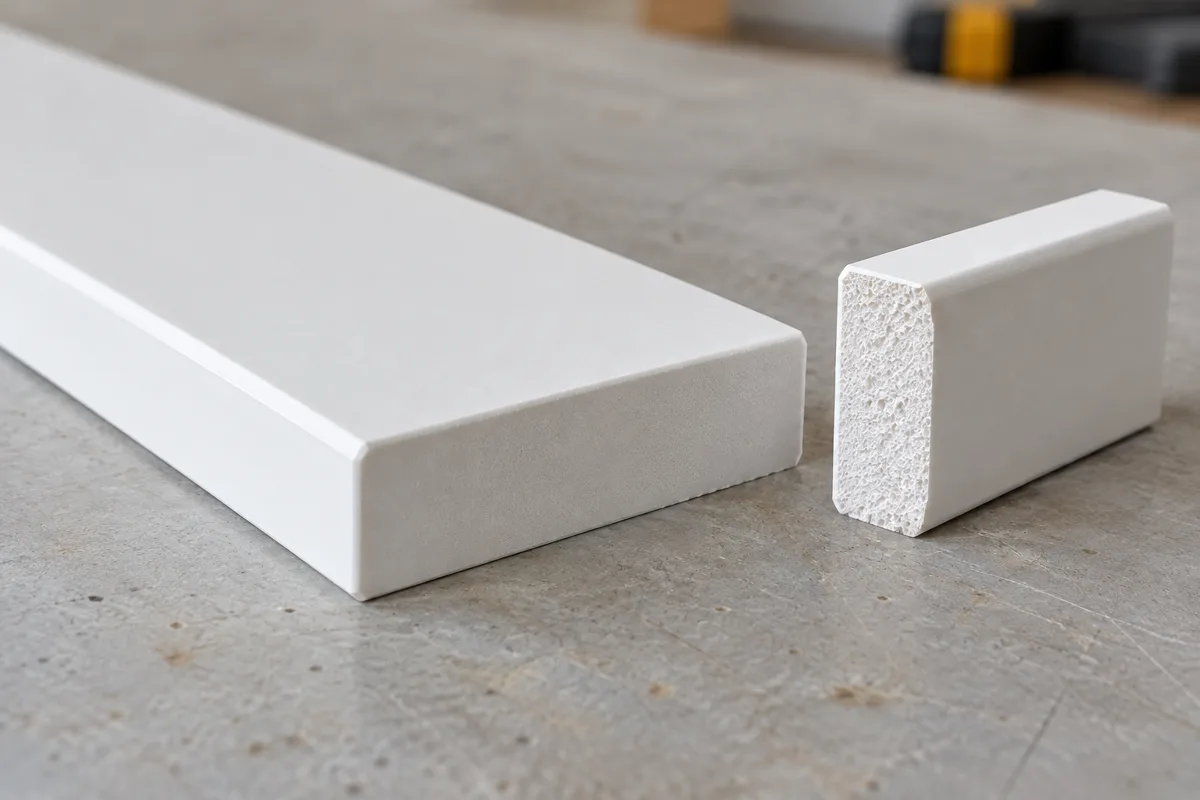
A white PVC board beside a white painted wood board can look nearly interchangeable. They are not interchangeable instructions. Cellular PVC has its own fastening, joining, coating and temperature-movement requirements, and those requirements remain relevant when the product is used indoors.
The attraction in a laundry area or near an entry is easy to understand: repeated damp cleaning can be hard on vulnerable wood-based edges. A suitable PVC trim product may tolerate that exposure better. It will not repair a leaking appliance, replace waterproofing, or stop moisture from damaging the wall behind it.
Confirm the product's intended use
Check that the particular trim is approved for your interior application. “PVC” describes a material family, not every detail of a finished product. Ask about the available profile, finish, compatible adhesive and fastening system. A cellular board, a hollow extrusion and a flexible molding can require different handling.
Read the installation guide before planning joints. Temperature changes can alter length, and the required allowances depend on the product and installation conditions. Copying a gap dimension from a different brand or an exterior example is not a reliable shortcut.
Do not assume a construction adhesive selected for wood is suitable. Likewise, a product-specific PVC joint adhesive should not be treated as a general-purpose wall adhesive. Those are different connections within the assembly.
Look beyond water resistance
A bathroom baseboard must also meet door casings, floor transitions and exposed ends neatly. Compare actual thicknesses before buying. A moisture-tolerant board that projects beyond every casing may create a more awkward detail than expected.
Paint compatibility deserves a separate check. Some products can remain unpainted; others have a surface intended for a particular coating system. Dark colors can affect heat absorption, especially near strong sunlight. Follow the manufacturer's current color and coating requirements instead of assuming that any interior paint is acceptable.
Inspect a sample under the room's lighting. Surface texture, edge appearance and sheen may differ from neighboring wood trim even when both are white. A small finished mockup is a better comparison than two online product photographs.
If water has already damaged existing trim, establish where it came from before replacing anything. A more resistant face can conceal an unresolved problem for longer. The successful choice is a compatible material in a sound, dry assembly, with joints and finish that suit the room—not simply a board described as waterproof.