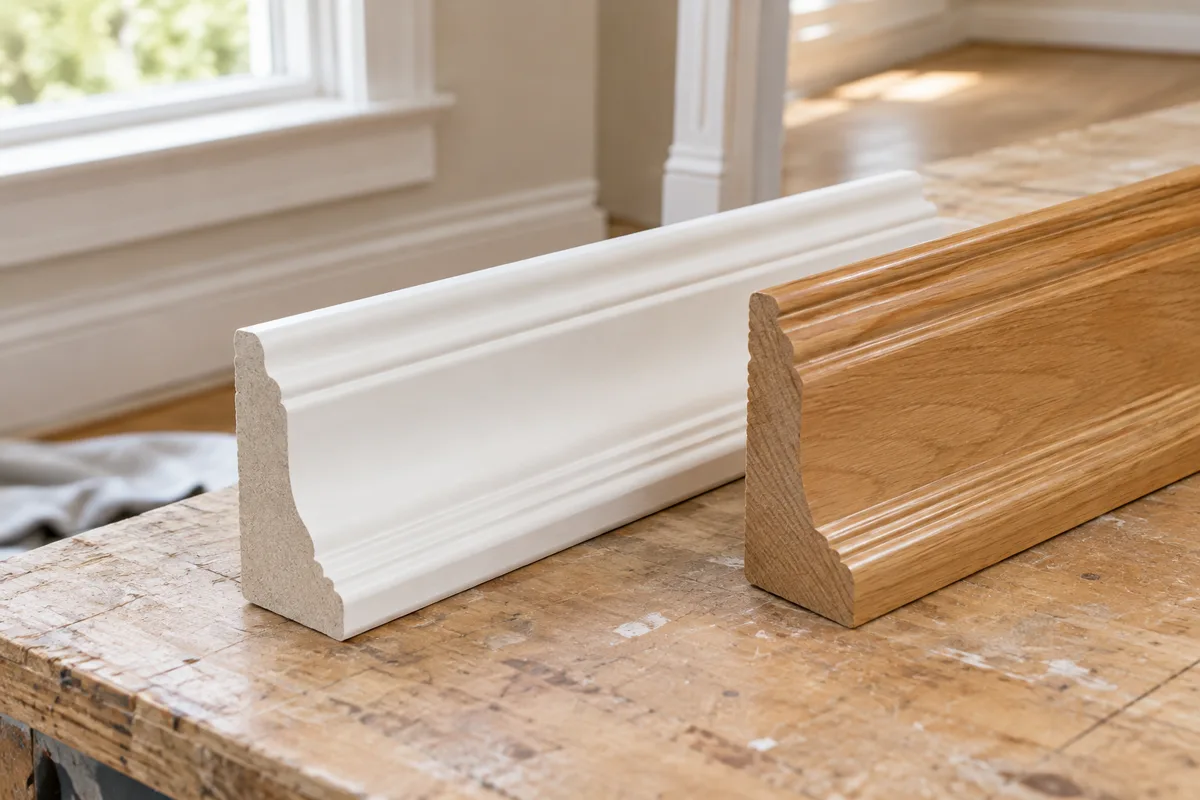
A white molding in a store display may be primed, fully finished, or wrapped in a decorative surface. The color alone does not tell you which. Before comparing prices, find out what work remains after the product reaches your house.
Primed trim has a preparatory coating. It usually still needs inspection, handling marks addressed, cut areas treated as specified and a suitable finish coat. Prefinished trim is sold with a surface intended to be the final appearance, although installation can still leave joints, cut ends and fastener locations needing attention.
What you gain and what you give up
A primed product leaves more freedom to match the room's paint color and sheen. It also puts the finishing work in your schedule. The room may need protection while the coating dries and cures, and its final appearance depends on preparation and application.
A prefinished product can reduce work in the room. The tradeoff is that repairs must match an existing finish more closely. A generic white paint pen may stand out against the factory coating. Ask the supplier how joints and fastener holes are intended to be handled and whether matching materials are available.
Look at an installed sample if possible. A flawless face in a package does not show what happens at an outside corner or where two lengths meet. Those details often decide whether a prefinished system suits the project.
Read the order as a system
Confirm the profile number, finished color, sheen and dimensions. If a door casing and baseboard come from different ranges, compare actual samples even when the names sound identical. One manufacturer's satin white can differ visibly from another's.
Include spare stock in the planning discussion. A damaged prefinished piece can be harder to repair inconspicuously than a piece that will receive a full finish coat. Store any spare length with its label in a dry, supported location rather than leaving it leaning in a damp shed.
For either product, inspect the delivery before installation. Separate transport damage from defects that only appear under side lighting. Photograph problems while the boards are still intact and check the supplier's return conditions before cutting.
The practical question is not which option needs “no work.” Both require care. Choose the one whose remaining work—full painting or careful matching and touch-up—fits the room, your timetable and the finish you want to live with.