A short wall beside a doorway is easy to overdesign. After the main wall receives three elegant frames, the remaining strip can seem to demand a tiny fourth. Yet repeating the motif at any cost may make the small wall look cramped and the whole room more restless.
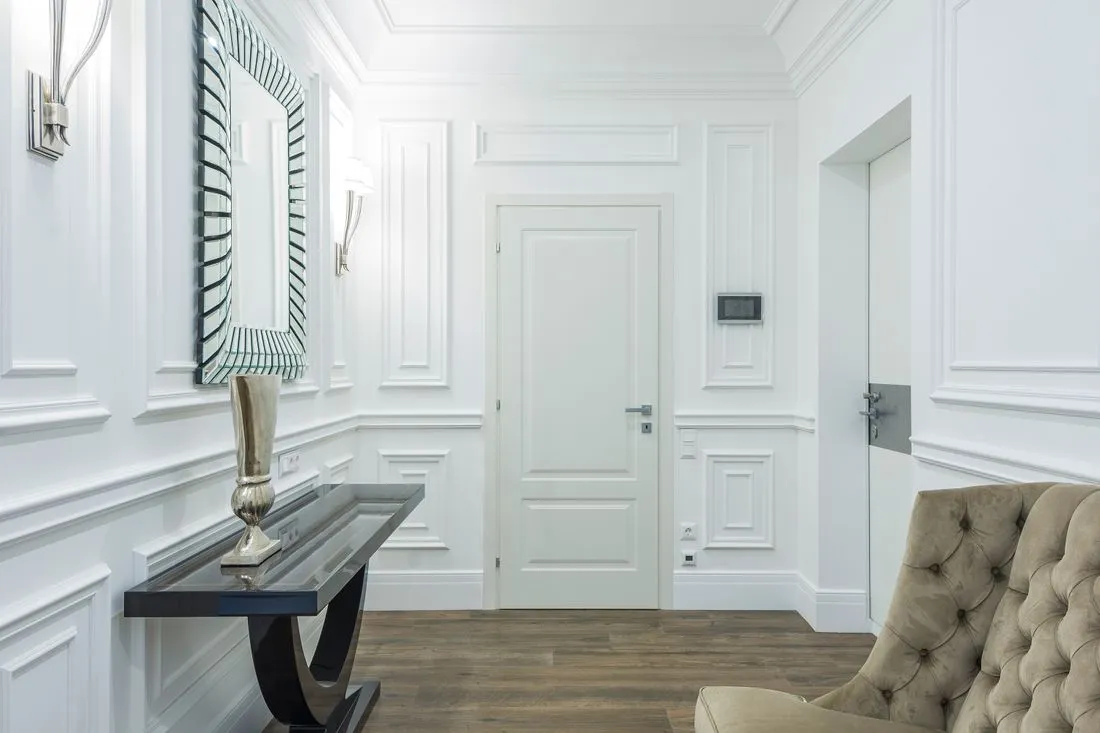
Look at the short section from its normal viewing angle. It may be seen mostly while entering, partly hidden by an open door, or occupied by a switch. Its role in the room is different from a broad uninterrupted wall, so it does not need the same amount of decoration.
A single frame can work if its margins remain comfortable. The frame may be narrower than those elsewhere, but its height and profile can keep it related. If the remaining width makes the inside opening little more than a slit, leaving the section plain is often more convincing.
The blank area still needs to belong to the room. Carrying the same baseboard, cap, or paint treatment around the corner can provide continuity without adding another rectangle. Decoration does not have to cover every available square foot to feel complete.
If using board-and-batten, consider whether the short section should read as one bay. Adding a central strip merely to maintain a nominal spacing may divide it into two implausibly narrow spaces. Reassess the local arrangement rather than copying a number from the long wall.
Electrical accessories and door movement can settle the question. A panel that crowds a switch plate or disappears behind the open door may contribute little. Preserve access and function instead of forcing a decorative alignment.
Tape the proposed profile width and step into the room naturally. Do not inspect only from a carefully centered position where the tiny frame looks most flattering. The everyday view is the relevant one.
When documenting the layout, identify intentional blank sections. Otherwise an installer may assume a frame was omitted from the drawing and attempt to fill the gap. A clear note protects the simpler decision.
The most coherent rooms usually have some variation in emphasis. A short quiet wall can give the larger paneling composition room to be noticed, rather than competing with it in miniature.