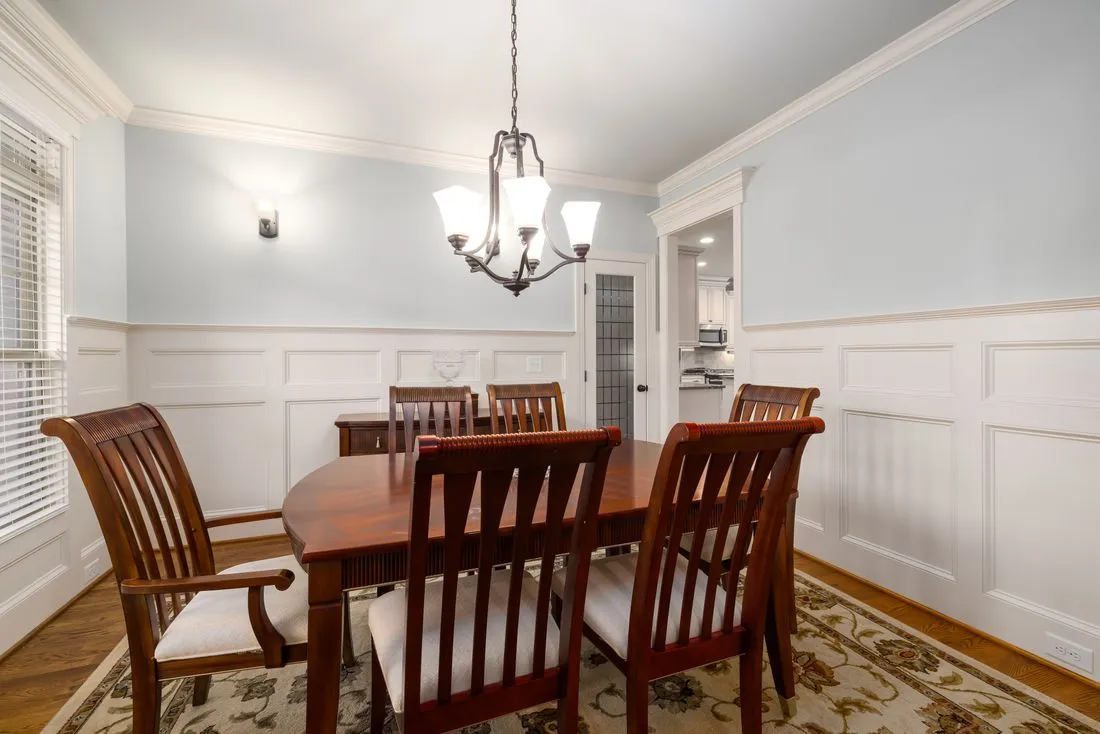
A dining chair does not touch the wall at an abstract standard height. Its curved back, rear legs, and the way someone pushes it away from the table determine the contact point. If protecting the wall is part of the paneling's purpose, test those movements with the actual chairs.
Place a chair where it is likely to be used and move it carefully through its normal range. Note the first point that approaches the wall. A chair rail positioned several inches away from that contact may be decorative rather than protective.
Paneling itself can still mark or dent. Material, coating, projection, and the shape of the chair all influence wear. Avoid assuming that a paneled lower wall is automatically more durable than a plain painted one.
Design for the room in use
Allow enough space for people to sit, stand, and pass behind the chairs. Deep caps and projecting panel details occupy part of that space. The amount may be small, but it matters in a tight dining area.
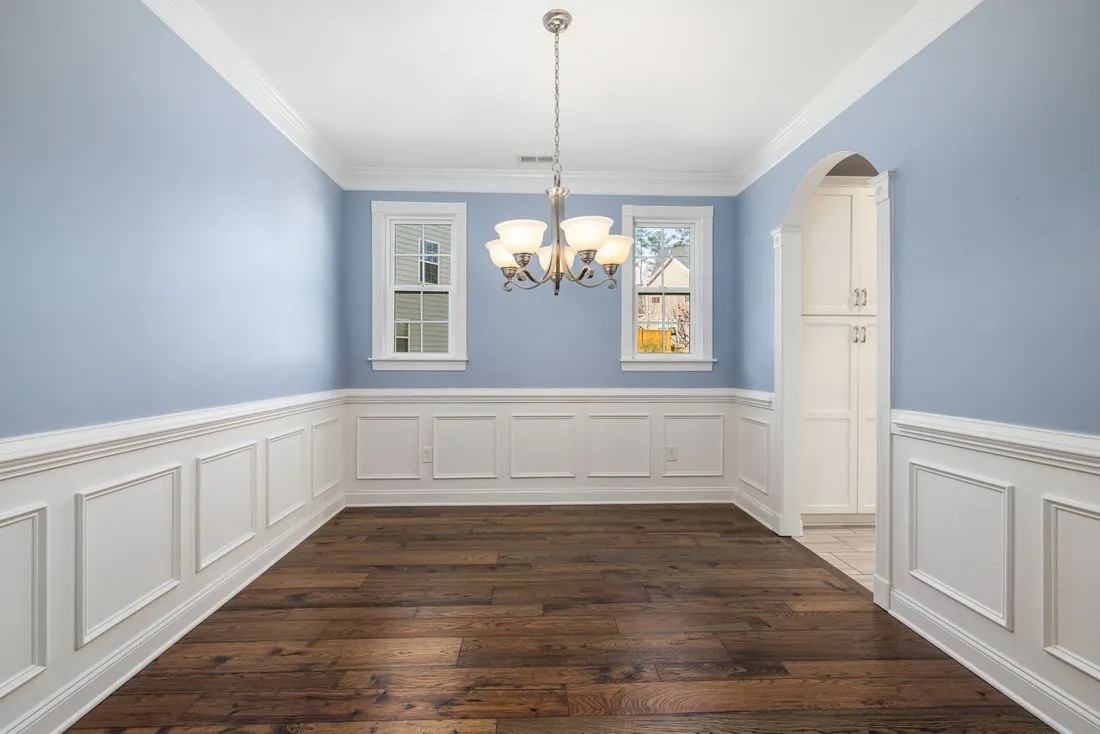
A broad flat field may be easier to live with behind moving chairs than a dense arrangement of delicate molding. If the chosen detail has narrow protruding edges, check whether chair backs are likely to strike them.
The rail can be coordinated with the chair contact zone while still respecting windows and other room lines. If those priorities conflict, consider a different protective strategy instead of forcing an awkward height around the entire room.
Furniture pads may help in specific locations, but they need to be suitable, maintained, and positioned where contact actually occurs. They do not make an undersized room or a vulnerable wall assembly immune to damage.
Make maintenance part of the choice
Test the intended finish on a sample and follow its cleaning guidance. A finish described as washable still has limits, particularly before it has fully cured. Keep the product reference so touch-ups use the same coating.
Lighter and darker colors reveal different marks. A pale finish may show scuffs; a dark one may show dust or pale scratches. Choose with the room's daily use in mind rather than assuming one color always hides wear.
If the chairs will change soon, avoid designing a very specific contact detail around the current set. A simpler, robust lower-wall treatment may remain useful longer.
The room should look composed with the chairs pulled out as well as neatly tucked in. That is the view that tells you whether the paneling serves the dining space or merely photographs well around it.