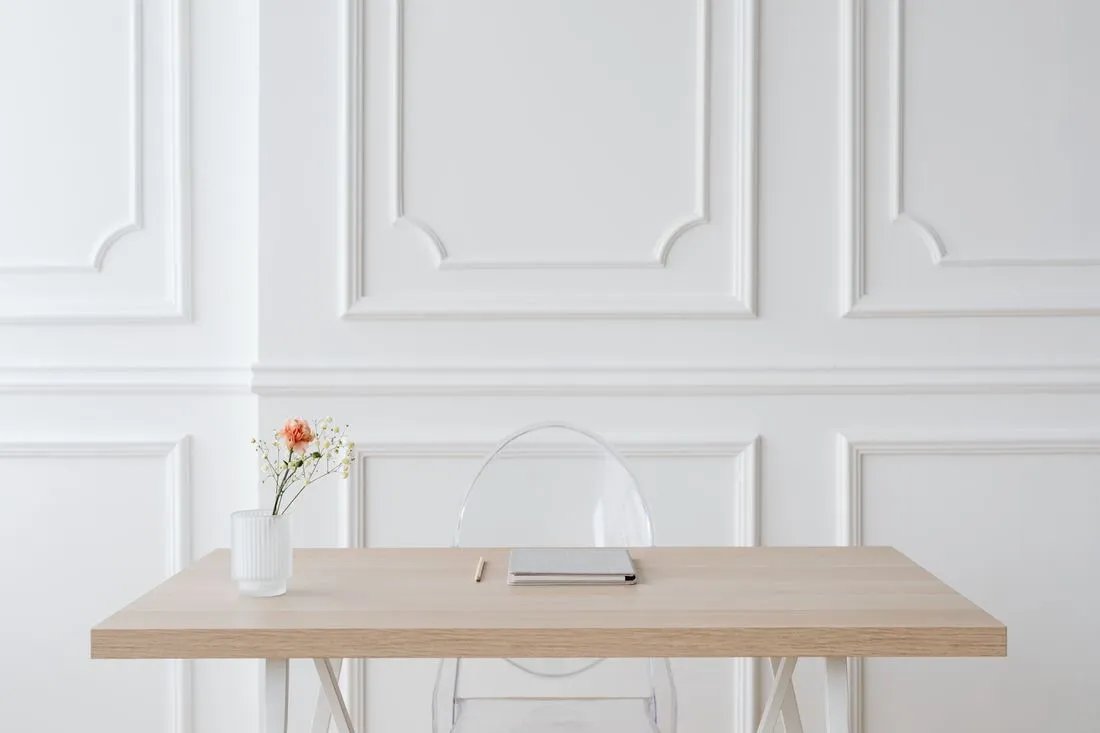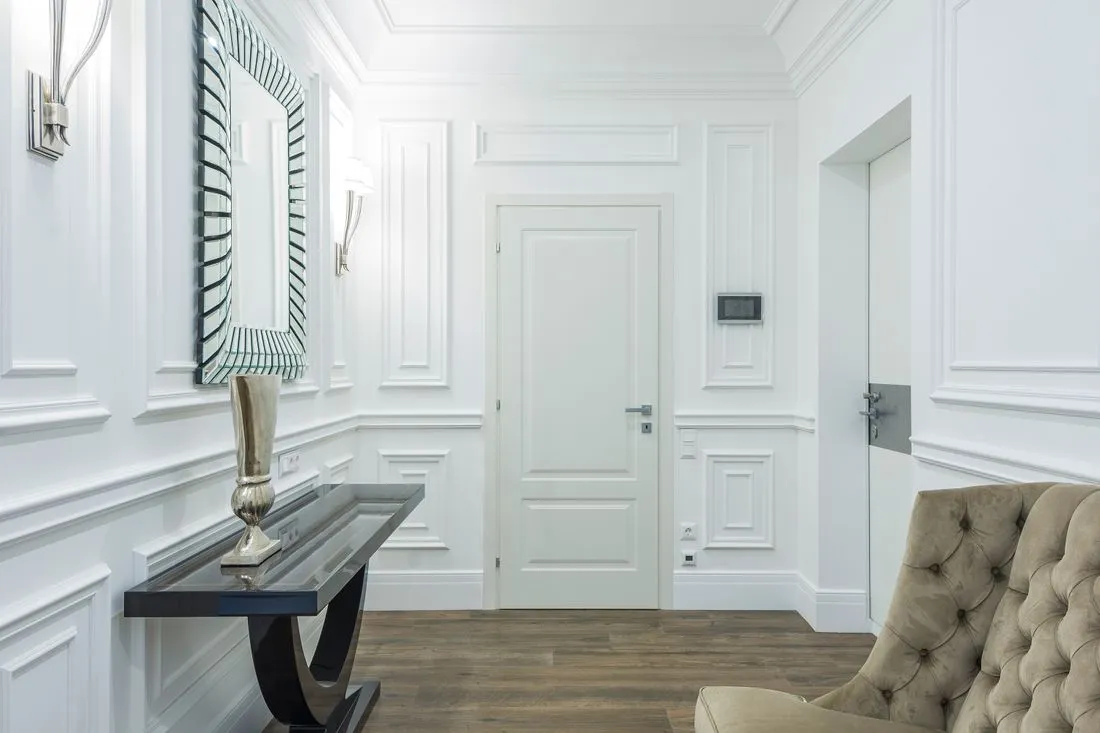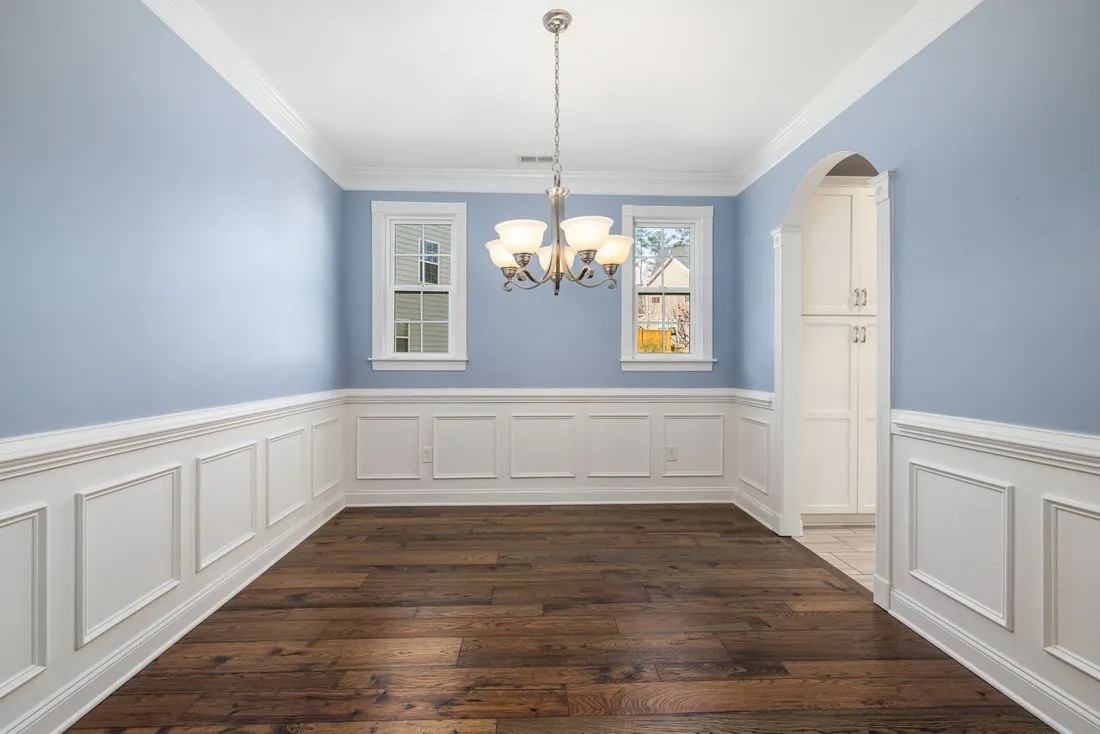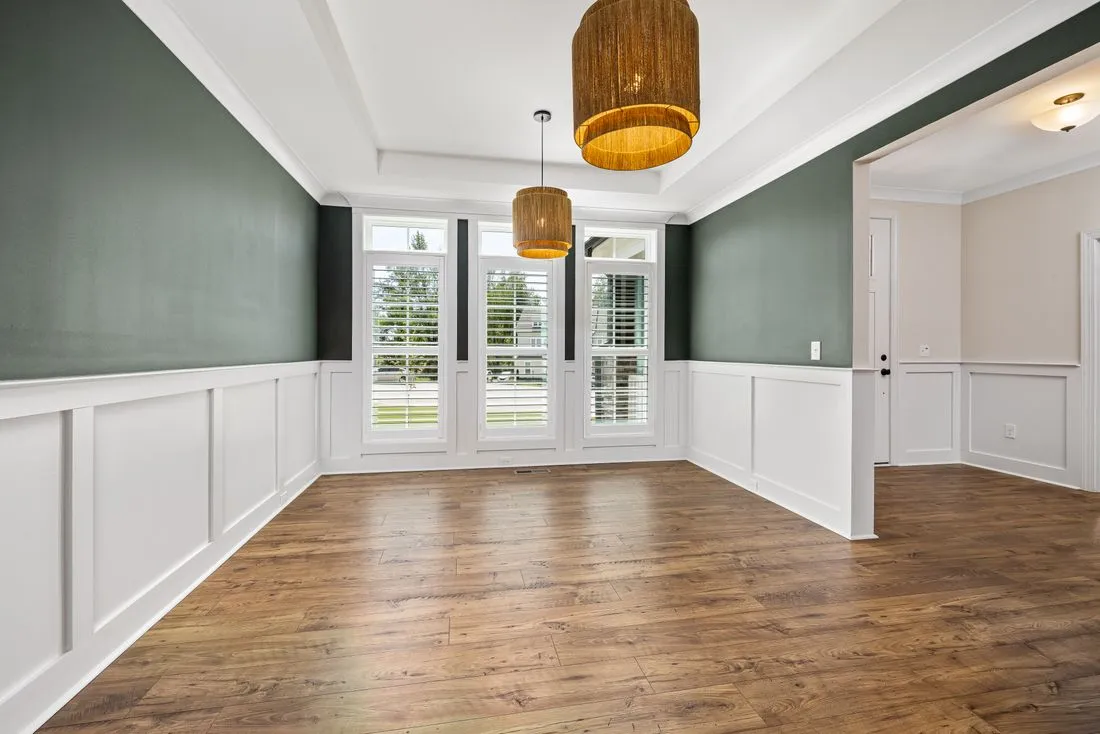
One paneled wall creates a focal surface. Paneling around the room creates an architectural layer that the furniture sits within. These are different effects, and deciding between them is easier before the profile or pattern is chosen.
An accent wall works best when it has clear boundaries. An inside corner, a full-height opening, or a built-in can give the treatment a natural place to stop. A finish that ends midway along an uninterrupted wall needs a particularly deliberate edge.
Look at the room's main view. If the proposed feature is hidden behind the open door or visible only at a narrow angle, it may not do the work expected of it. Conversely, a wall already dominated by a fireplace, large window, or busy shelving may not need another strong pattern.
Compare the amount of visual activity
Paneling around the whole room can feel calm when its profile, spacing, and color are restrained. One wall can feel busy when it combines deep relief, strong contrast, and a dense grid. The surface area alone does not determine how much decoration the room appears to contain.
Draw the neighboring walls even if they will stay plain. Their baseboards, door casings, and ceiling trim still meet the feature. A continuous cap might create coherence, or it might suggest unfinished paneling on the plain walls. Test that relationship rather than automatically carrying every line around the room.
Furniture makes a useful distinction. A bed wall or dining-room end wall can support a focused treatment. In a room with seating facing several directions, an all-around lower paneling scheme may provide a more consistent background.
Consider later changes
An accent layout designed exactly around a television or sofa can be restrictive if the room is rearranged. A broader architectural pattern usually offers more flexibility. That does not make a furniture-specific feature wrong; it simply makes the commitment worth recognizing.
Whole-room paneling brings more corners, openings, and service interruptions into the project. Include those details in the estimate rather than multiplying the cost of one clear wall by four.
Tape representative sections on the main wall and one return wall. If the second surface adds little, stop at the first. If the corner looks abruptly cut off, a wider treatment may resolve it.
The right extent is the one that gives the room a clear structure. More coverage should improve that structure, not merely use the remaining boards.