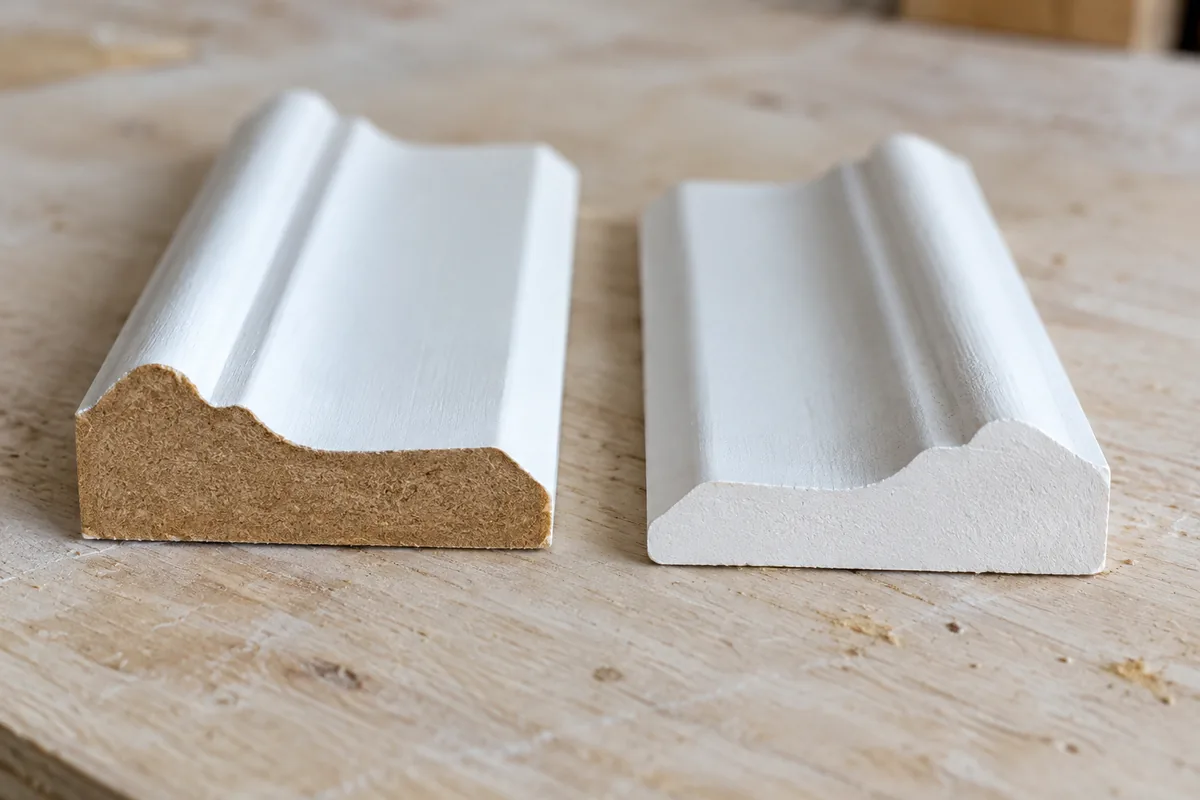
The factory face of MDF is often smoother than a freshly cut edge. Apply the same finish to both without an appropriate preparation system and the difference can remain visible: the edge may look rougher, duller or more absorbent.
Start with sound, dry material. A swollen or damaged edge is not simply an unprimed edge, and sanding it smooth may not restore the original profile. Determine whether the piece needs replacement before investing in a finish repair.
Use the product's preparation system
Follow the MDF and coating manufacturers' guidance for edge preparation, primer or sealer, and compatible finish. Avoid a universal household-glue recipe or an improvised solvent treatment. A method that appears smooth initially can create an incompatible layer beneath the paint.
Preserve the intended shape during any permitted smoothing. A narrow edge can become rounded quickly, changing the way it meets another piece. Use suitable dust control and protection for the material, and keep the work separate from the clean finishing area.
Old coated MDF still needs a coating assessment before disturbance when its history is uncertain. The substrate's name does not identify what paint was applied later.
Build one complete sample
Use an offcut with the same type of cut edge as the project. Apply the proposed preparation, primer and finish in the specified sequence, allowing the required time between stages. Inspect both the face and edge under light that will resemble the room.
If the edge remains textured, determine whether the issue is raised fibers, insufficient preparation or a product incompatibility before adding more coats. A thick film may soften the profile without producing the smooth result you want.
Include any filler repair in the sample. Filler and raw MDF can absorb differently, so an edge that looks uniform before painting may still reveal a patch afterward. The sample lets you resolve that relationship without reworking an installed doorway.
Pay attention to end locations exposed to incidental moisture. The required treatment may involve more than the visible face, and it does not upgrade the board for a location outside its intended use. Repeated wetting remains a material-selection problem.
Once the sample works, repeat the same preparation on the actual pieces rather than rushing the unseen ends. Keep the product information with the project notes. A carefully prepared edge makes MDF look like a deliberate finished component; an untreated one can reveal the shortcut from across the room.