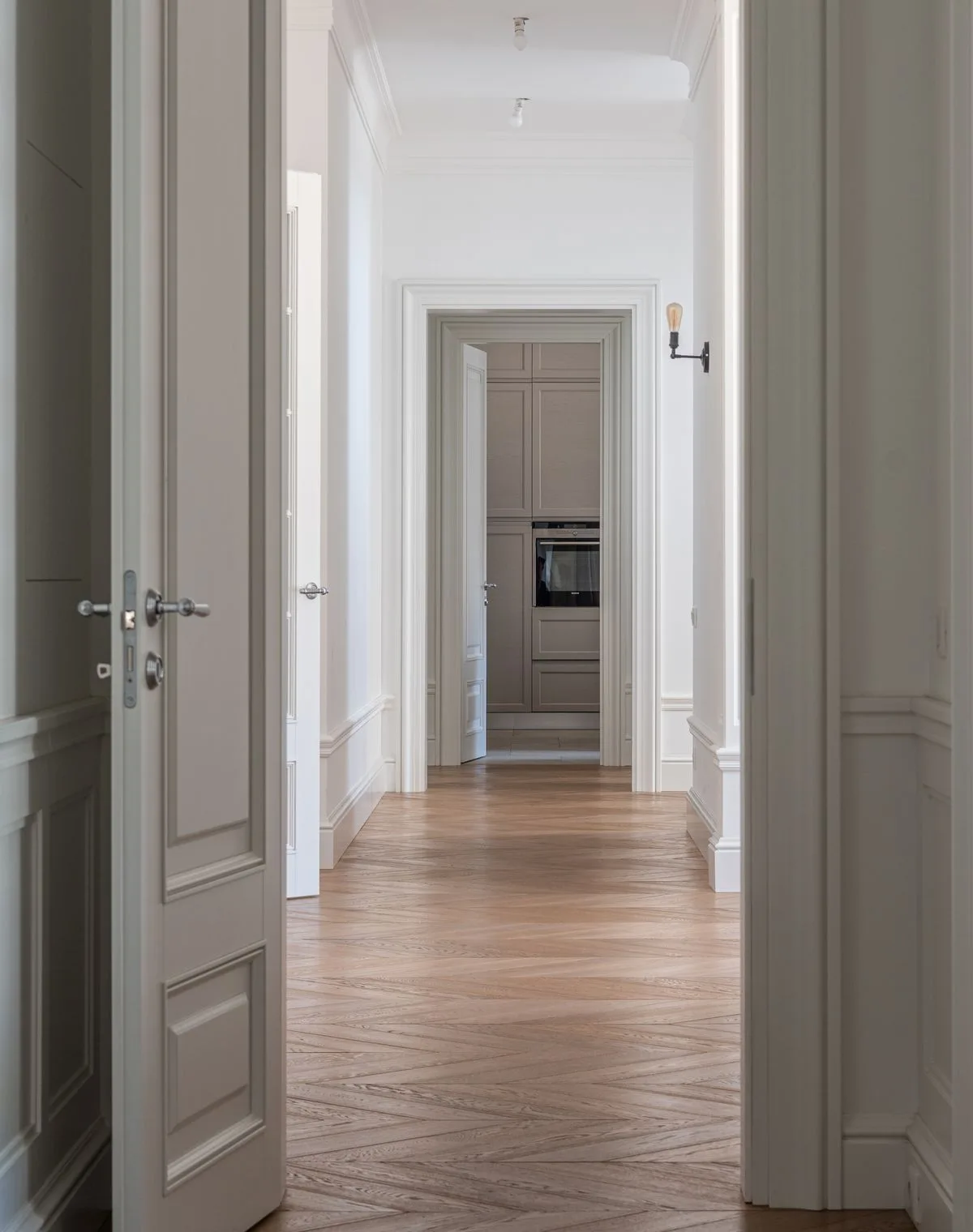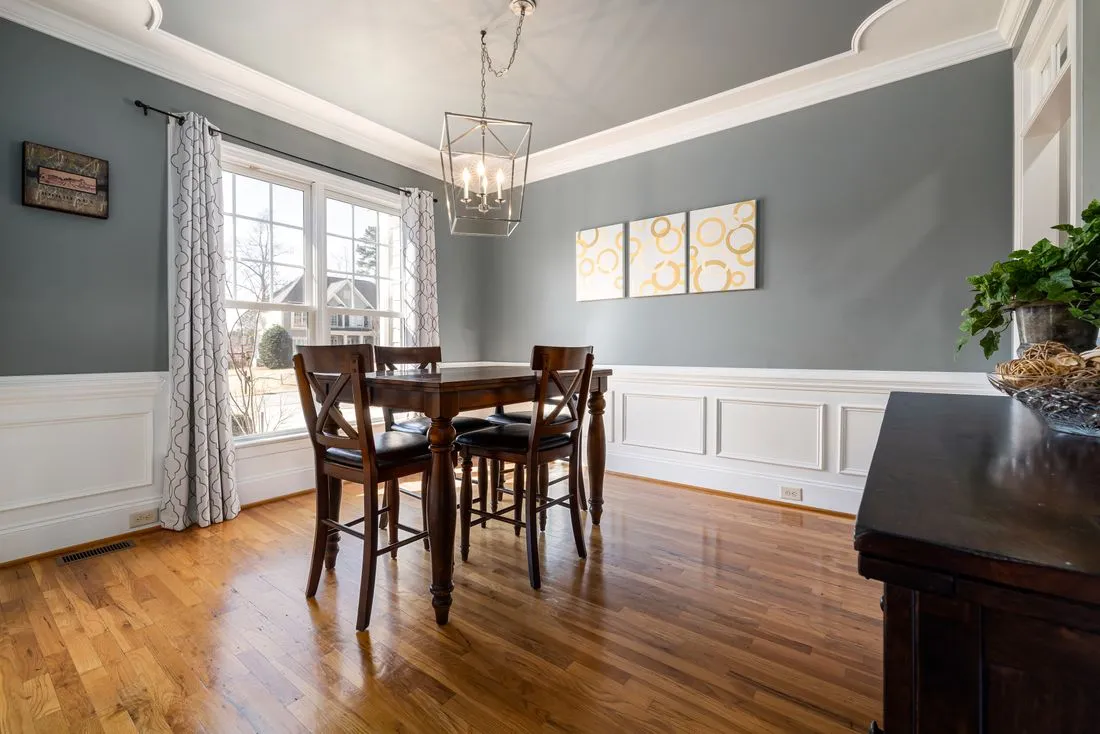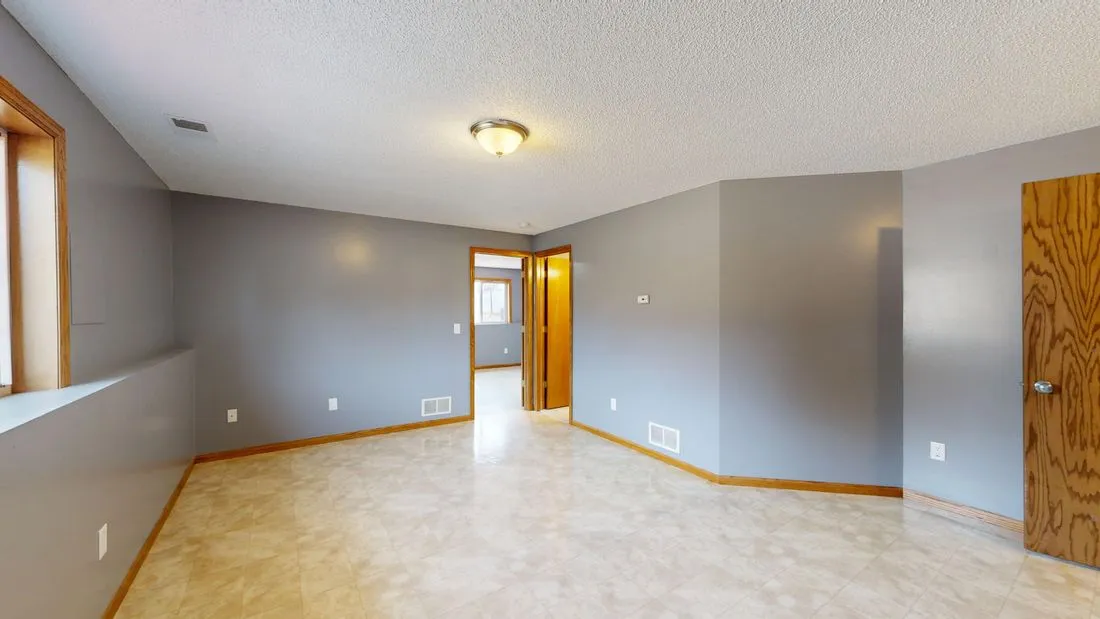
Not every piece of trim in a room has to receive the same finish. Existing stained windows may be worth keeping while new baseboards are painted, or a wood doorway may serve as a focal point within a quieter painted perimeter. The combination works best when the reason for the change is visible.
Begin by identifying what is staying. The wood species, grain and aged color of an existing opening are fixed references unless refinishing is part of the project. Choose the painted elements beside that real finish rather than beside an idealized photograph of similar wood.
Give each finish a complete component
A whole stained window assembly or a complete painted doorway usually reads more clearly than a finish change halfway across one casing. Use natural boundaries in the architecture. Where components meet directly, draw or mock up the junction before painting begins.
There can be exceptions, but they should look intentional. A painted wall with a wood cap or a painted panel system with selected natural-wood details can work as a designed combination. An isolated unpainted strip left because it was difficult to reach usually reads differently.
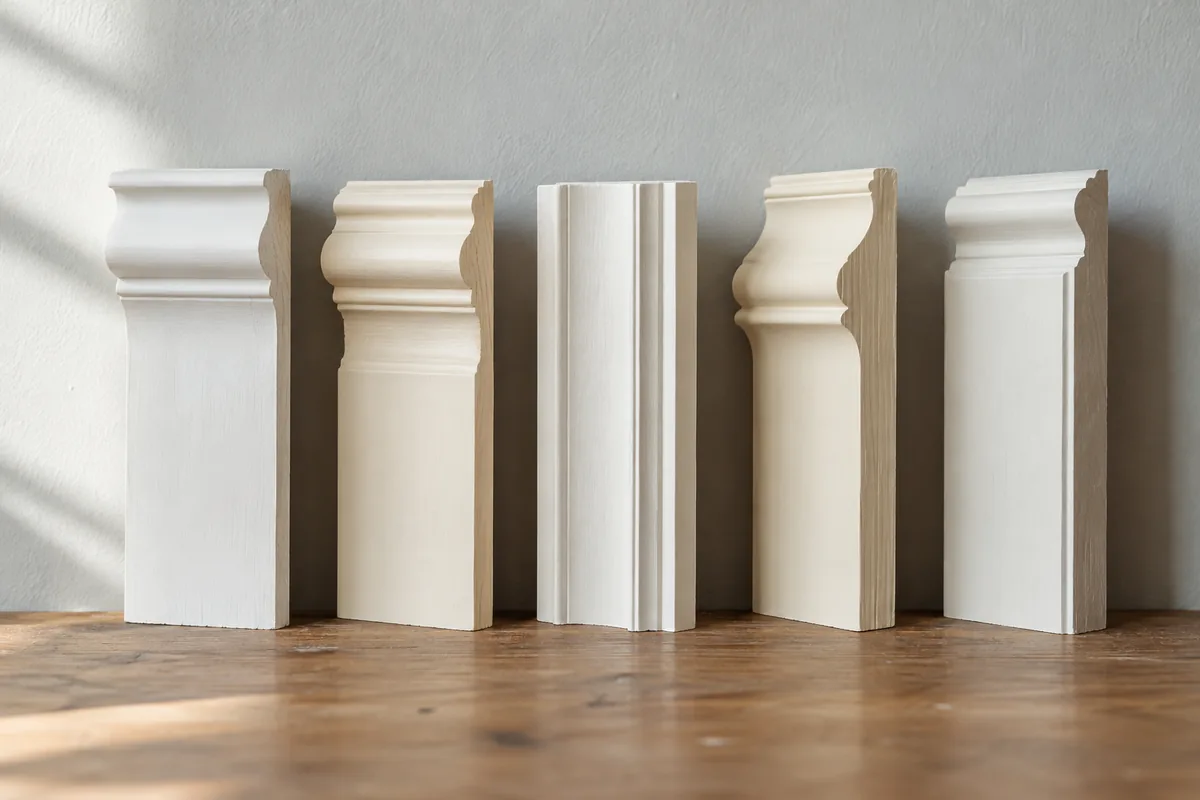
Consider profile style as well as color. A very ornate stained casing and a stark flat painted baseboard can coexist, but the meeting needs attention. Samples reveal whether their heights and projections relate sensibly.
Let undertones have a conversation
Painted trim does not need to copy the wood color. A compatible warm white or a muted contrasting color may be more convincing. Compare under daylight and evening lighting, since a wood finish can look much warmer under some lamps.
Avoid demanding an exact match between new and aged wood without a test. Stain and clear coat interact with the species and preparation, and the result may remain different. A clear boundary can be more successful than a close imitation placed directly against the original.
Maintenance requirements will differ. Painted repairs need the correct color and sheen; stained repairs also need a compatible grain and finish sequence. Record both systems rather than keeping one generic note for the room.
If preserving old finishes involves cleaning, repair or removal, assess their condition and any coating hazards first. Do not begin sanding an uncertain painted section simply to see whether attractive wood lies below it.
Stand at the main entrance and follow the room's edges. The finishes should explain their roles without requiring a story: this opening is wood, this perimeter is painted, this transition is deliberate. That clarity matters more than making every surface identical.