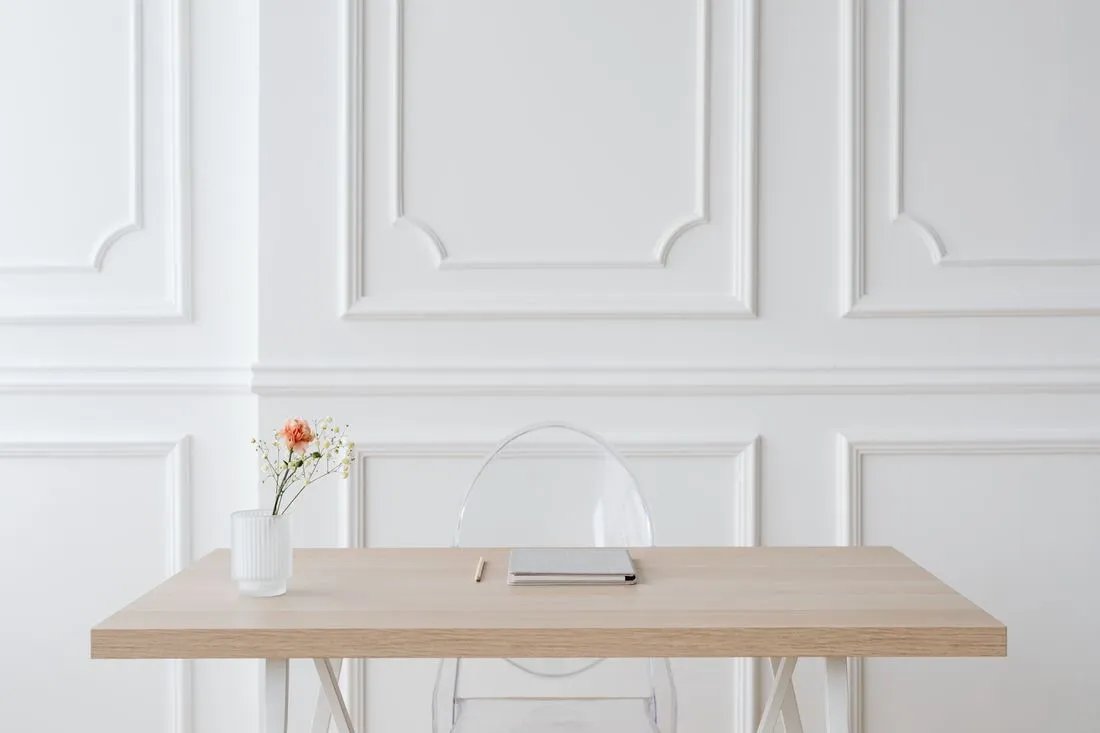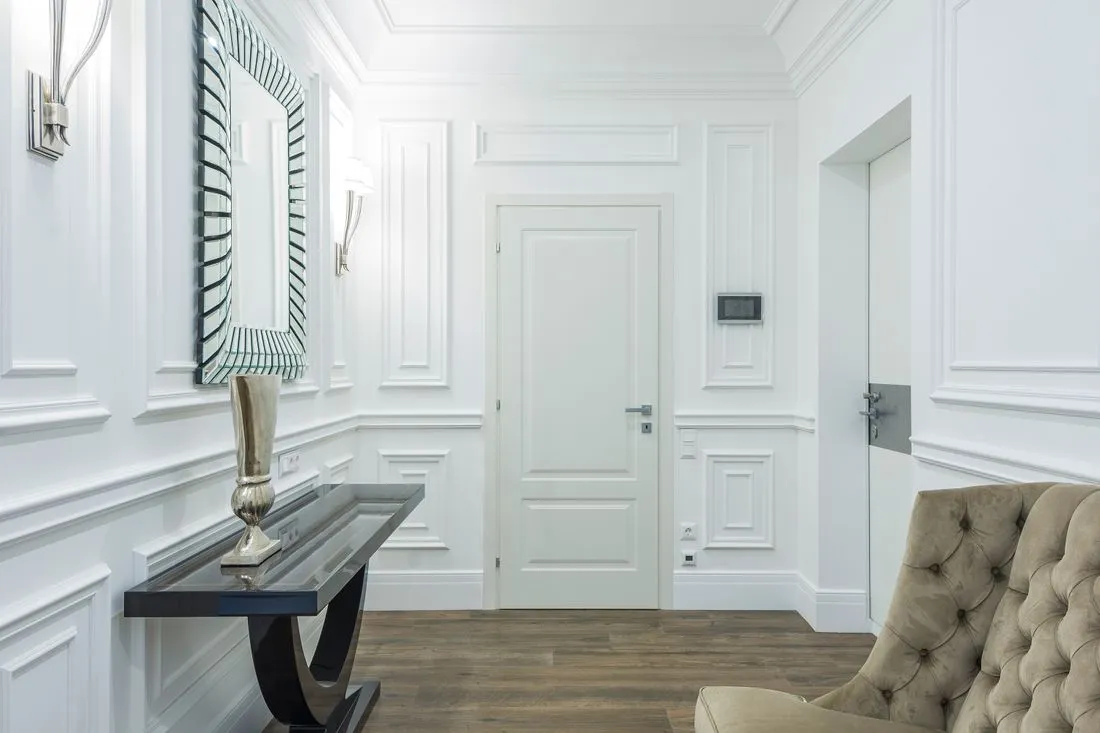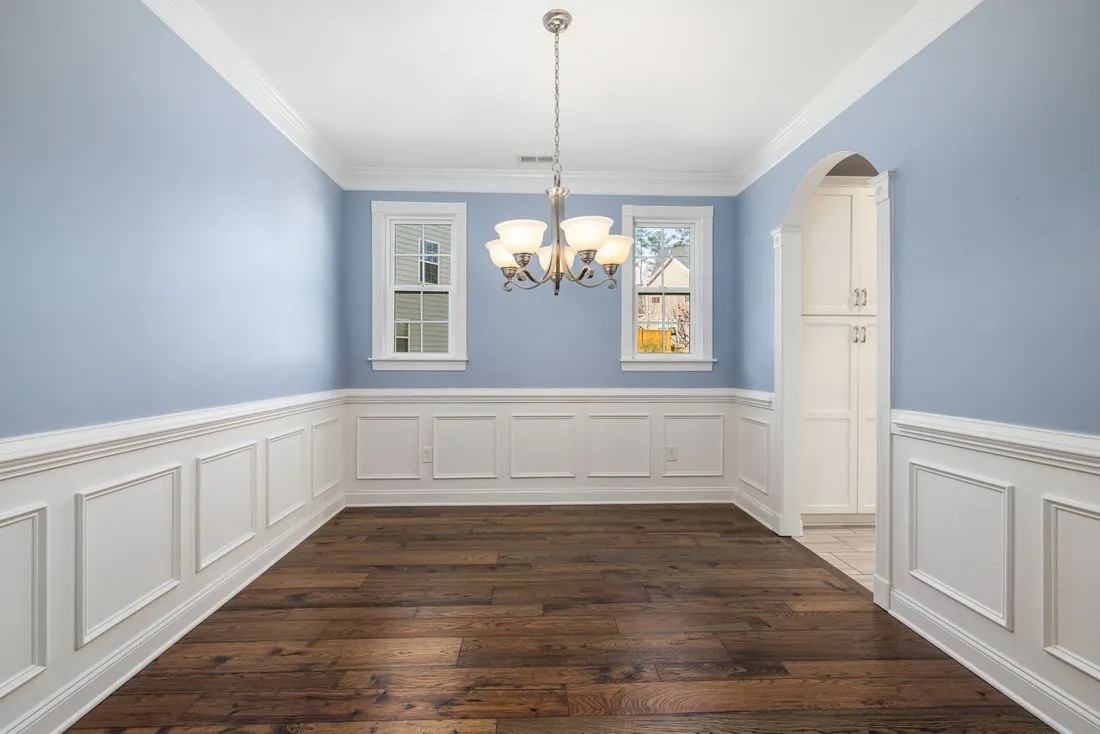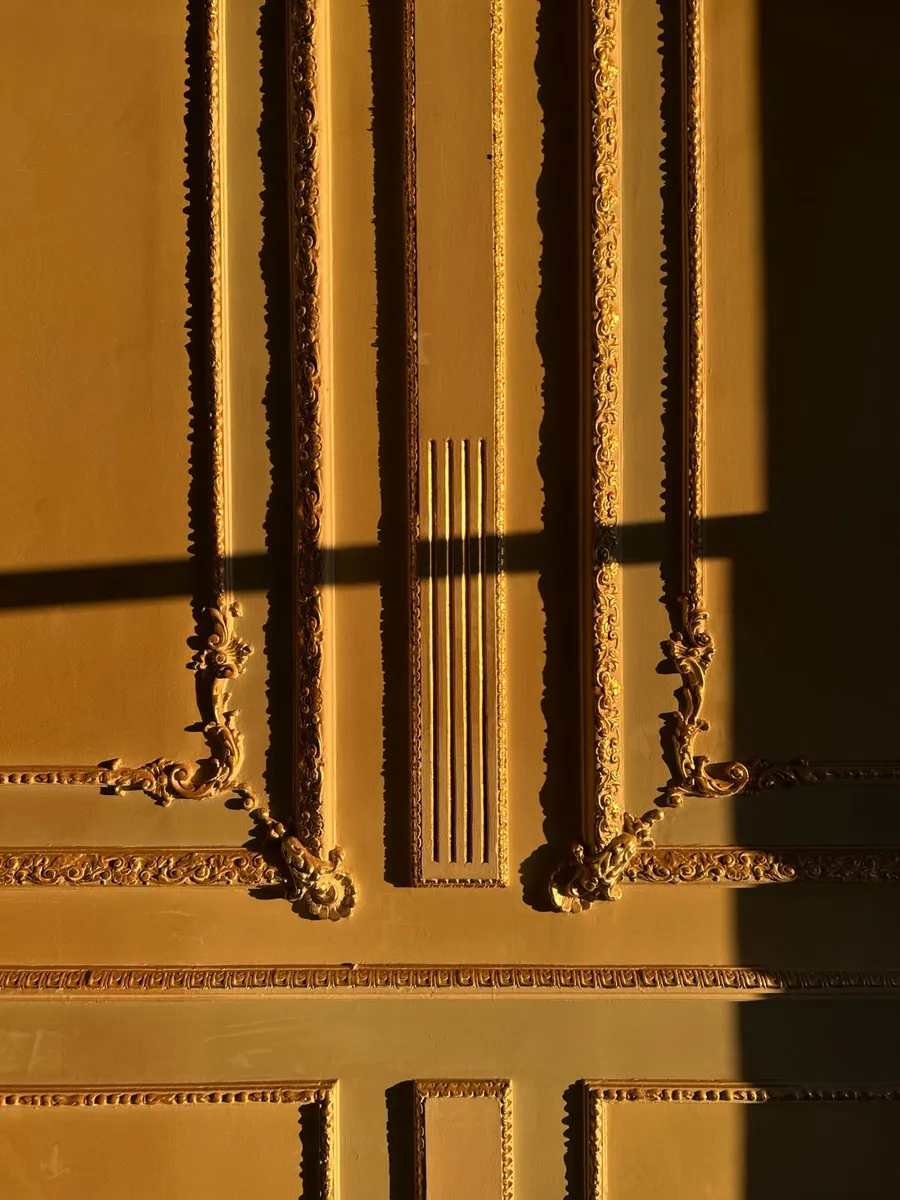
A paneled wall changes throughout the day even when its color stays the same. Morning light may flatten the pattern, while a lamp placed near the wall can turn every molding edge into a sharp shadow. The finish should be chosen with those ordinary lighting conditions in mind.
Depth creates the basic shadow. Paint adjusts how clearly you see it. A single color across wall and molding reduces color contrast, but the relief remains. Contrasting trim makes both the painted outline and the cast shadow part of the composition.
Sheen adds another variable. A more reflective finish can produce highlights along raised edges and reveal surface irregularities from particular angles. A less reflective finish may soften those effects without removing the underlying texture.
A small flat paint chip cannot represent this combination. Use an actual molding sample attached to a backing area in the intended wall color. Finish the pieces with the planned products and let them dry as directed. Compare the sample upright where the paneling will be installed.
Look from three ordinary positions: entering the room, sitting nearby, and viewing along the wall. The last angle is often the most revealing because it shows uneven surfaces and strong projections. A detail that looks delicate head-on may become dominant from the sofa.
Lighting fixtures can be adjusted in the design stage too. A wall-washing or grazing effect should be intentional. If a lamp will sit close to a textured wall, include that lamp in the test rather than blaming the paint later for shadows the layout creates.
The molding's spacing affects the result. Closely packed frames produce a dense network of shadows; wider margins leave calmer areas between them. Changing the color is only one way to reduce visual activity. A simpler profile or fewer divisions may address the issue more directly.
Do not judge the finish while the room is empty if it will eventually contain large dark furniture. Those pieces alter contrast and sometimes block light that made the sample appealing. Use representative furnishings or large color samples during the comparison.
Keep a photograph of the accepted sample in the room's typical daylight and evening light. The goal is not a wall that looks identical at every hour, but one whose changing shadows remain welcome.