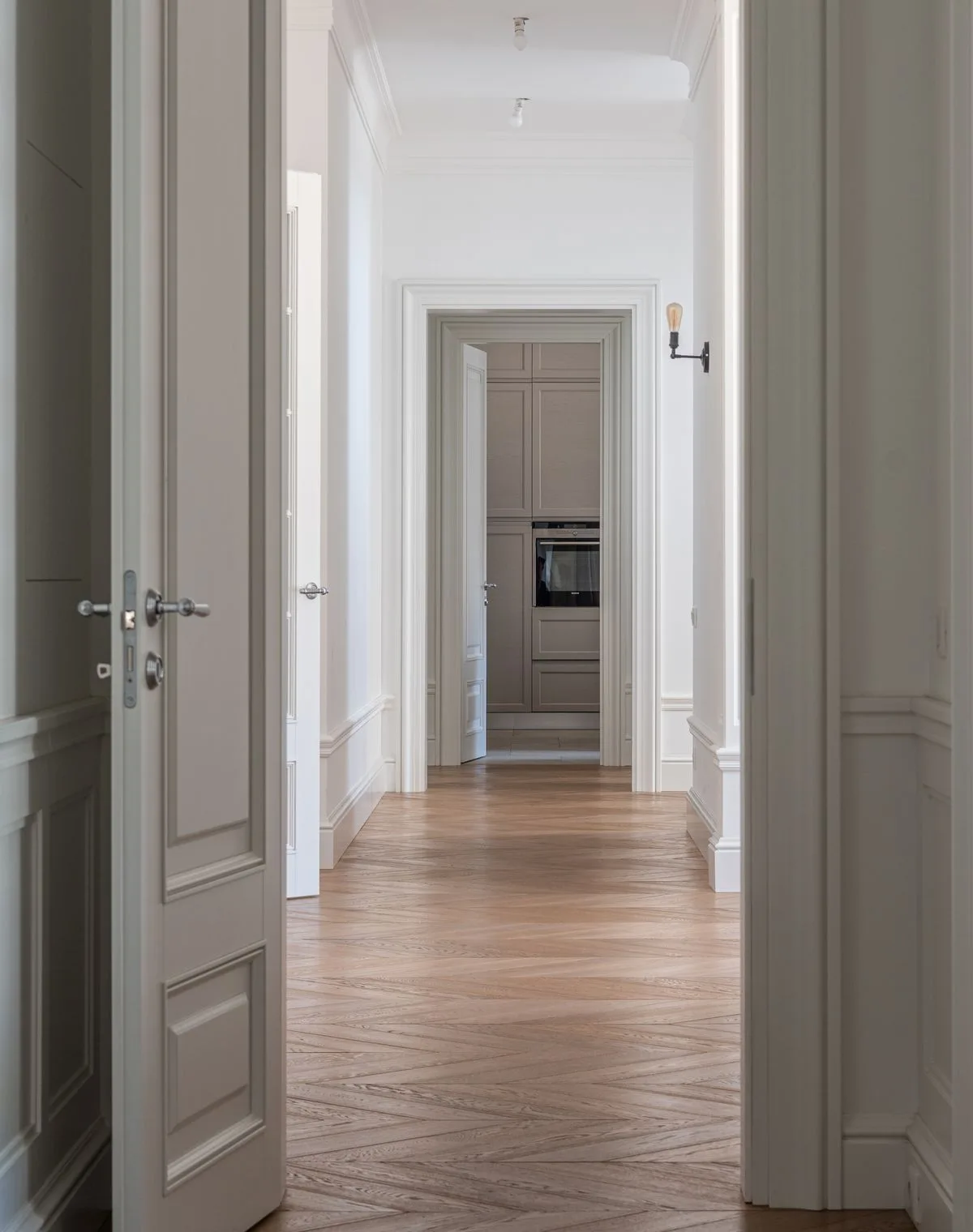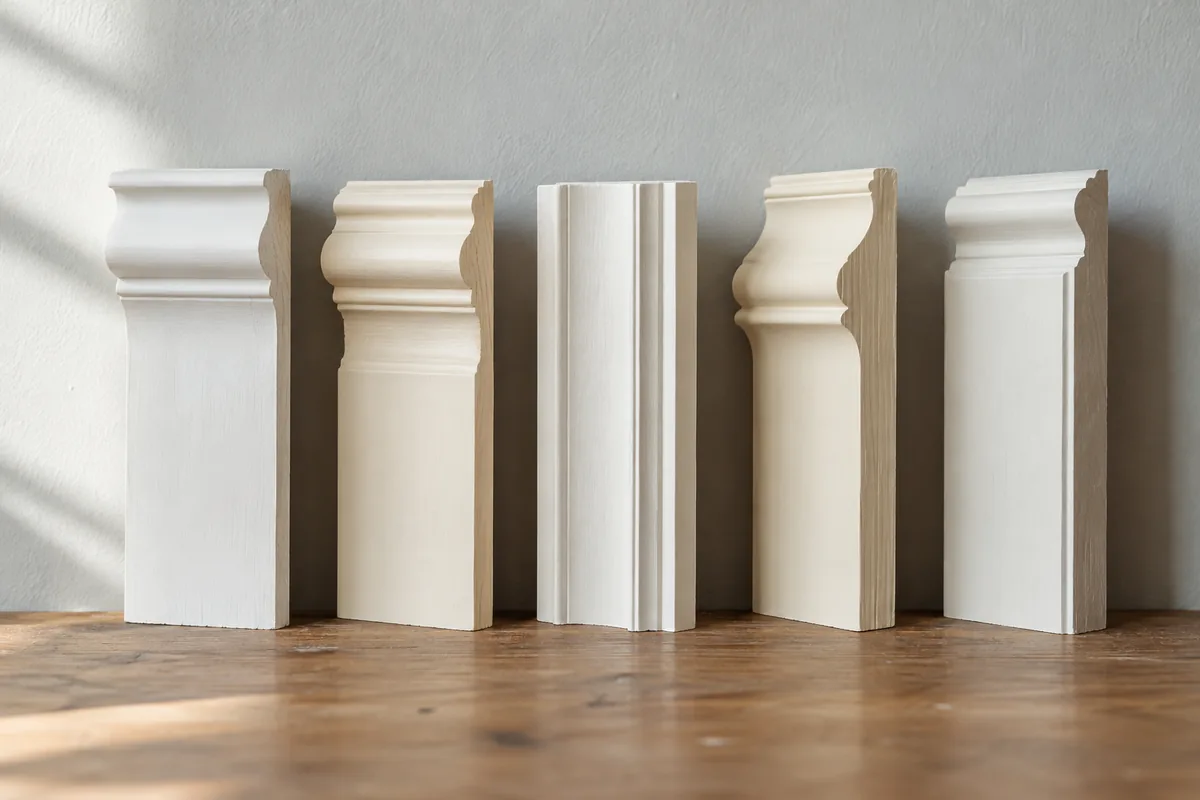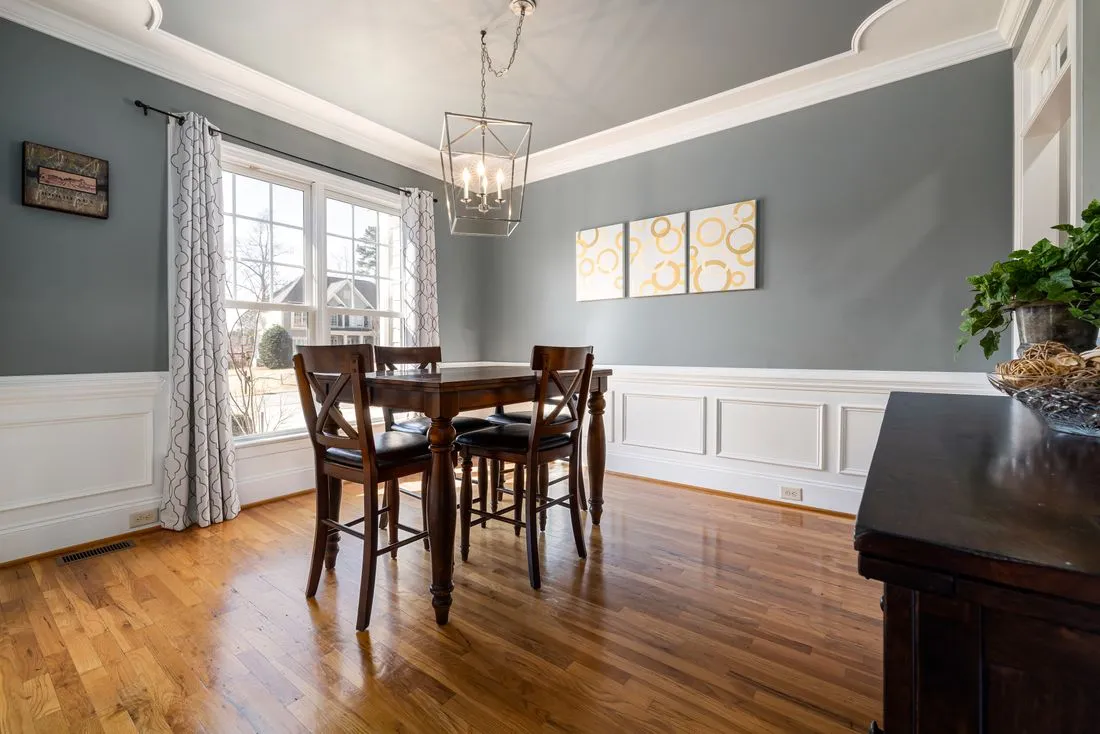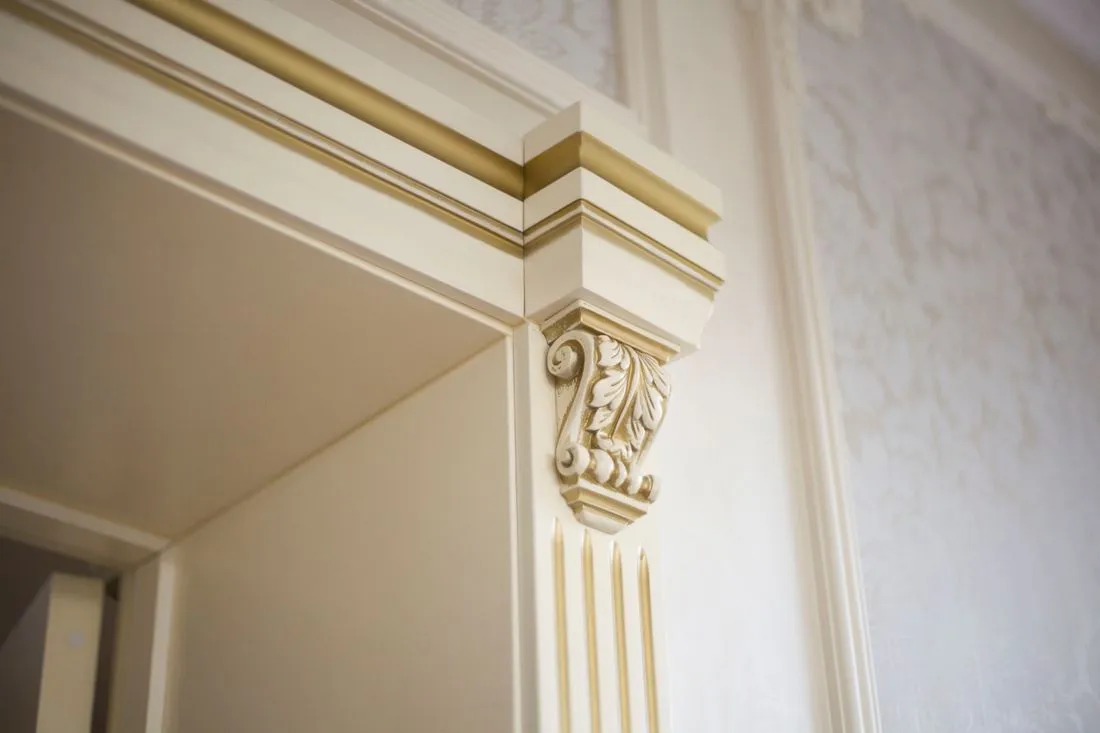
Deep grooves and small ledges can hold a surprising amount of paint. A face that looks evenly covered may have a wet pool in a recess, which later runs or dries into a thick ridge. Inspect the whole profile during application, not just the broad surface facing you.
Use a brush and coating suited to the molding. A tool that is too large for the detail can deposit paint faster than it can be distributed. A tiny brush is not always better, but it should be possible to reach the recess without loading the adjacent edges repeatedly.
Apply the film the product calls for
Heavy coats do not necessarily produce better coverage. They can sag, soften details and take longer to reach the next stage. Follow the coating's application guidance and use the required number of properly applied coats rather than trying to finish in one thick pass.
Look from below a ledge and from the side of a cove while the coating is still workable. These viewpoints reveal accumulation that a straight-on view misses. Correct only within the product's working time; dragging a brush through a partly set area can create a new defect.
On loose pieces, the orientation can change where paint collects. Follow any product restrictions on prefinishing and provide stable supports that protect the wet surface. Flexible molding, for example, may require finishing after installation under its manufacturer's instructions.
Repair a dried defect at the right time
If a drip has set, do not keep poking at it while the surrounding coating is soft. Let the finish reach the stage specified for repair, then use an appropriate safe method that preserves the profile. Old underlying coatings may require lead assessment before abrasion or cutting.
A narrow groove is easy to enlarge or round while correcting a lump. Compare the affected section with an intact area and stop before removing the intended shape. If several coats have already obscured the detail, a more extensive professional assessment may be preferable to repeated local scraping.
Clean dust and residue using the coating system's approved method before recoating. A repaired groove that contains debris can become a new source of roughness.
Lighting helps more than speed here. Give yourself a view that shows the recesses and work in sections you can inspect while the paint remains workable. The goal is an even protective finish that follows the molding, rather than a thick coating that gradually replaces its contours.