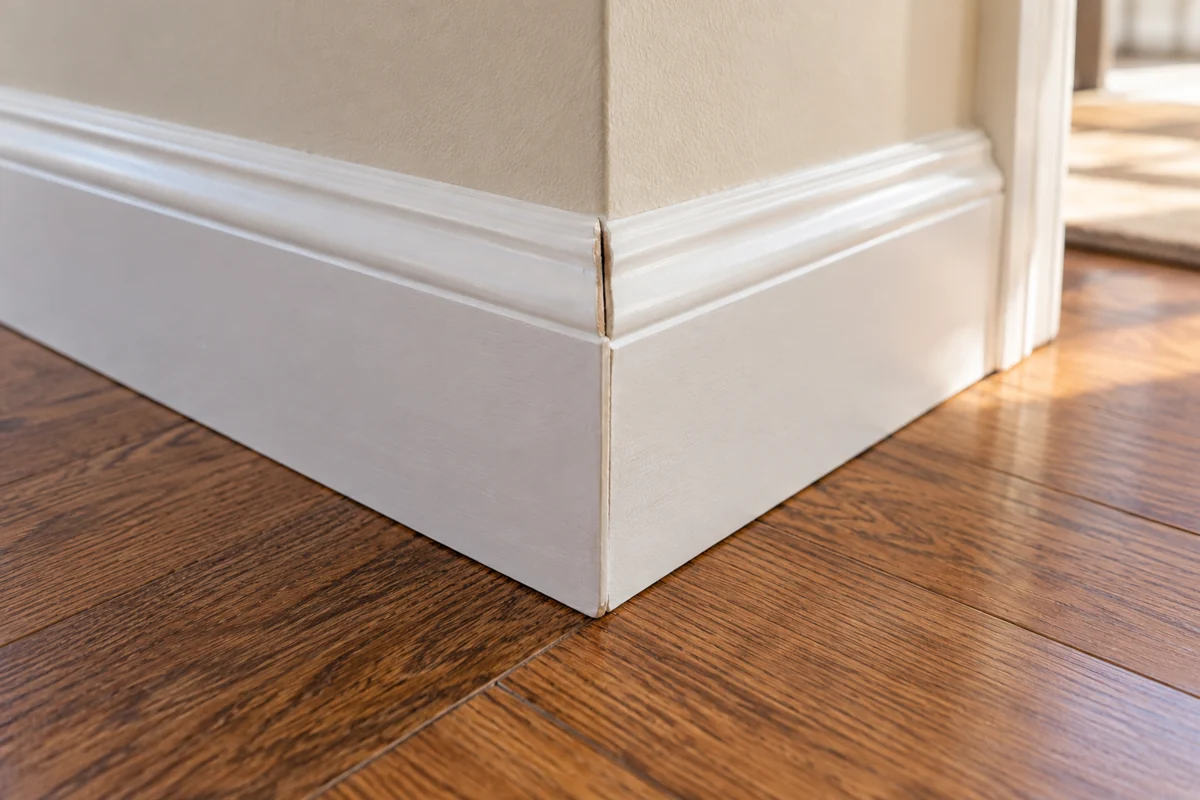
An outside baseboard corner receives light from several directions, so a small mismatch can look larger than it did on the bench. It is also exposed to shoes, vacuum cleaners and furniture. A thick cosmetic patch on an unstable joint is unlikely to remain discreet.
Look at the gap without forcing it shut. Does the opening widen toward the face, remain even across the cut, or change from top to bottom? Check whether both pieces sit against their respective walls and whether their top edges align. The pattern is evidence, not an invitation to choose filler by color.
Separate the possible causes
An even gap may indicate a length issue or a board not reaching its intended position. A wedge-shaped gap can indicate the cut geometry. A gap that varies vertically may come from a tilted piece, a wall irregularity or a profile held inconsistently during cutting. More than one condition can exist at the same time.
Before altering an end, inspect the backing. A plaster lump or old caulk ridge can keep the molding from seating. Do not scrape uncertain old coatings or disturb a wall without first addressing lead and concealed-service concerns. Sometimes the right next step is a substrate assessment rather than another cut.
Use short test pieces to resolve the corner geometry where appropriate. They should match the actual profile and sit in the installed orientation. Once the short pair fits, confirm the full-length pieces together with their far-end connections.
Avoid a forced solution
Fastening one piece tightly and pulling the other toward it can create stress while hiding the gap briefly. If the material relaxes or the room conditions change, the joint may reopen. The correct fitting and fastening system should hold an accepted joint, not manufacture one by force.
A minor, stable surface imperfection can be finished with a compatible product after fitting. Missing profile material, a damaged tip or a broad open joint may call for a recut or replacement. On stained trim, even a small filler patch can be conspicuous, so expectations should be tested on a sample.
At a heavily used corner, reconsider whether the profile has an unnecessarily fragile projecting edge. A simpler detail or a planned corner treatment may be more suitable if it fits the room's design and product system.
After repair, inspect from standing height and from the approach through the room. Side lighting can reveal a ridge that front-facing light misses. A sound, aligned corner should not need a large mound of filler to look complete; the finishing work should refine the joint rather than invent its shape.