“Moisture resistant” is a useful description only when it is attached to a specific product and a stated use. It does not mean that a board can be installed in any wet location, left with exposed cut edges, or used to conceal a leak.
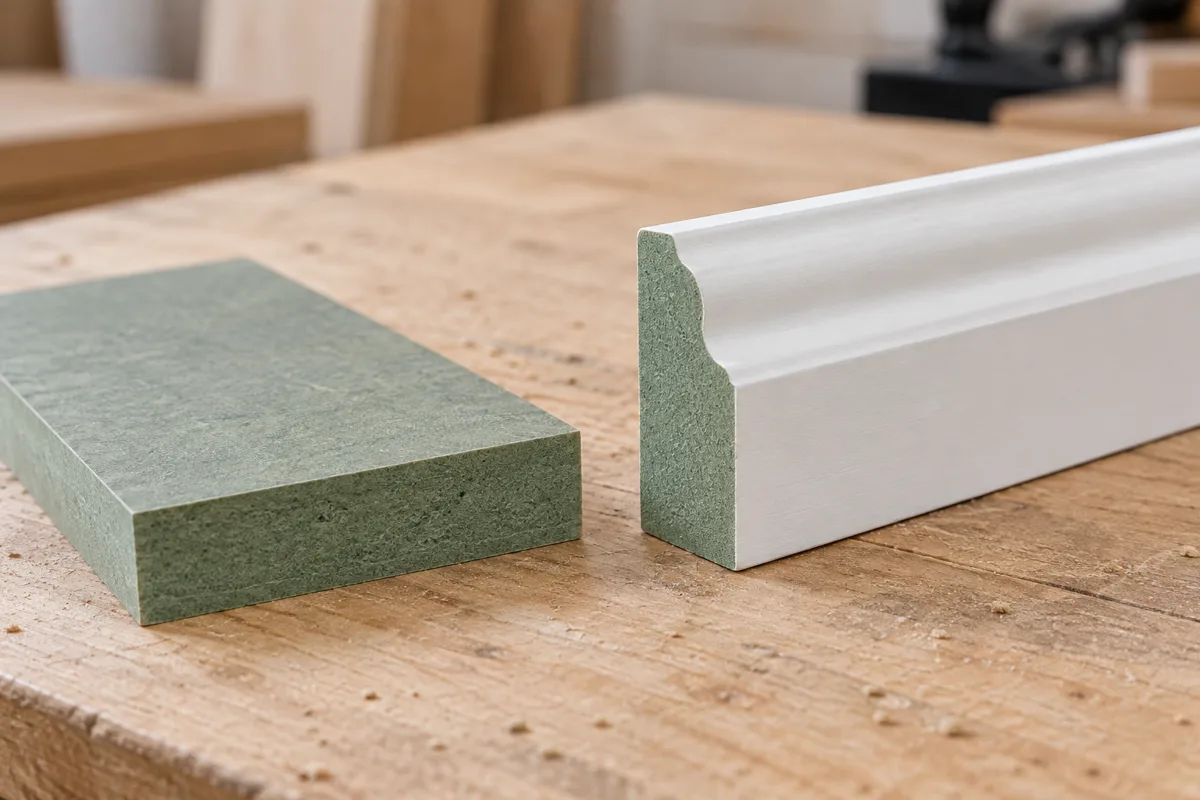
Standard MDF and an upgraded moisture-resistant grade may look similar after painting. Some products have a colored core, but color alone is not a reliable specification. Keep the label and ask for the technical information for the exact material being sold.
Separate humid air from repeated wetting
A well-ventilated interior that experiences changes in humidity is different from a floor edge repeatedly soaked by standing water. A product suitable for one situation may be unsuitable for the other. Describe the actual location to the supplier: a powder-room wall, the side of a laundry cabinet, and trim beside a shower are not equivalent exposures.
An MDF rating also does not describe the performance of the whole assembly. Water can enter through a cut end, an unsealed joint or a damaged coating. The surrounding wall and floor need their own appropriate construction and protection.
For a location that sees direct or recurring water, compare materials specifically approved for that use. Do not rely on a thicker coat of paint to upgrade a board beyond its intended application.
Plan the edges before installation
A factory-finished face can make a cut edge easy to overlook. Ask how the manufacturer requires cut ends, drilled areas and exposed edges to be finished. Follow the specified system rather than assuming that a quick brush of whatever paint is nearby is sufficient.
Make a sample that includes a real cut edge and a joint. It will show both the finishing effort and how the material meets neighboring trim. The sample is also a useful place to check whether the proposed filler and coating produce an even surface.
If an existing MDF baseboard has swollen, first investigate the moisture source. Painting the raised fibers may improve the color briefly while leaving the underlying damage and wetting unchanged. Soft, distorted material often requires replacement after the cause has been resolved.
Finally, remember that a better moisture rating does not make storage irrelevant. Keep the delivery protected and supported in the conditions specified by the manufacturer. Starting with material that has already been exposed to unsuitable conditions makes the final result less predictable, regardless of the label on the invoice.