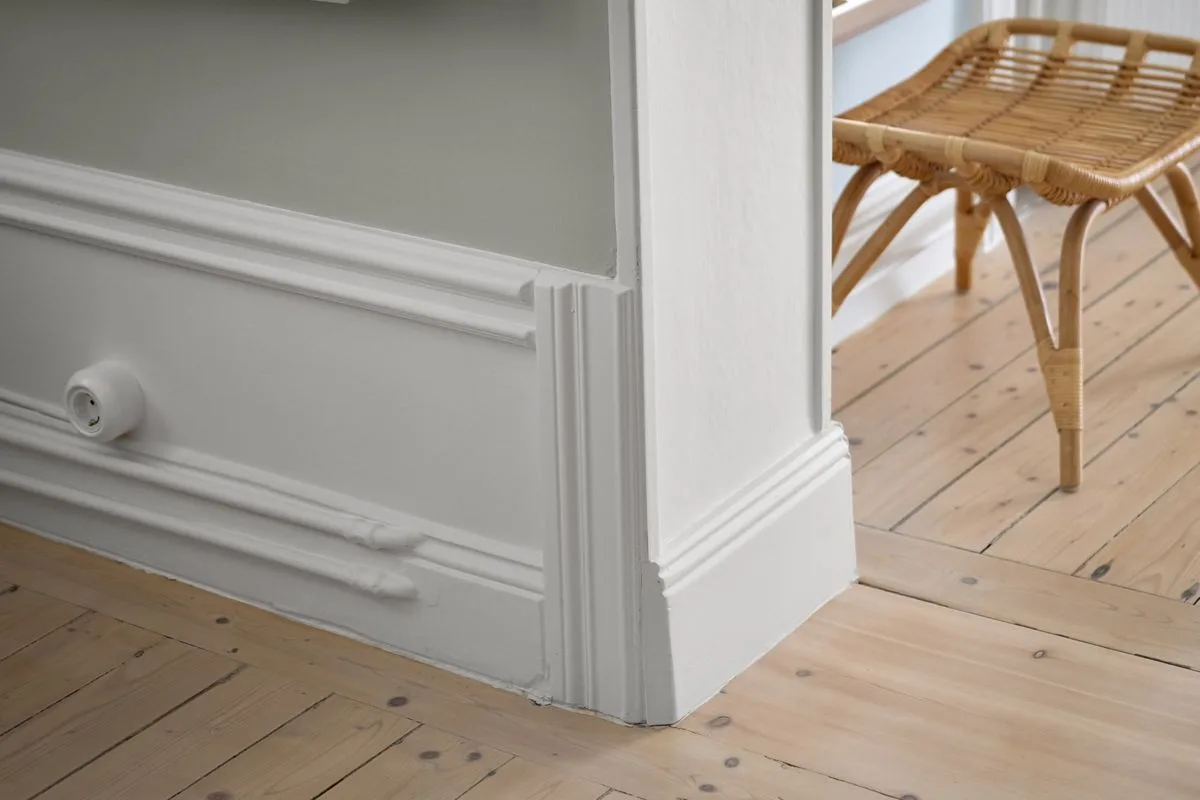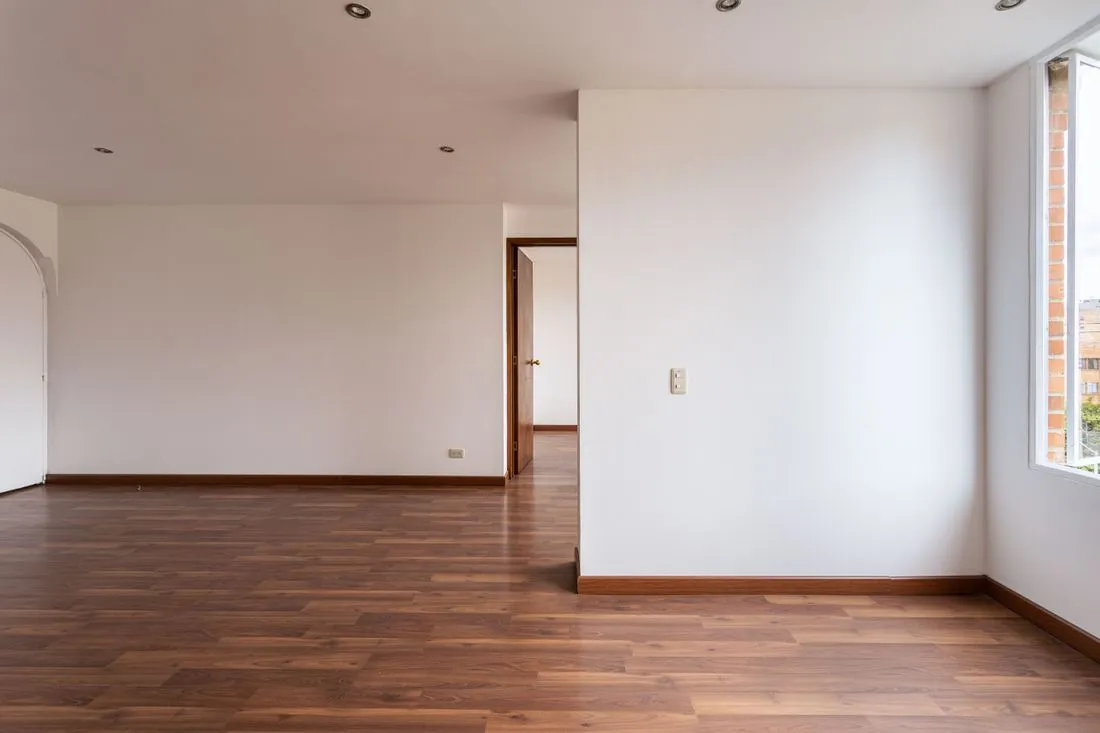
There is no need for every room in a house to use an identical baseboard height. A formal front room, a modest bedroom, and a utility space may call for different proportions. The challenge is not the difference itself; it is where and how the change becomes visible.
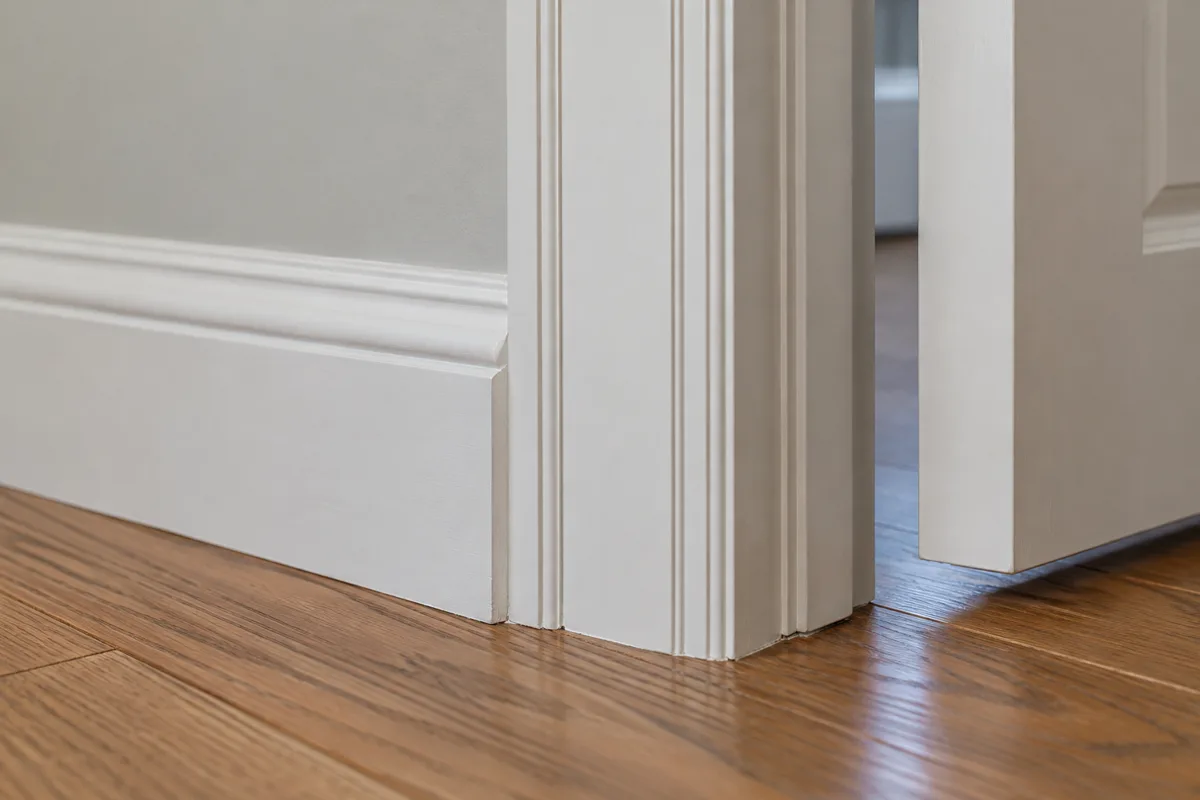
A doorway is often a natural boundary. Each room's baseboard meets its own side of the casing, so the heights do not collide directly. Keep the casing substantial enough to receive both, and compare the view through the opening before choosing a large difference.
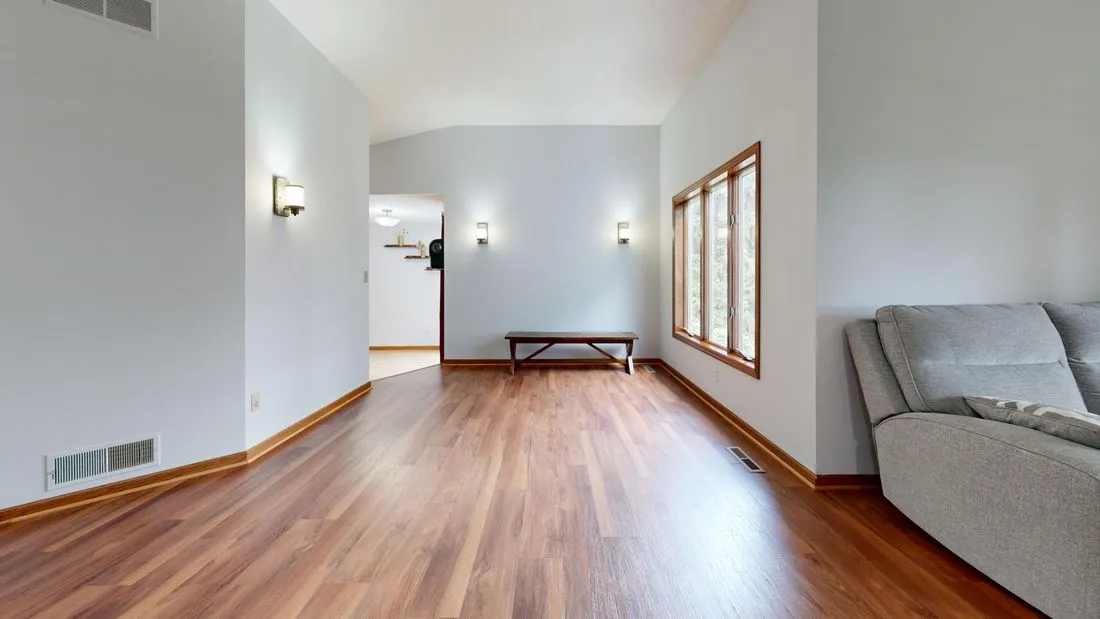
An open corner is less forgiving. When two heights meet on one continuous wall, the step becomes a feature. Unless that step corresponds to a deliberate architectural change, it can look like an incomplete replacement. In an open-plan area, a shared baseboard is often easier to resolve.
Preserve a family resemblance
Related profiles can help different heights feel connected. One room might use a taller flat board with the same top edge as a smaller version elsewhere. Alternatively, the color and depth can remain consistent while the height changes. There is no requirement to preserve every attribute, but changing all of them at once makes the boundary more emphatic.
Consider the casing hierarchy. A taller baseboard beside very narrow casing can upset the relationship at the doorway even if the adjoining room is perfectly balanced. Test the actual pieces together at each side of the opening.
Floor levels also affect what the eye sees. Two boards with the same nominal height can have top edges at different elevations where the floors step. Record both the physical board height and the visible top line rather than assuming one measurement explains the transition.
Walk the normal routes through the house. Differences that are unobtrusive from one doorway may be conspicuous from a long hall. A photograph taken at eye level can help compare the whole view without focusing only on the samples.
If renovation happens in stages, write down the intended final arrangement. Otherwise each room may receive a slightly different “close enough” profile that was never chosen as part of a plan. Deliberate variation feels more coherent when it is documented than when it accumulates through separate shopping trips.