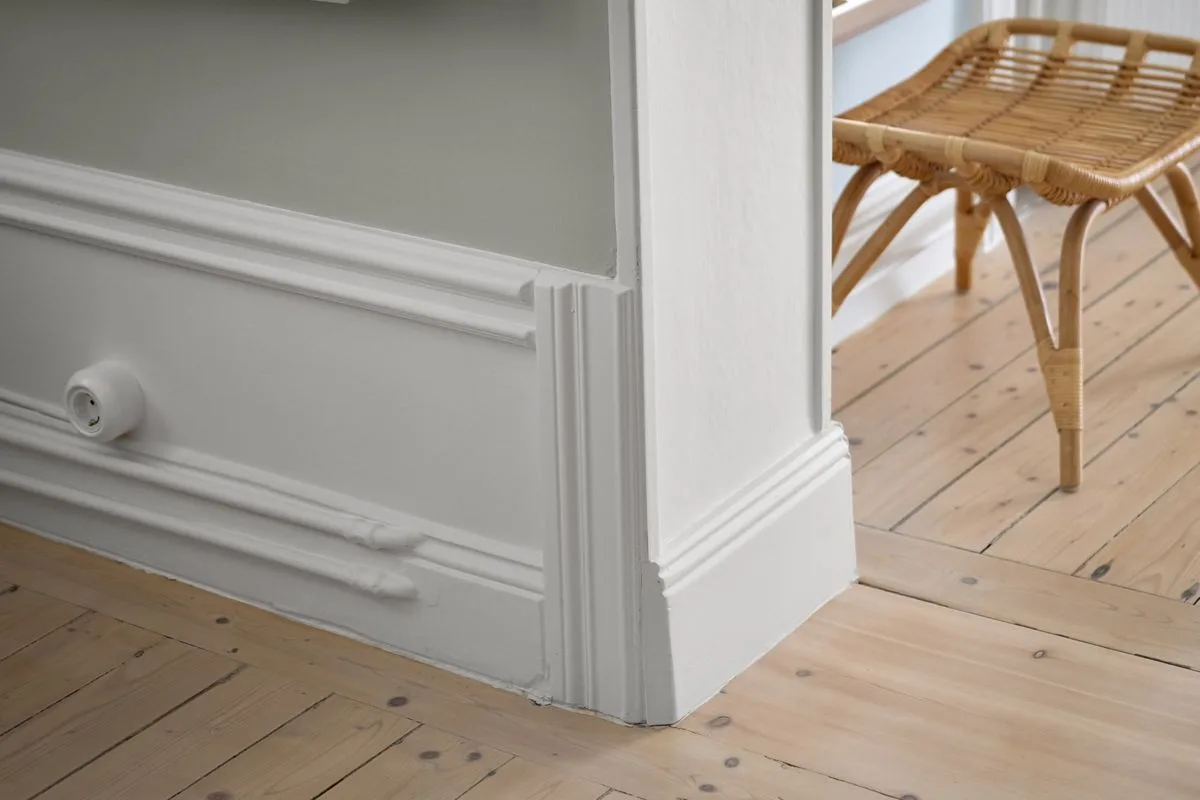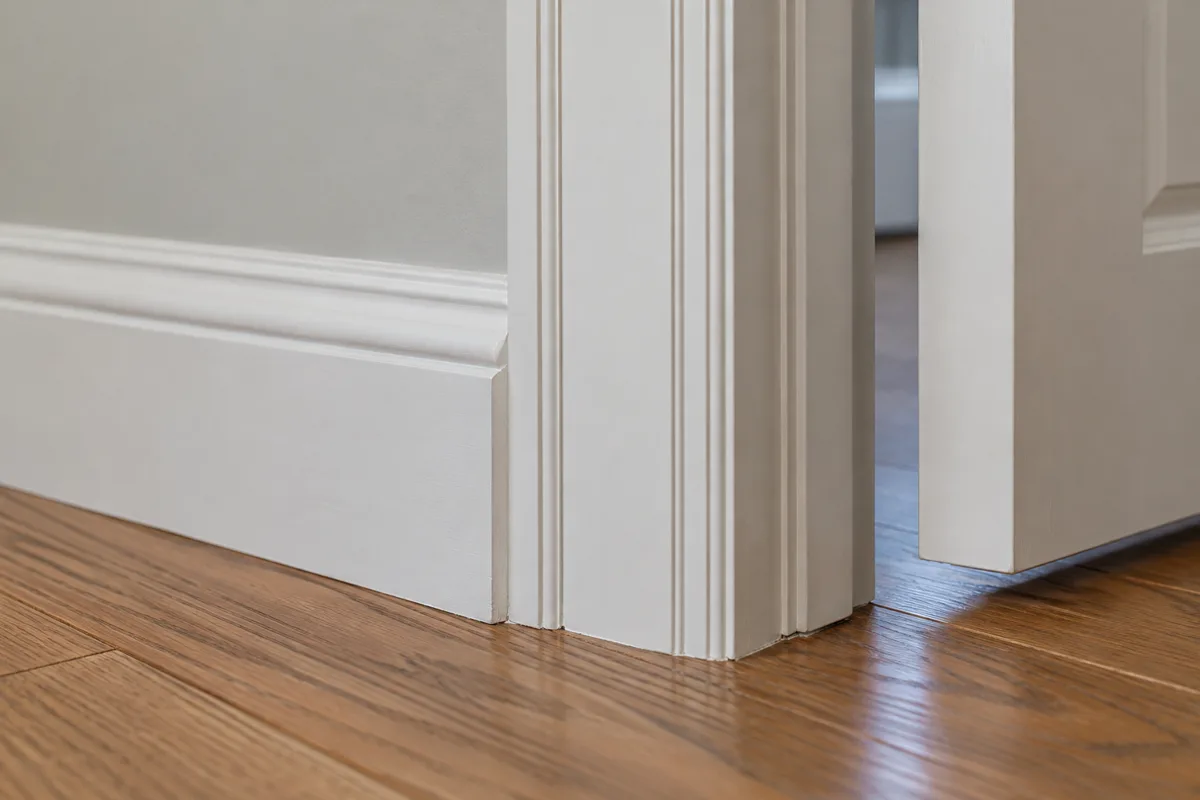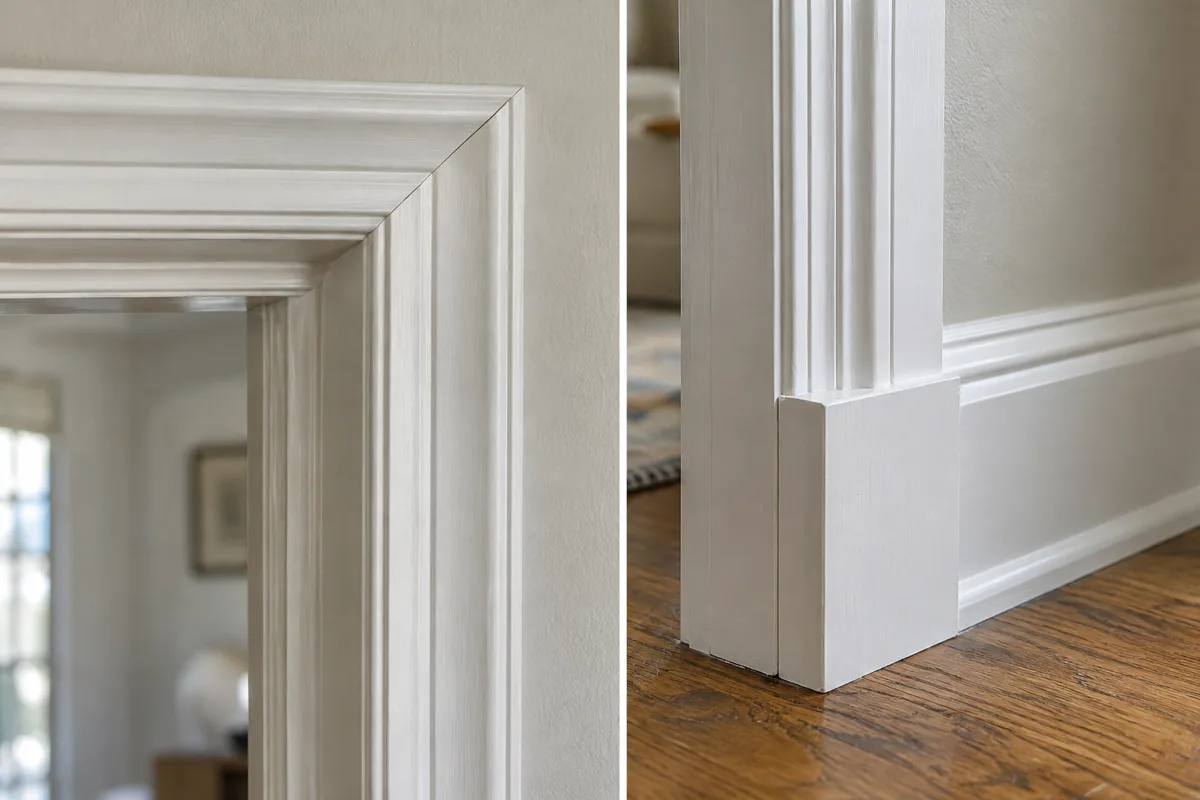
A miter carries a profile around a corner. A butt-jointed arrangement lets one member stop against another. Both can produce a convincing door surround, but they organize the corner differently. Choosing between them is easier when you look at the molding's cross section before the room's style label.
With a shaped casing, the ridges and hollows usually want to turn together. A miter makes that possible. Simply butting the same profile against a horizontal piece can leave decorative edges colliding without a clear ending. Corner blocks offer another approach, but then the block becomes a visible part of the design.
Flat casing gives more freedom. A horizontal head can sit over the side pieces with a square joint, creating a clear top-and-support relationship. It can also be mitered to form a continuous frame. The decision is about the outline you want as much as the difficulty of the cut.
Consider the whole opening
Draw the top corner and the foot of the doorway on the same page. A heavy square-jointed head may look right with broad legs and substantial baseboards. The same head can seem stranded above thin casing that disappears into a much smaller floor detail.
A mitered frame is often quieter where several doors appear together. It avoids a projecting header and lets the openings read as a related group. That does not make it automatically modern; the profile can be plain or highly decorative.
Consider finish as well. A stained joint exposes differences in grain and end grain that paint may visually unite. Look at sample corners in the actual material, not only in white renderings. A species or board selection that looks consistent in straight lengths may behave differently when the grain changes direction.
Do not let the joint hide a geometry problem
An out-of-square opening or an uneven wall can affect either arrangement. Square joints do not eliminate the need for fitting, and miters should not be forced closed by bending the surrounding pieces. A dry-fit should show that the trim can sit against its backing without strain.
For a room with existing casing, examine the joints already used elsewhere. Repeating that logic can be more convincing than introducing a new corner treatment at a single door. If a deliberate change is planned, place it at a meaningful room boundary.
Before buying, assemble one corner large enough to view from a few steps away. The right joint is the one that makes the molding look complete, rather than making the viewer notice how the pieces were persuaded to meet.