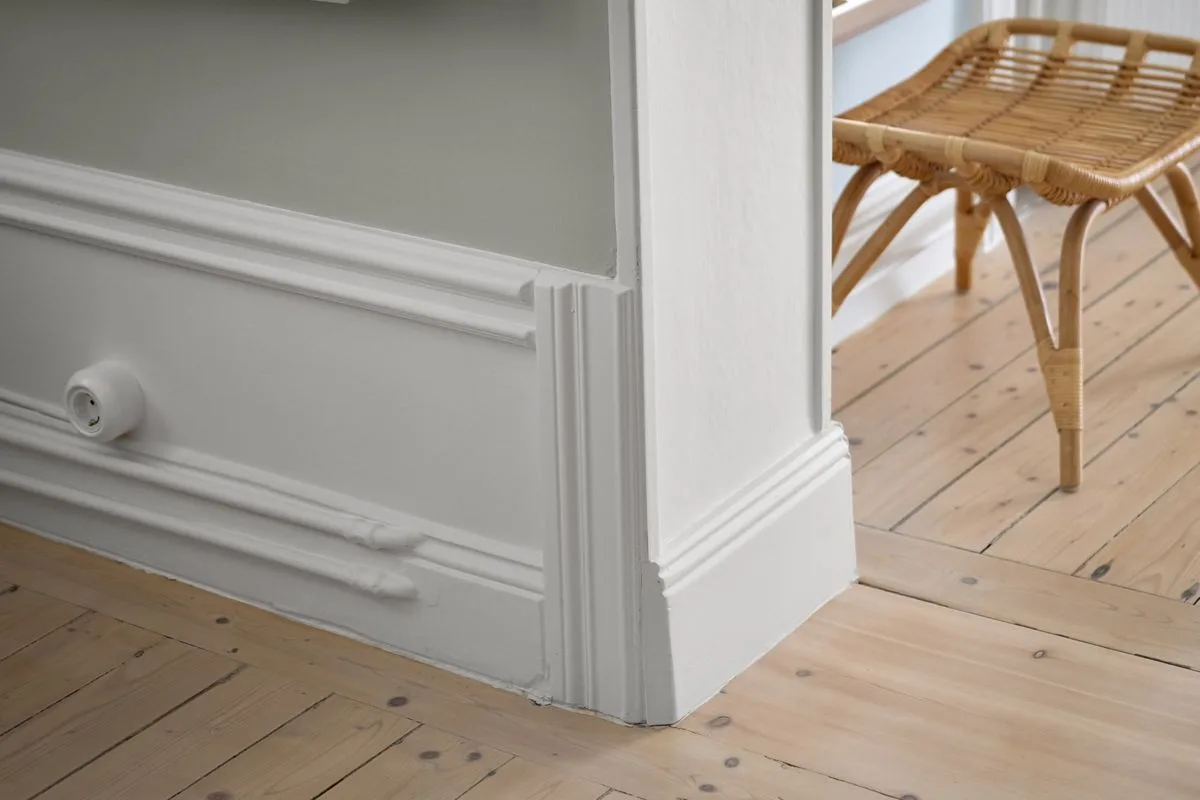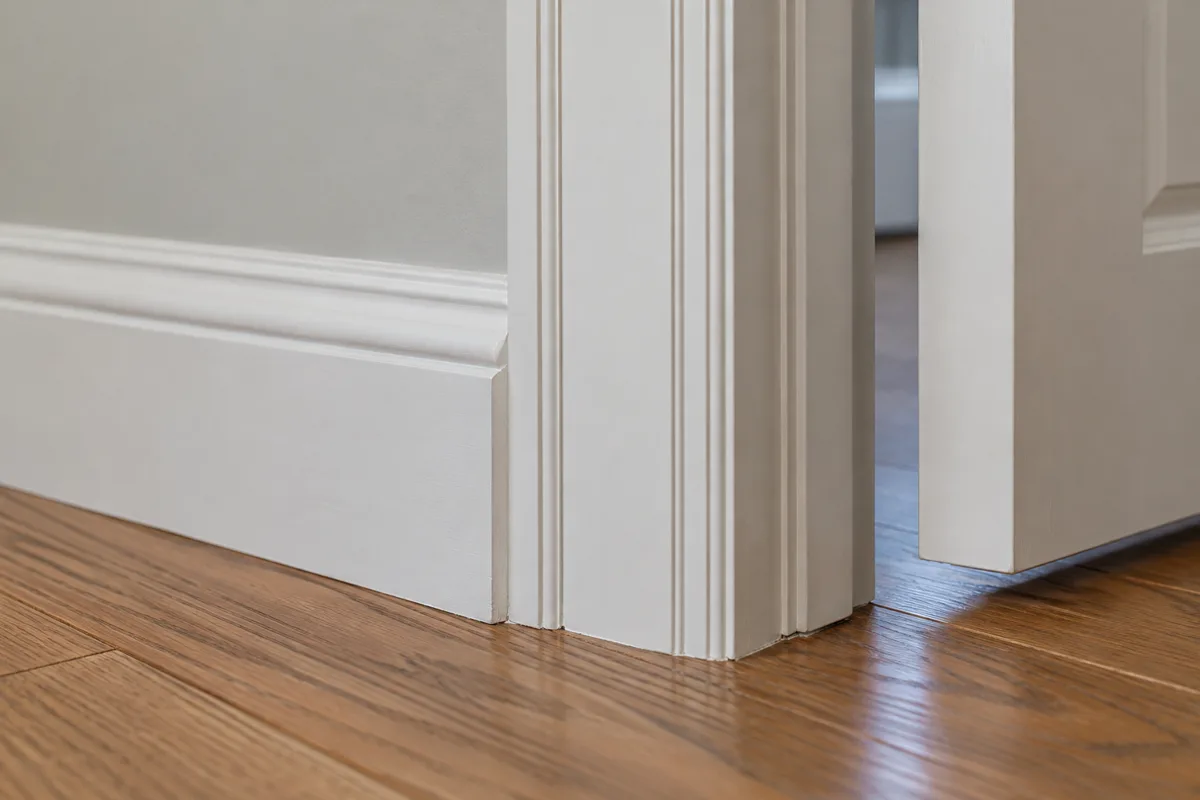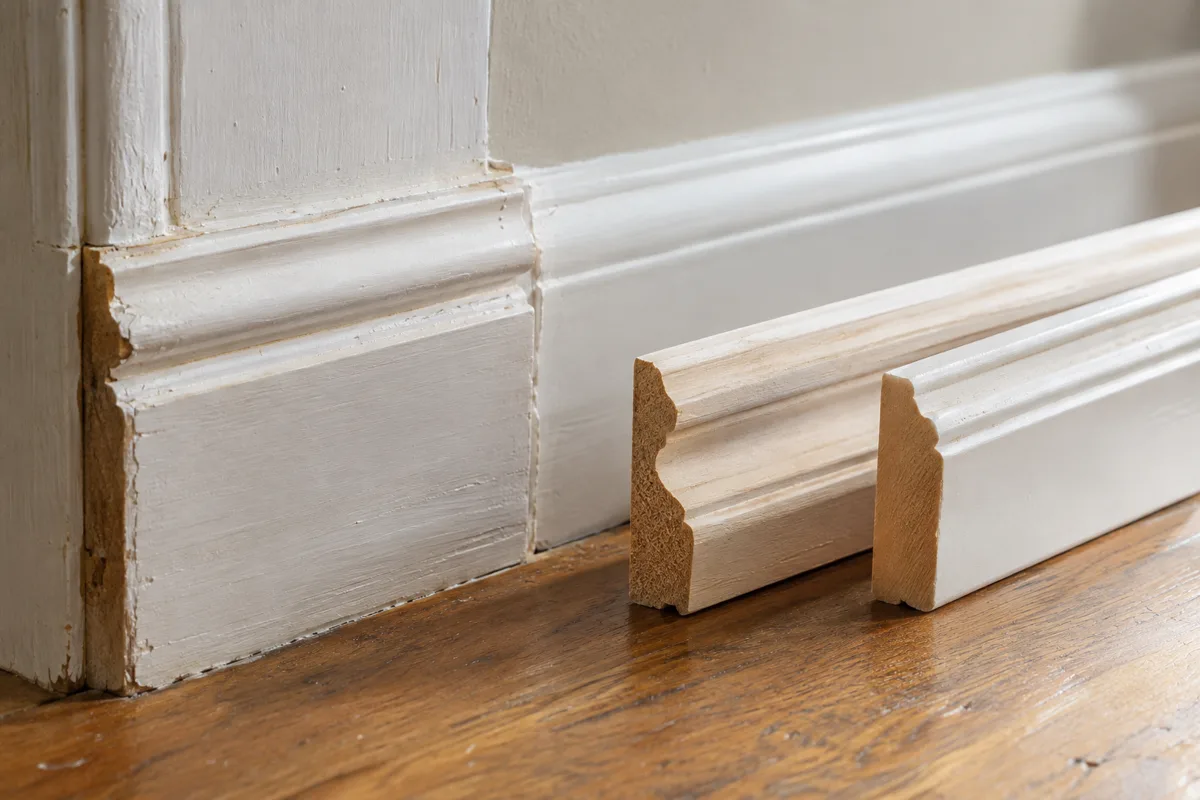
An old baseboard can look almost identical to a new stock profile until the two meet on the same wall. A small difference in a curve, bead, or flat face creates a broken shadow line. Matching by a catalog photograph is therefore a useful first filter, not a final decision.
Begin with an accurate record of the existing shape. Photograph it square-on with a ruler, record its height and maximum thickness, and note which edges meet other trim. If a loose offcut is already available, it is particularly useful. Do not disturb old coatings simply to obtain a sample without assessing the risks.
Paint buildup can blur the original profile. A narrow groove may appear shallower than it was, while the top edge may have become rounded. Decide whether the new piece needs to match the current finished appearance or a carefully restored original shape; those can be different targets.
Compare the lines that continue
Place the sample ends together and sight along the face. The top edge, major bead, and broad flat area usually matter more than a tiny hidden difference on the back. But the back shape affects how the piece sits, so it cannot be ignored during fitting.
Confirm actual measurements with the supplier. Profile names and numbers are not necessarily interchangeable between manufacturers, and nominal dimensions may not describe the exact finished section. Ask about species, paint grade, available lengths, and whether the profile is current stock or a custom run.
If no close match exists, consider the location of the repair. Replacing a complete short run between natural boundaries can be less conspicuous than inserting a near-match in the middle of a long wall. A custom profile may be justified where the original detail is significant and repeats throughout the house.
Do not try to hide a mismatch with a heavy filler ridge across the face. It tends to interrupt the very shadows that define the molding and may be difficult to maintain.
Approve the replacement in its intended finish. Raw and painted samples can appear misleadingly different—or misleadingly similar. Once accepted, keep the supplier reference and a labeled offcut. Future repairs become much simpler when the profile is documented instead of rediscovered from a painted corner.