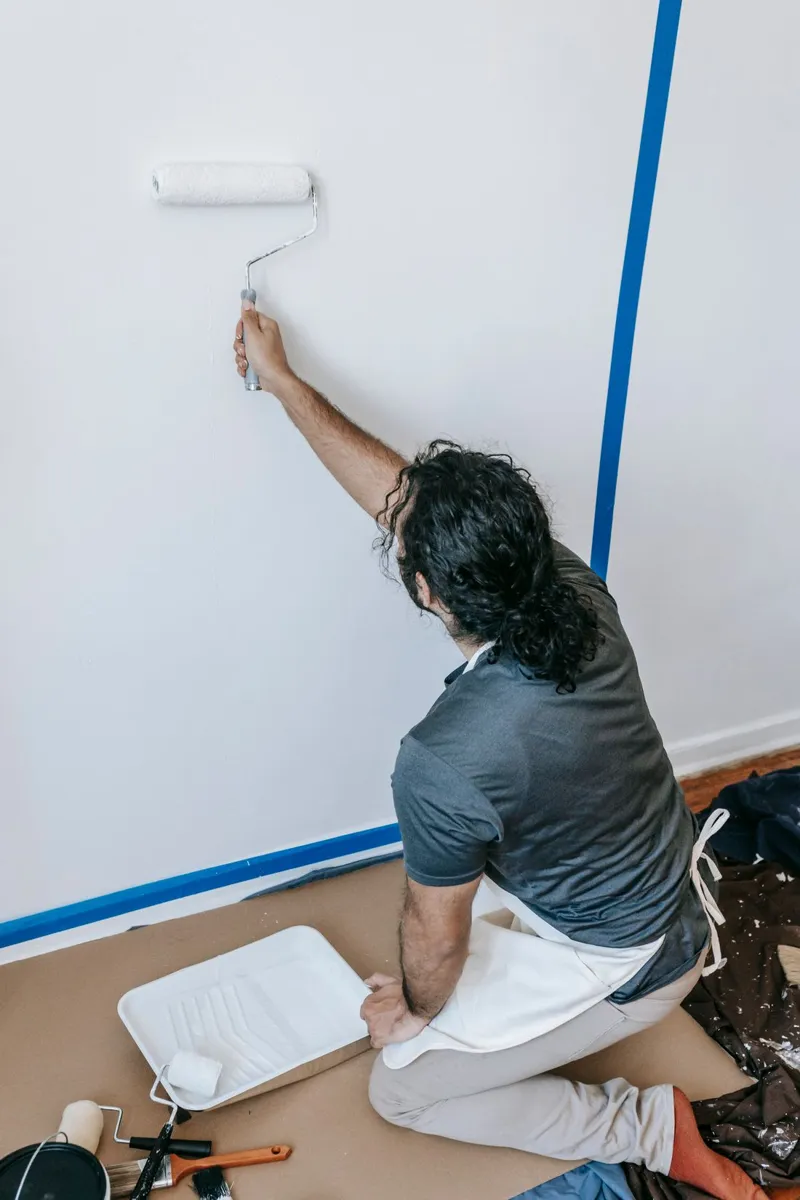
A clean paint line begins before the tape is unrolled. Dust, texture, loose coating and incompatible adhesive can all prevent a neat edge. Choose tape for the actual surface and follow its application and removal instructions; a roll that worked on one wall may damage another.
Check how long any adjacent coating has been in place. Dry to touch does not necessarily mean ready for masking. Fresh paint may lift when tape is removed, especially if the product's curing guidance or tape's surface restrictions are ignored.
Prepare the boundary
Clean the intended tape path appropriately and let it dry. Apply without stretching it into tension that could pull it away later. Press the paint-side edge as the tape manufacturer recommends, taking care not to damage a delicate finish.
Rough or textured surfaces may still allow paint beneath the edge. Do not assume a wider strip solves that problem. Test the method in an inconspicuous area, and consider whether a carefully controlled brush technique is more appropriate for the particular boundary.
Avoid building a heavy ridge of paint against the tape. A thick film can bridge the edge and tear unpredictably during removal. Apply the coating according to its instructions, including the intended coverage and number of coats.
Follow the product's timing
There is no single removal time that suits every tape and coating. Some guidance calls for removal while paint remains wet; other systems use a different sequence. Read both sets of instructions rather than borrowing a universal rule from another project.
Remove in a controlled way using the recommended angle and method. If the film has bridged or resistance suggests the finish may tear, stop and follow the appropriate corrective guidance. Do not jerk the strip off in the hope that speed will make the edge cleaner.
Old or uncertain coatings can raise lead concerns when damaged or disturbed. Assess that risk before preparation or a process likely to pull loose paint, especially in a pre-1978 home.
Inspect the boundary after removal and before packing away the paint. A tiny local correction may be easier while the materials are available, but allow the coating to reach the proper stage before further work.
Tape is a temporary tool, not a guarantee. A sound surface, compatible adhesive, controlled paint film and correct timing give it a much better chance of producing the line you intended.